A Night at the Opera
Saturday 3rd
January 2026
|
|
Oh, Vienna
A Night at the Opera |
|
|
|
We had a really good night's sleep. I think it had something to do with the fact we had individual duvets. Instead of one large duvet to cover the king size bed we had two single duvets. It didn't matter how much one of us rolled around, no one hogged the bedding. "We should do this at home" I suggested.
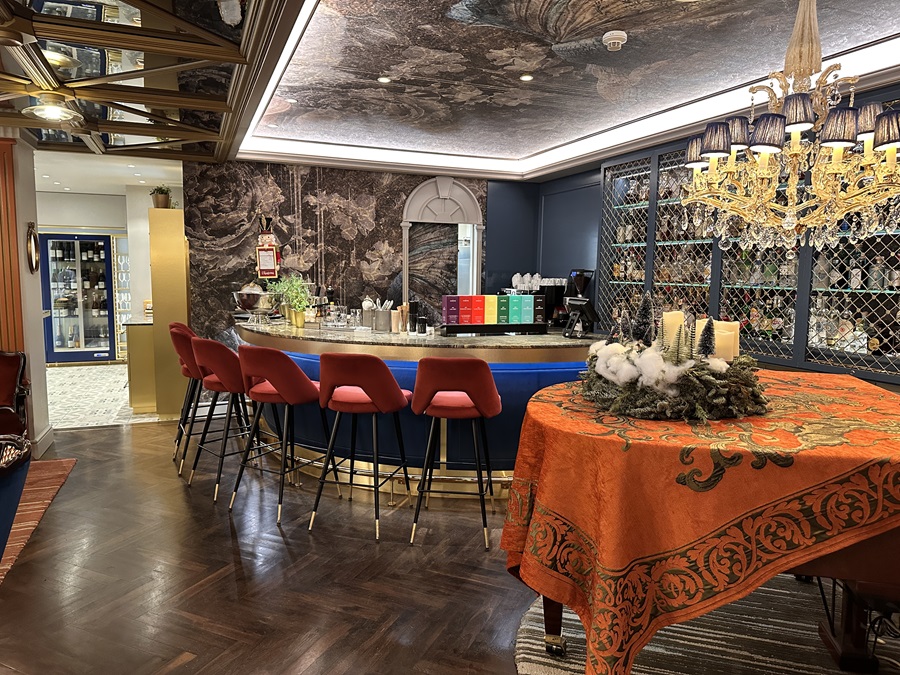
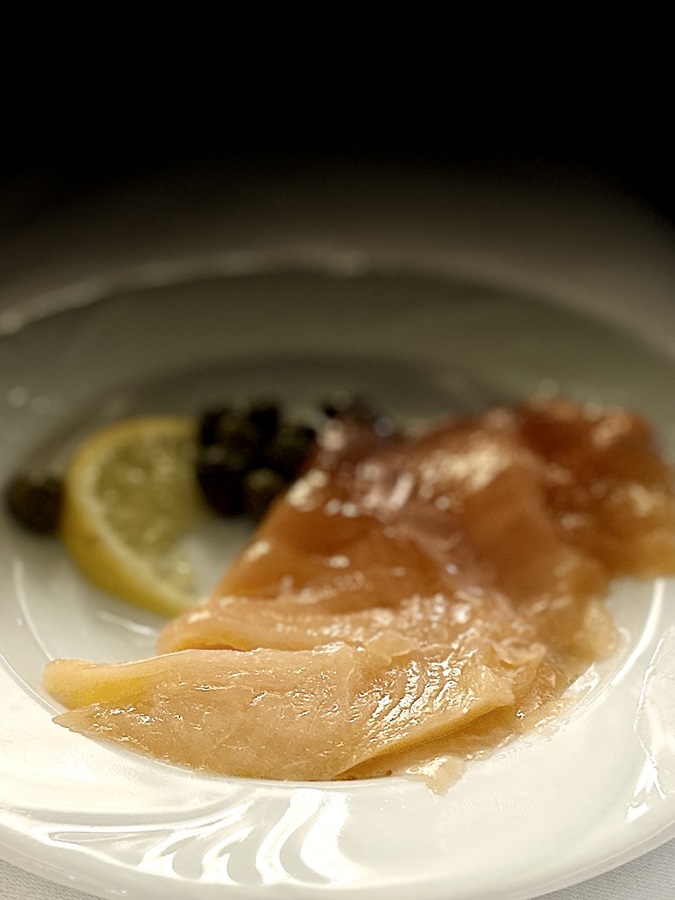
At 10am we were down in the bar, where breakfast was served. The choice on offer was superb. Between us I think we tried almost everything! We began with freshly squeezed grapefruit juice and orange juice. Then there was fresh fruit salad, yogurt, sliced meats, cheese slices, crusty bread rolls. They had smoke salmon, individually plated up into sensbile portions. Although there was nothing to stop you from going back as often as you liked. They even had a proper meat slicer, like they have in a deli, to slice some ham. We were very impressed by the whole spread.
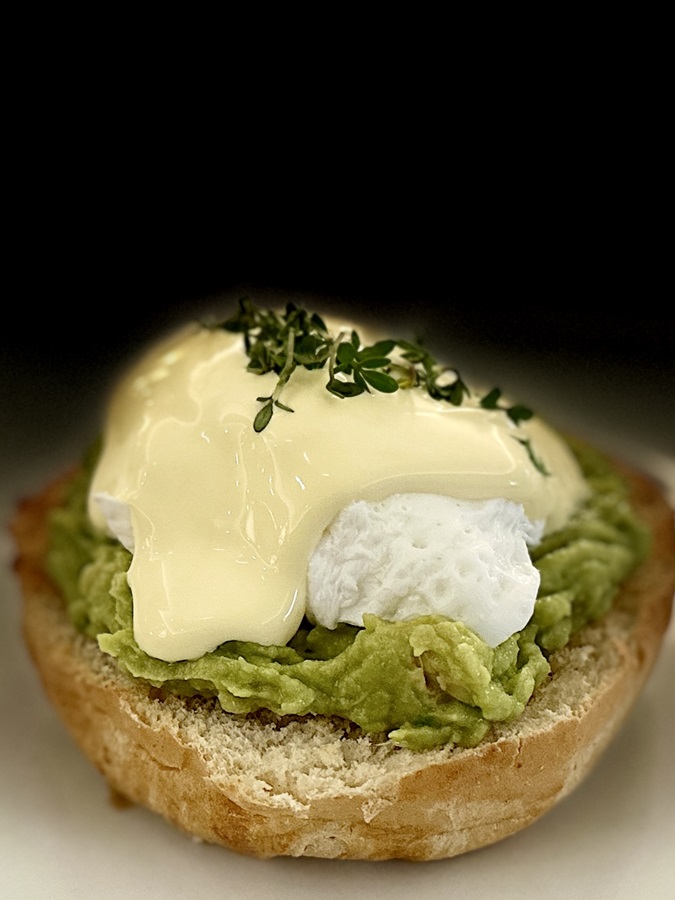
They also had a breakfast menu of dishes made to order. I tried their Egg Artist, a twist on the Benedict, with a poached egg and crushed avocado on a muffin, topped with hollandaise sauce. It tasted good but the sauce was definitetly from a jar, and it was served chilled which was very odd. After almost an hour of grazing we were ready to start the day. We caught the underground to Karlplatz then set off on foot to find the location for the Johann Strauss Immersive Experience.
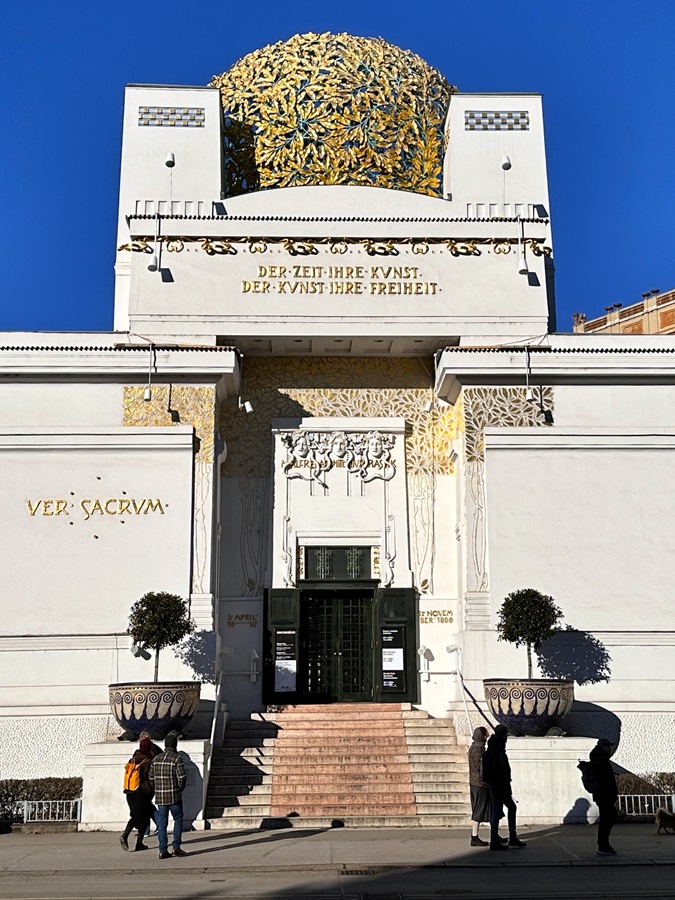
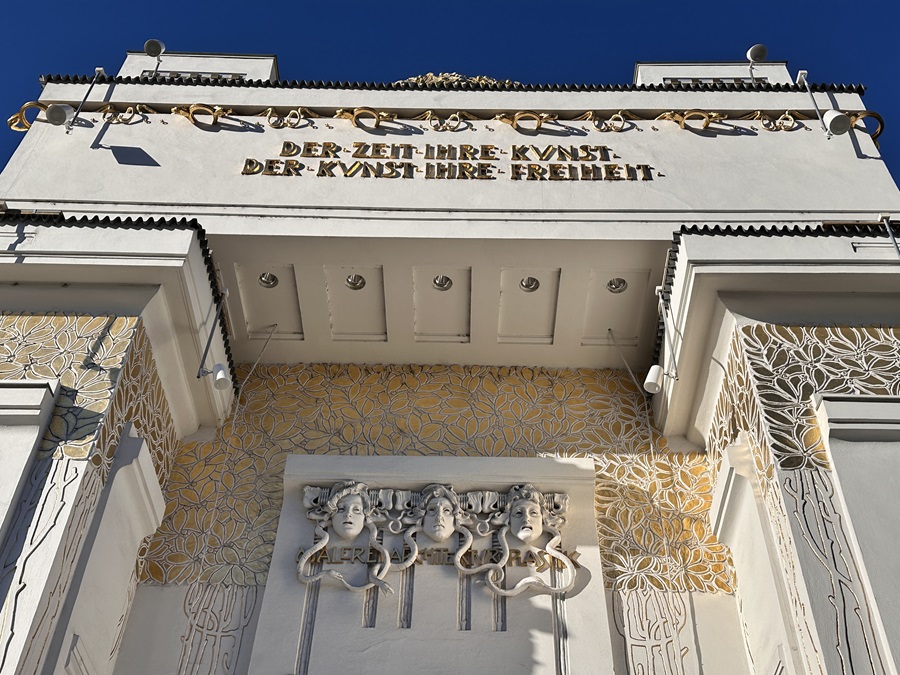
What we found first was the Secession building. It was created by those rebelious Viennese artist who formed their own artisitc society. The architect who designed the building was Joseph Maria Olbrech and the work was completed in 1898. It was an interesting design. Directly above the door were three gorgons, from Greek mythology, here representing painting, sculpture and architecture. Above that were the words, "Der Zeit ihre Kunst. Der Kunst ihre Freiheit" which translated as "To every age its art, to every art its freedom" . Then it was crowned by a stunning dome of golden leaves.
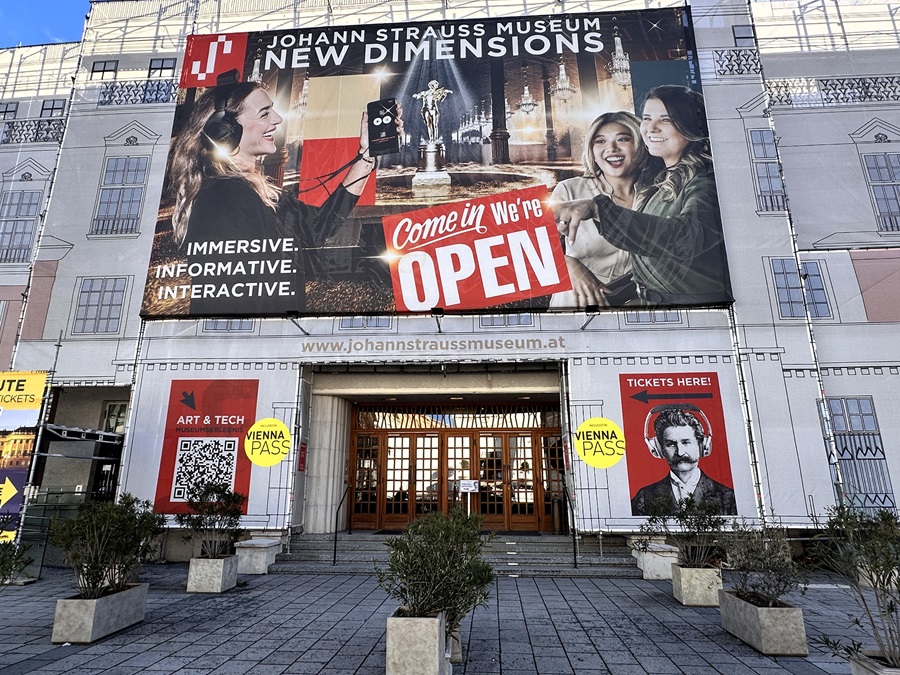
Directly opposite the Secession building was our immersive experience. The building must have been undergoing renovations. It was wrapped in a shroud, with images of windows to make it looked palatial. They had a sign saying "Come in. We're OPEN"! We used their lockers to keep our coats. They insisted on having proof of ID to use the lockers. Luckily, I was carrying my driver's licence.
We were given a set of headphones each. "There is no need to touch them" said the young girl "the audio will change automatically." As soon as we walked inside, the audio started playing. Whilst this experience was about Johann Strauss II, the younger, it was useful to have the backstory. The headphones were a clever piece of kit. It somehow detected our position and played the appropriate audio clip as we walked on and the story continued.
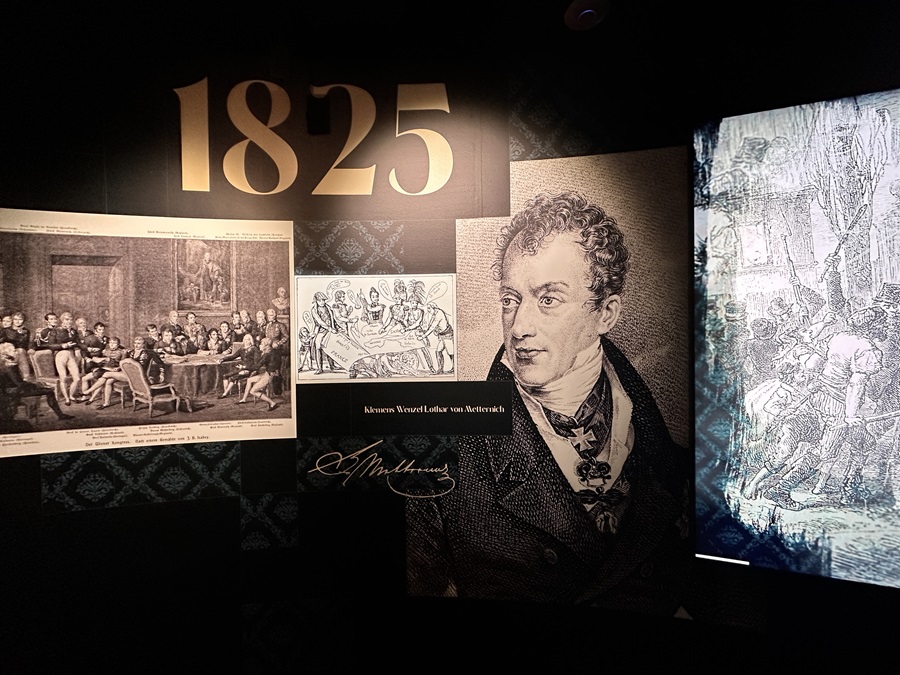
It all began with his father, also known Johann Strauss, later known as the first, or the senior. Tragedy struck when Strauss senior's mother died of what was called creeping fever when he was only seven years old, and then his father drowned in the Danube when he was twelve. Orphaned at such a young age, he was raised by a guardian. Whilst studying as an apprentice bookbinder he was encouraged to take lessons in the violin and viola. His breakthrough was when he joined a popular band, a string quartet, playing light dance music such as waltzes and polkas. This was the rock'n roll of its time. He was often away on tour with his band. His absence didn't stop him from fathering six children with his first wife, and apparently a further eight children with his mistress! Johann Strauss II, the younger, was born in Vienna in 1825, the eldest of all of his children.
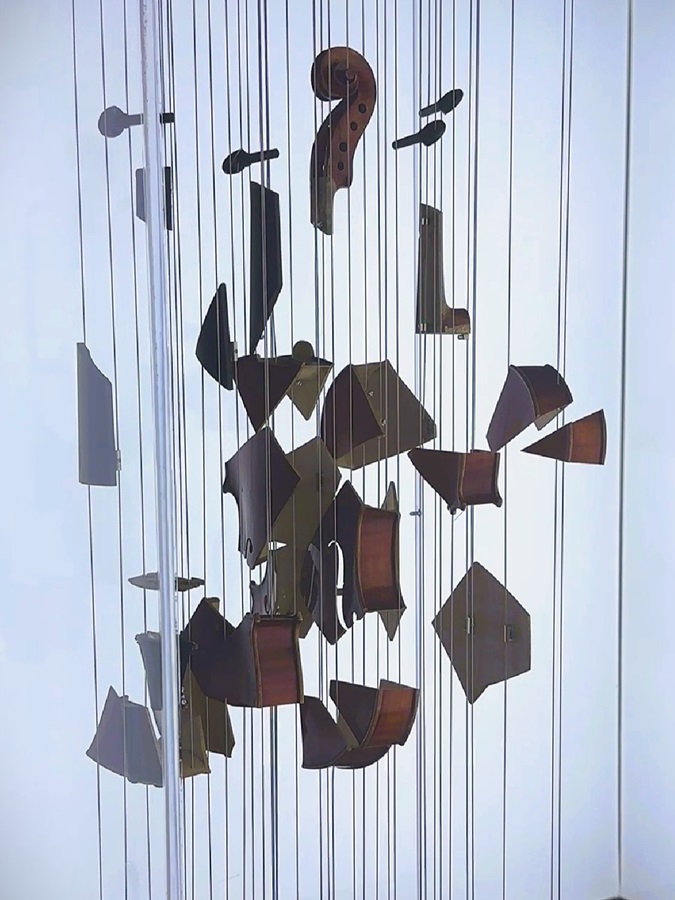
The father forbade any of his children from following him into a career in music. We came to a fascinating installation. Fragments of a violin were suspended on wire. From one angle they looked like a jumble of pieces of wood, but as you changed your perspective a whole and complete violin came into focus. It recounted the story of when Strauss senior came home to find his son practising his music. In a rage he grabbed the instrument, smashed it to pieces against the wall and gave Strauss junior a severe whipping. His son ignored him and went on to eventually surpass his father, writting hundreds of waltzes, polkas and operattas, becoming much more succesful.
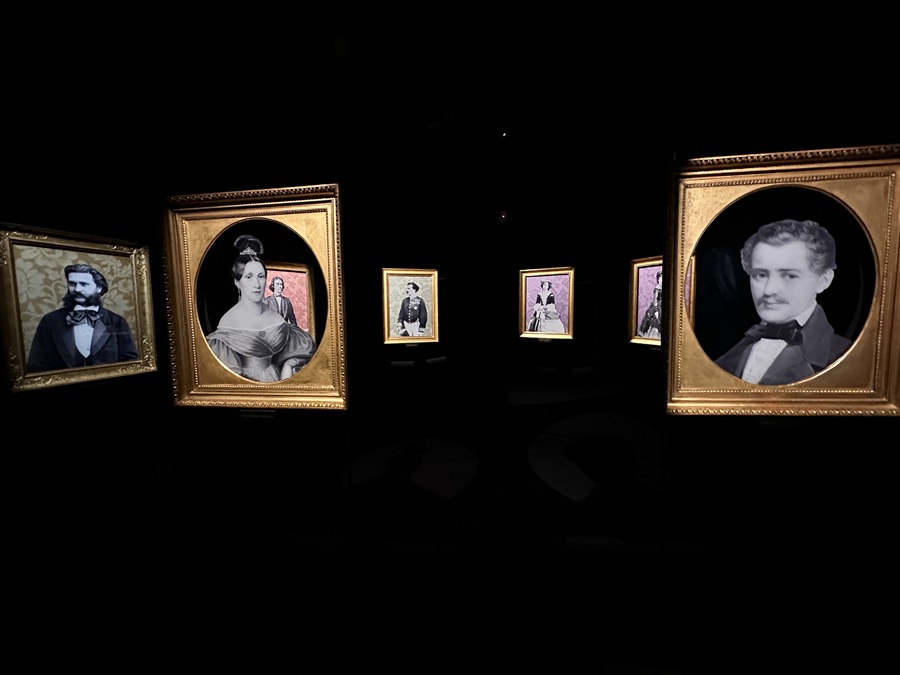
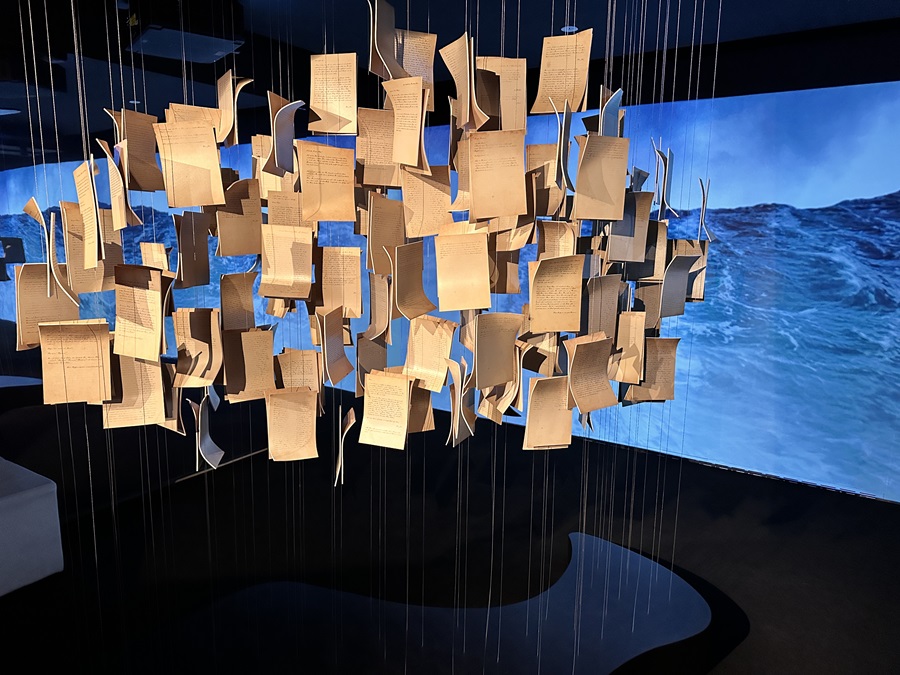
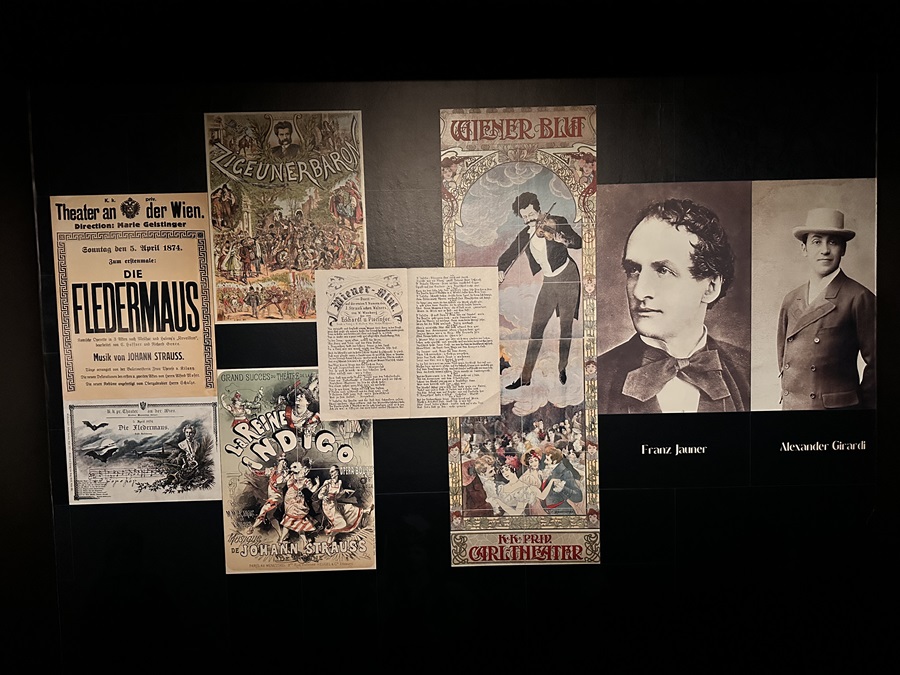
In another room there was a stormy sea projected onto the wall and a cloud of letters. Whilst it was visually dramatic, I forgot what it represented. Were they love letters? Johann Strauss II married three times. His first wife was a singer called Jetty (Henrietta) Treffz to whom he was married for sixteen years. A period when he produced his best known works, such as the Blue Danube Waltz and Die Fieldermaus operetta. Jetty died in 1878, at the age of 59. He quickly remarried, to an actress called Angelika, but that didn't last long, eventually divorcing after four years. Things must have been bad because he even changed his nationality to a Saxony, a region that permitted divorces! Then with his last wife Adele he found love again. Once again producing some memorable music and operettas during this time.
One of the last things we did in the immersive experience was to compose our own music. It wasn't exactly "composing", it was simply selecting in four parts, a specific key, and what time the parts were played. The programme then generated a two minute piece of music that you could e-mail to yourself. It was just a little but of fun. To borrow a phrase from the eighties song called Vienna by Ultravox, "It meant nothing to me. (Oh, Vienna!)"
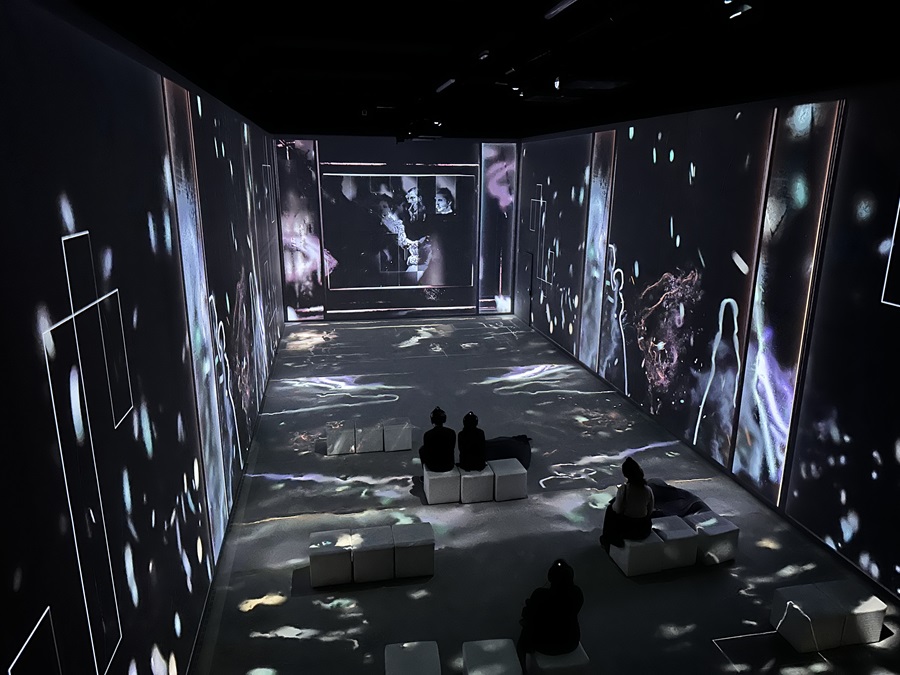
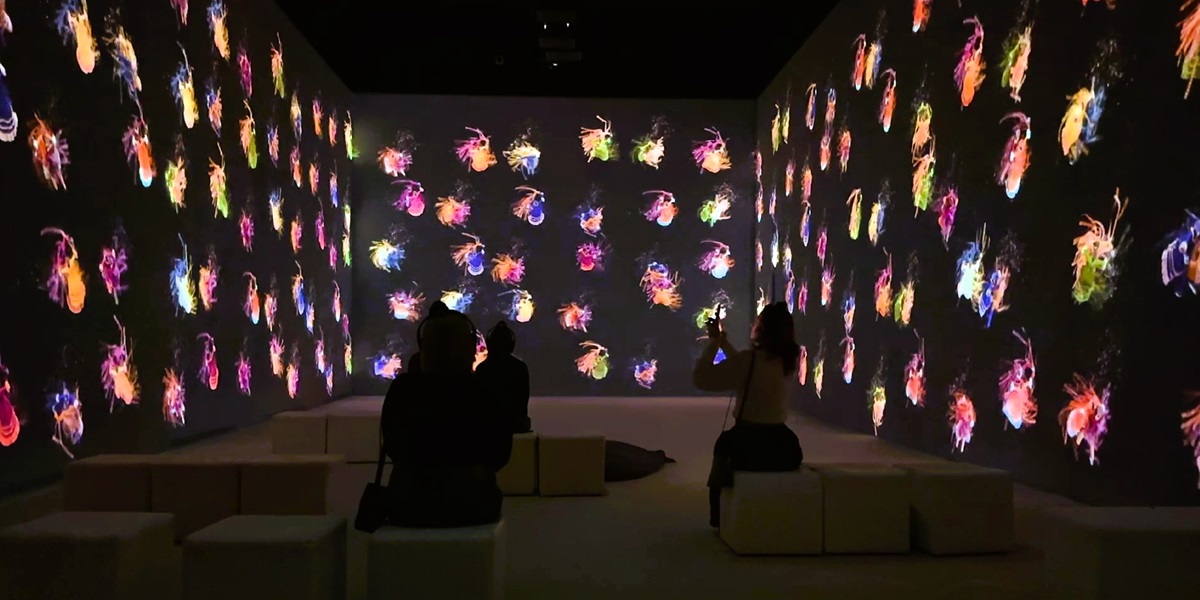
The finale of the immersive experience was a large room where projected onto the walls were images from the life and times of Johann Strauss II. His music played through our headphones.
Some of the sequences were mesmerising, but despite being entertained, we didn't stay to watch the full 30 minute show. It seem to come to a natural ending before starting the cycle again, so we took the opportunity to leave. Out through the gift shop, in which we didn't spend long and then to the lockers for our coats. Overall we spent an enjoyable hour and a quarter immersed in the Johann Strauss II story.
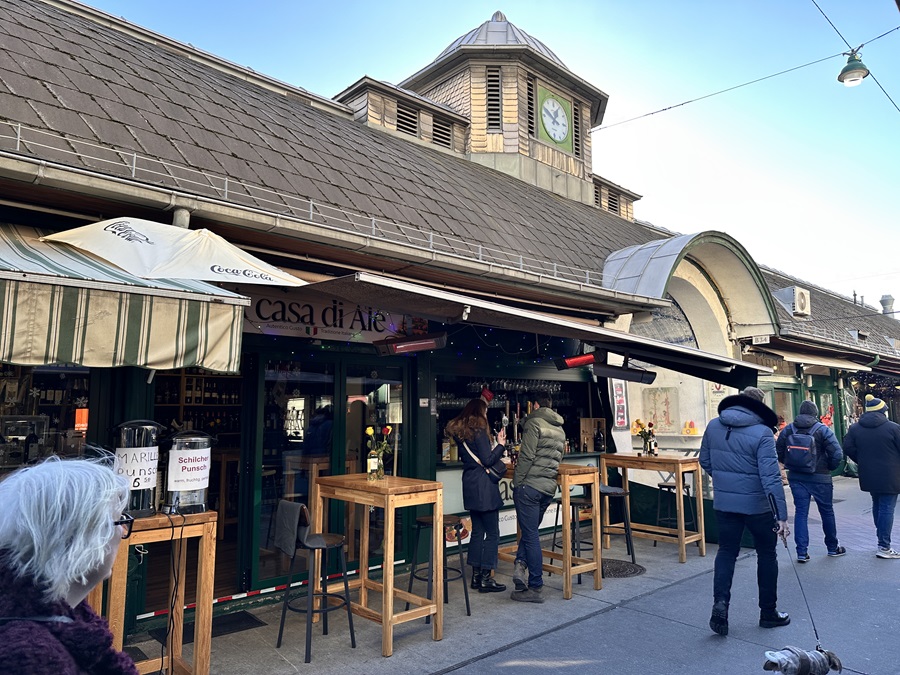
Back outside we gravitated towards Naschmarkt, a former milk market that stretched out for a mile, along two parallel streets, Minerstrasse and Sopherlgasse, filled with wine bars, restaurants and fresh food producers.
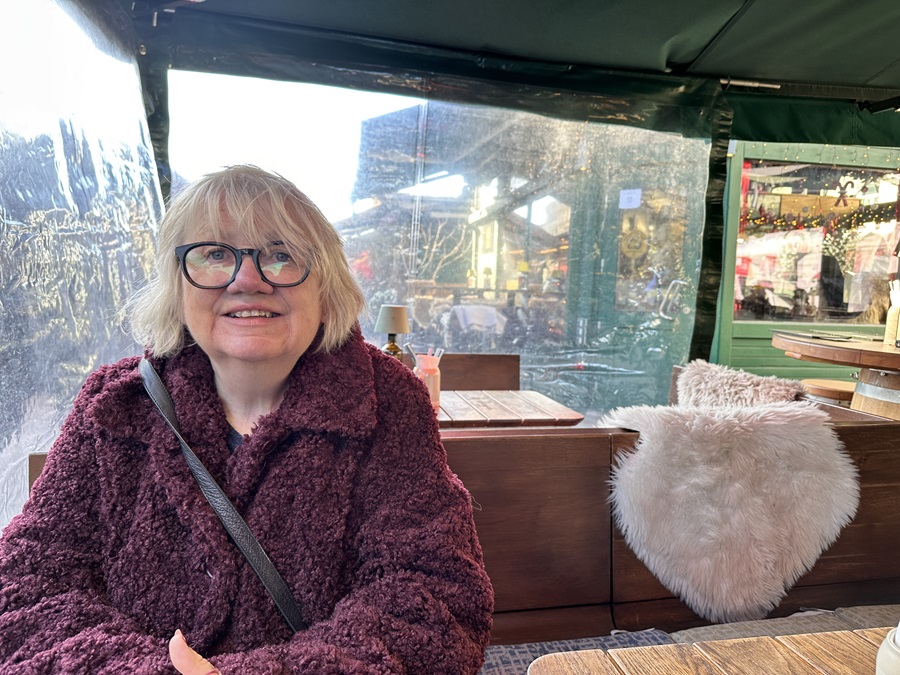
We quickly decided to have a warm drink at one of the bars called Erzherzogtum. Or at least I did. Julie opted for a cold glass of diet coke. I was glad I went for the hot chocolate. It was just perfect for a day like today.
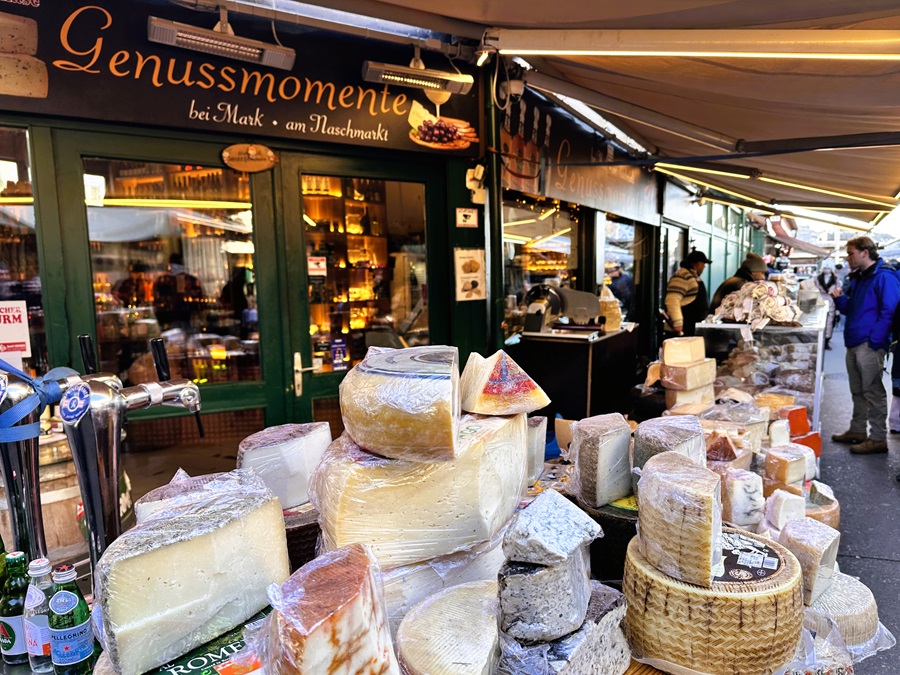
We continued to explore the Naschmarkt, reaching where it was split in half by a road cutting across it. Choosing not to continue any further we returned up the parallel street, Sopherlgasse. This side was less bars and more retail shops selling artisan foods from near and far, from Apline cheeses, handmade sausages, cured meats to speciality Middle Eastern ingredients.
Having returned to where we began we headed towards the city centre, pausing briefly to take a closer look at the Secession building. With hindsight we should have gone inside to visit its art gallery.
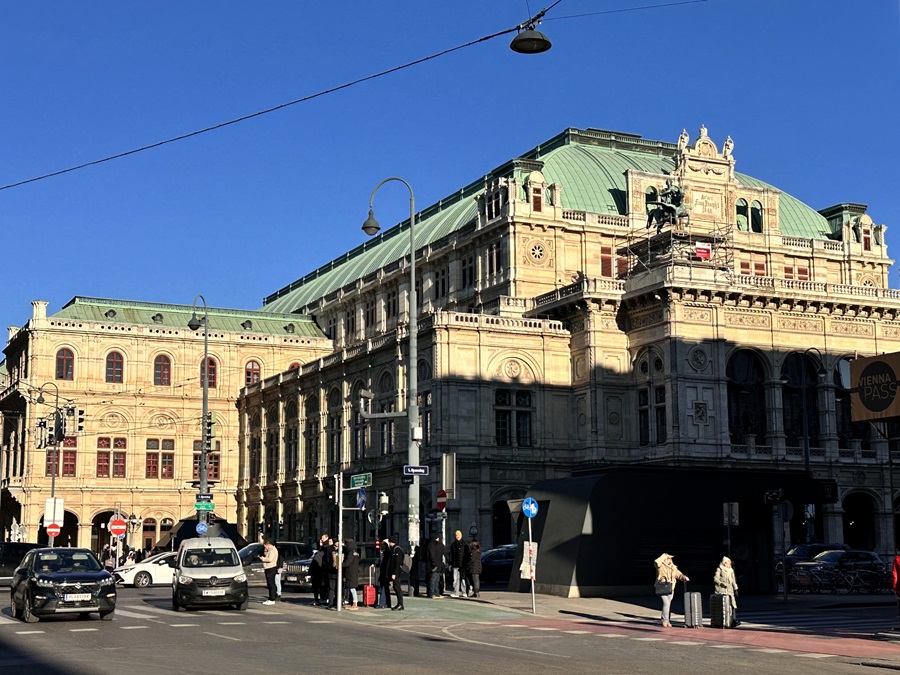
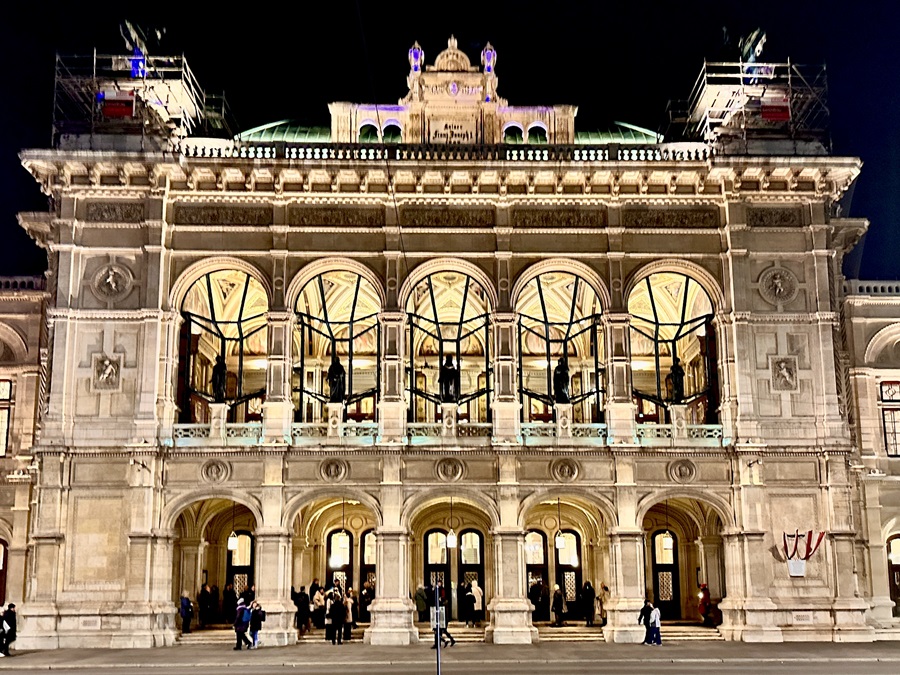
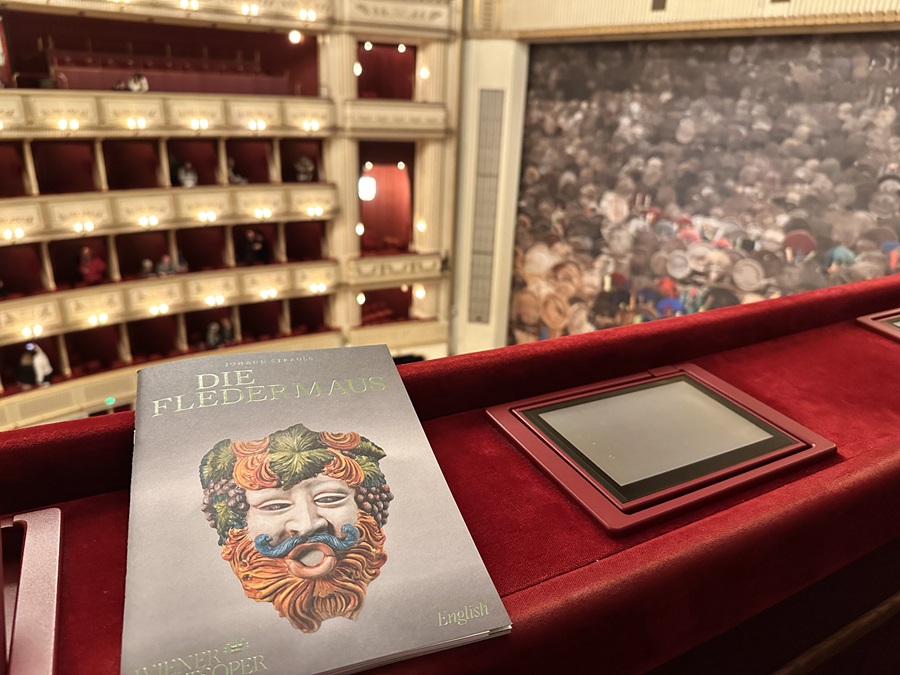
At the lights, we crossed the road towards the famous Wiener Staatsoper, the Vienna State Opera house. Its construction began in 1861, the first major project on the Ringstrasse during the city's expansion. It was a beautiful building. Although it did also remind me of a train station with its large long green roof. We were excited to see it because we had tickets for the opera tonight. It was the first thing I booked once we decided to visit. We couldn't come to Vienna and not go to the opera. I was also pleased that tonight's performance was going to be Die Fledermaus by Johann Strauss II.
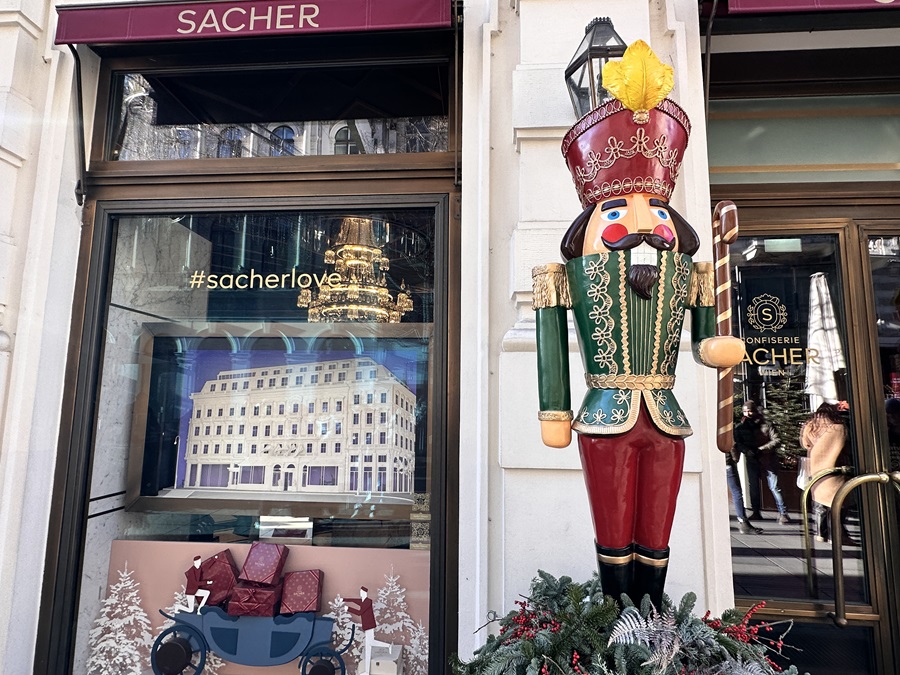
Another "must-do" in the city was to enjoy the hospitality of a classic Viennese coffee house. This wasn't based on some influencers top tips. In 2011 UNESCO listed the Viennese coffee house as an intangible world heritage. If you come to Vienna and do not visit a coffeehouse, then you will have missed out on the most quintessential Viennese experience. Cafe Sacher, in the luxury Hotel Sacher, was one of those genuine traditional cafes. It's even famous for creating its own cake, the Sachertorte, a chocolate cake with an apricot filling. However, the idea of ticking the "coffee house" box went out of the window when we saw the long queue waiting to get inside. We kept on walking.
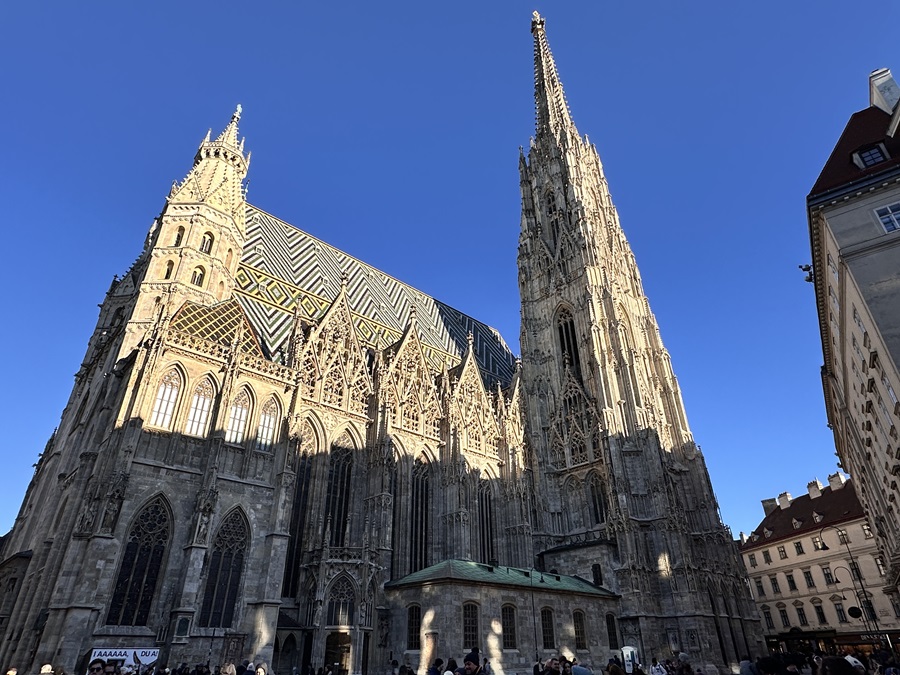
In no time we had reached Stephansdom, St. Stephen's Cathedral, Vienna's most venerated church. It was one of the few buildings we had seen not built during the late 18th century golden era. Most of what we see today, a beautiful gothic and renaissance cathedral, was built during the mid-14th century, replacing the original 12th century, which had burnt down, and then expanded over a previous 13th century incarnation.
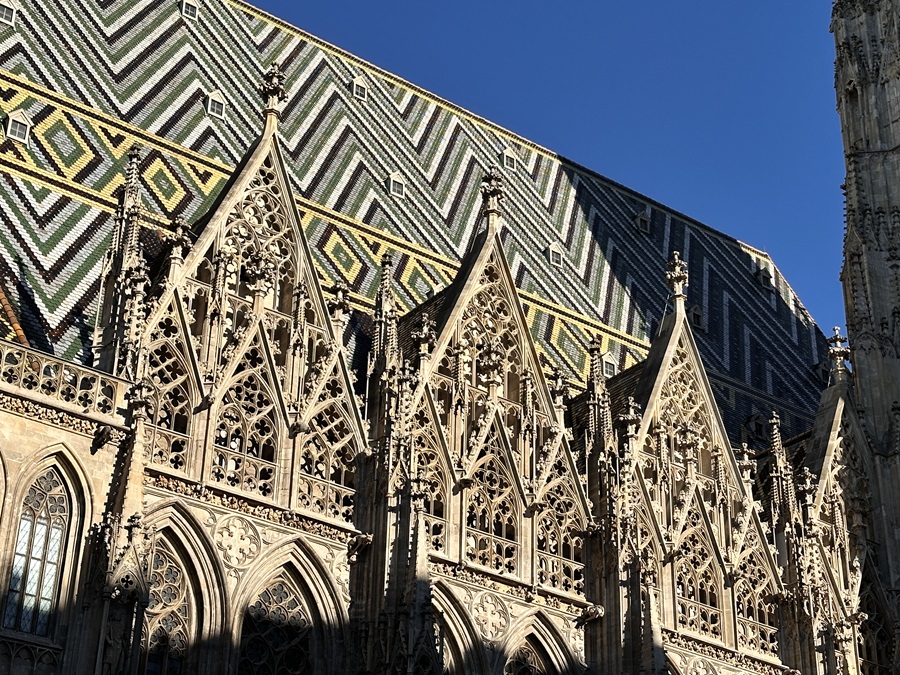
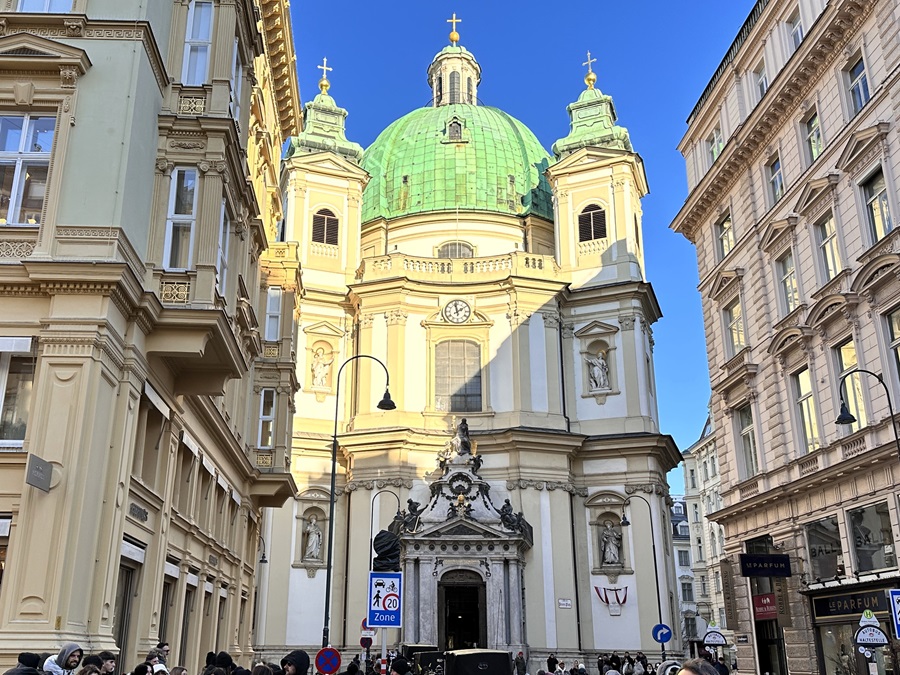
It's crowning glory was its roof. Geometric patterns of green, black, grey and white glazed tiles zig-zagged across the steeply pitched roof. A row where the white tiles were replaced by yellow cut along the middle. It was extremely pretty. We decided not to go inside. Instead we went in search of another church, Petrskirche. It was on our radar because we had a classical concert scheduled at St. Peter's Church, for tomorrow night.
It wasn't possible to see Peterskirche in its entirety. The baroque church was tightly surrounded by town houses, right in the middle of what's now the shopping district.
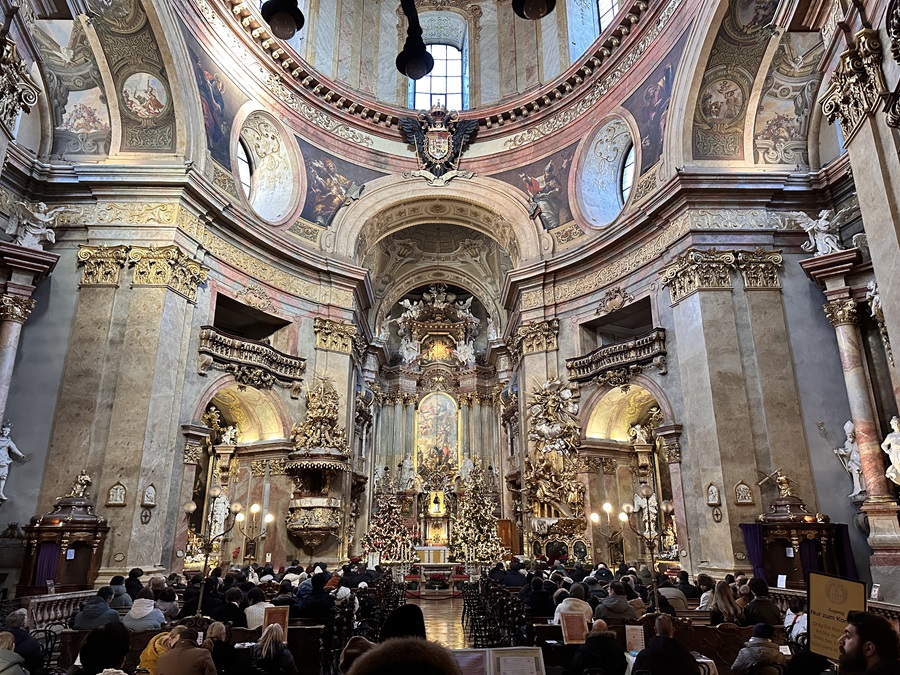
We did decide to pop inside the church, where we there was an organ recital taking place. Whoever was playing were murdering a classical organ piece. Most of the seats were already taken so we stood at the back to admire the beautiful frescoes and the stunning golden altar, and laugh at the bum notes.
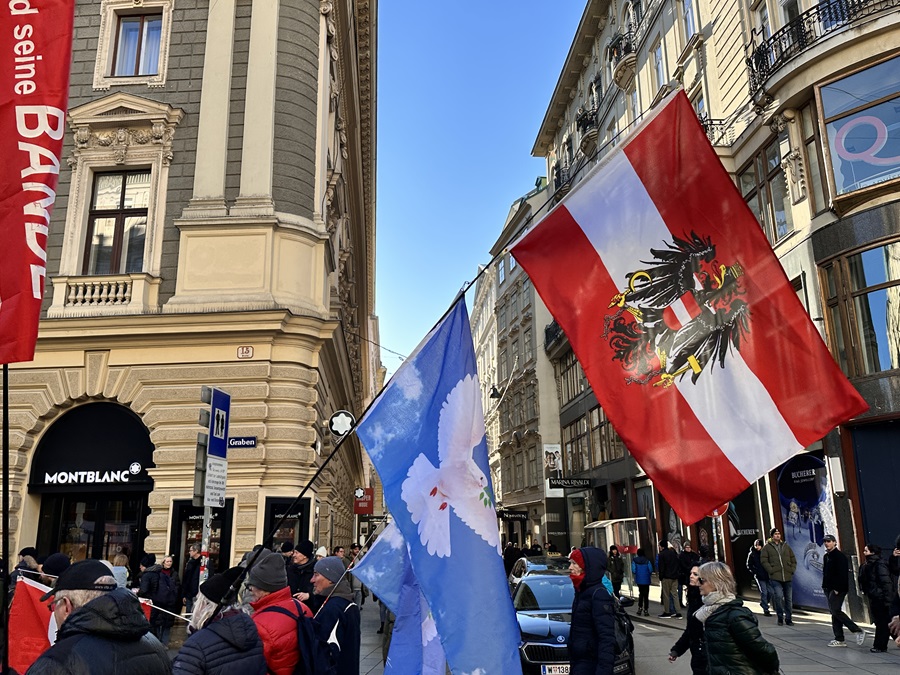
Back out on the streets our progress was halted briefly as we waited for a protest to march through Graben, a long rectangular square, (if you know what I mean). They carried a banner with the slogan "Yes - Neutrality and Freedom. No - NATO" . Ever since 1955 when Austria re-emerged from the Second World War it declared a position of neutrality, and despite being a part of the European Union it has never sought to become a member of the military alliance NATO. With the current situation in the Ukraine and the war raging with Russia the question of Austria's neutrality has been debated. It was all peaceful and good natured.
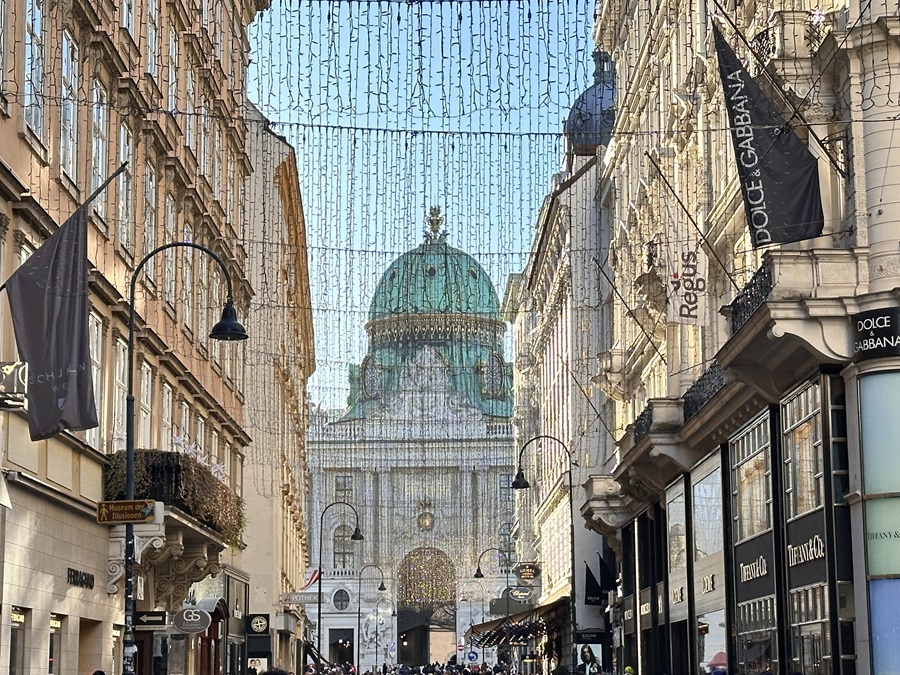
Once they had passed we continued from Graben, down Kohlmarkt, drawn towards the green domed Michaelertrakt, part of the Hofburg palace complex. Kohlmarkt was a pleasant pedestrianised shopping street. Towards the end of it we came to another highly rated coffee house, called Demel. Ufortunately another long queue put us off attempting to stop for a cake and coffee.
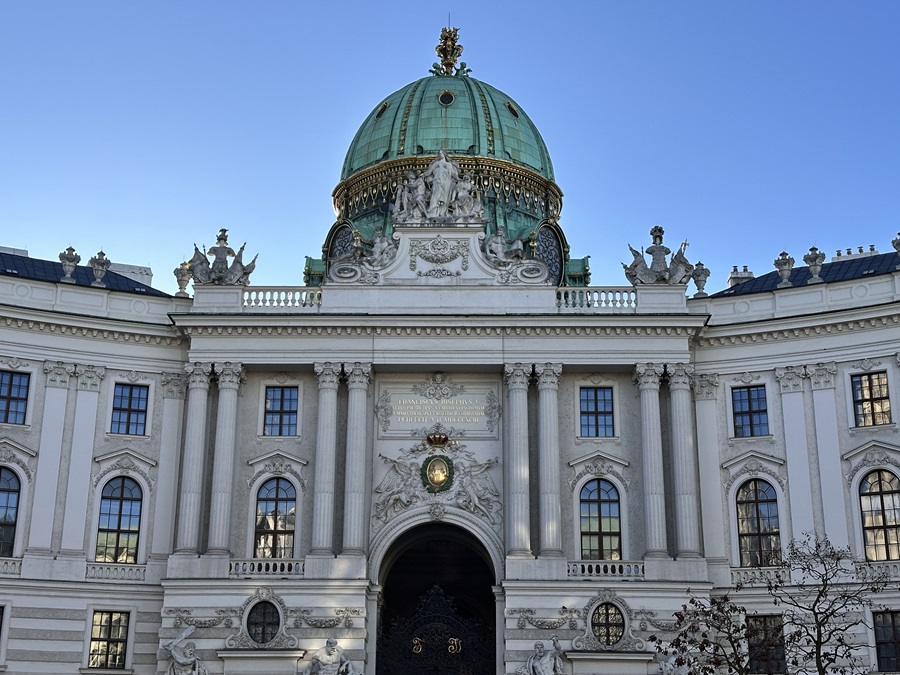
Crossing the square in front of the Michaelertrakt we stopped to marvel at its beauty, especially the gold trim around the dome. Unsure of which way to go from here we followed the flow of people through its large arch entrance.
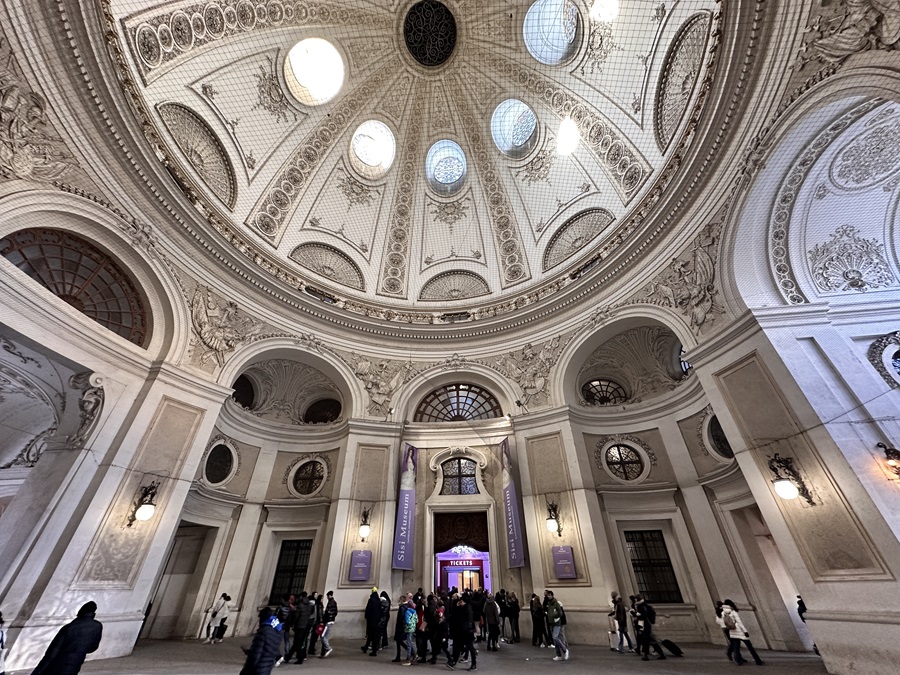
We didn't know what to excpect but nothing prepared us for the beauty we found inside. It was only a passageway but it was the most palatial. It was as incredible as any church. The dome was simply magnificent.
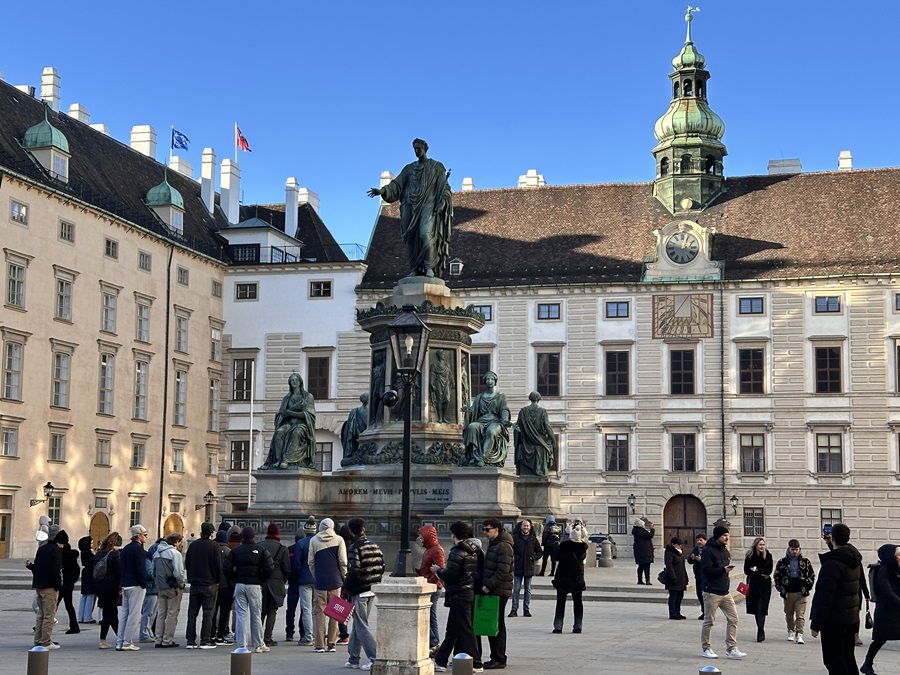
Beyond the Michaelertrakt we entered an inner courtyard, framed by several wings of the Horburg palace, specifically the Swiss wing, the Leopoldine wing, the Imperial Chancellery wing and the Amalienburg. In the heart of the square there was an imposing statue of Emperor Franz I of Austria. He was also the Emperor of the Holy Roman Empire, a confusing term that originated in the 9th & 10th centuries, when Pope Leo III revived the title of Roman Emperor, then later when Pope John XII crowned Otto the Great of Saxony as the Roman Emperor.
For centuries the Holy Roman Empire became concentrated in Central Europe, closely associated with Germany but also covering Austria, Switzerland, even parts of Italy. It all fell apart during the Napoleonic Wars in 1806 under the rule of Emperor Franz I of Austria.
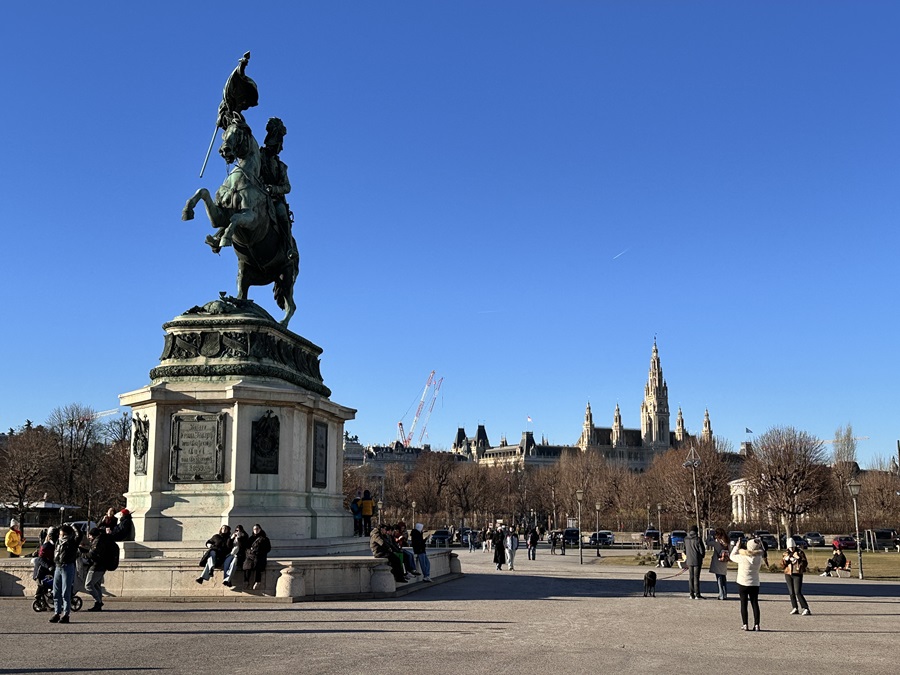
We left the Hofburg inner courtyard, to Heldenplatz and an even more imposing statue. It was the Archduke Karl Ludwig, brother of Emperor Franz I, son of Emperor Leopold II, and father of Franz Ferdinand, the Archduke whose assasination in Sarajevo in 1914 triggered the First World War! Anyway, it was celebrating Karl Ludwig for his own acheivement, showing him riding triumphantly, carrying the flag of the Austrian Empire, leading the army at the Battle of Aspern-Essling in 1809 when Napolean suffered his first military defeat in open battle. We could see the Rathaus in the distance and decided to head back towards the hotel.
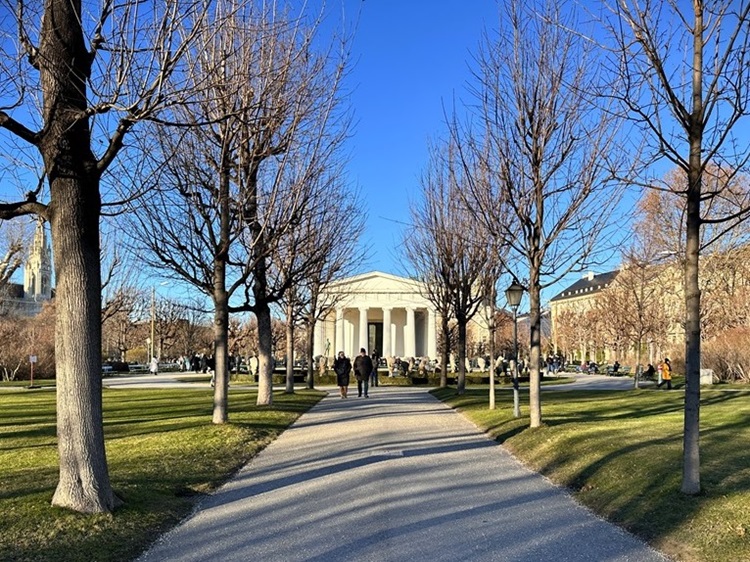
The shortest route took us through the Volksgarten, to a replica of a Greek temple in the centre. The Theseus Temple was based on the Temple of Hephaestus in the Agora of Athens. It was built in 1829 specifically to house a statue of Theseus slaying the Centaur by Italian sculptor Antonio Canova . The marble sculpture is now in the Kunsthistoriches Museum but the temple is still used as an exhibition hall.
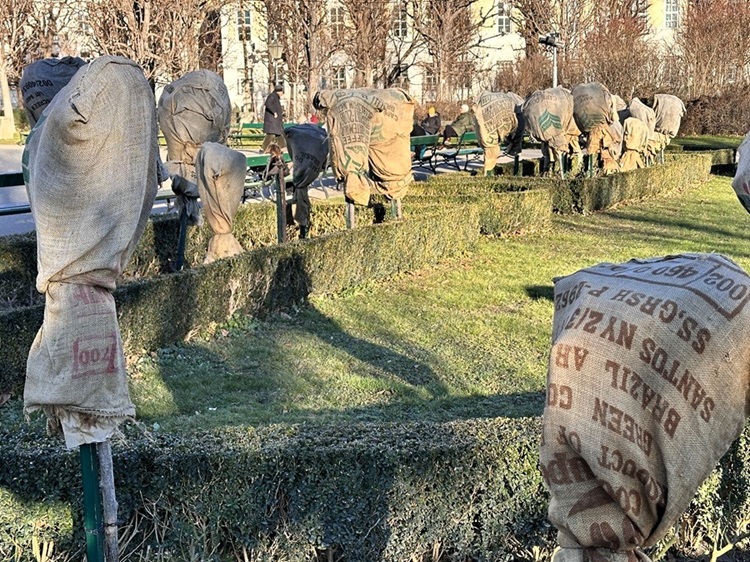
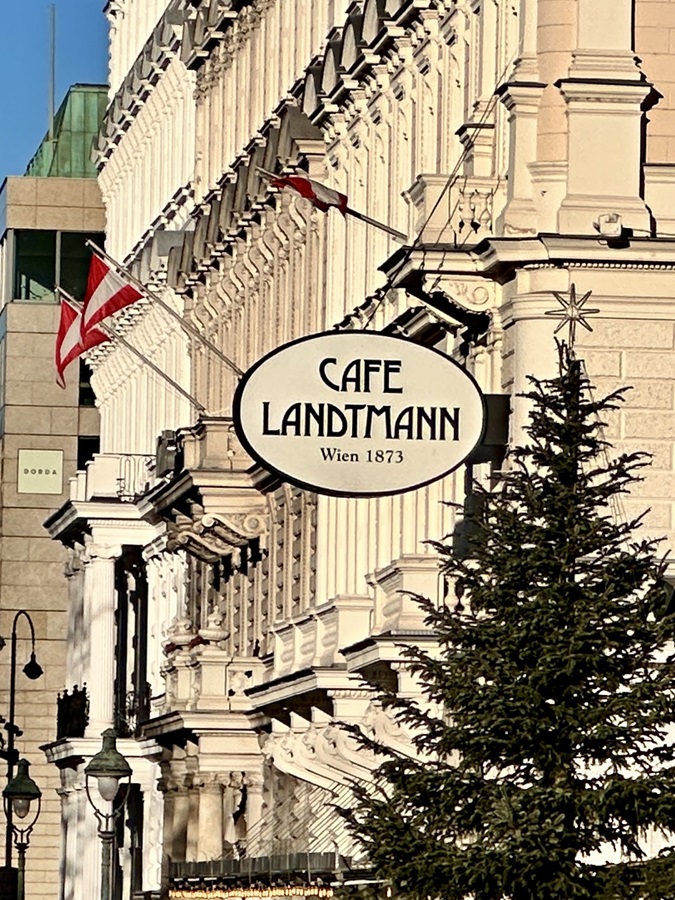
Walking around the temple we thought we were experiencing an art installation. We wondered what meaning there was to the jute bags wrapped around what appeared to be heads. We even named it the "Silencing of the Scarecrows". But it was just the gardeners overwintering the roses. We reached the boundary of Volksgarten and were about to cross the Ringstrasse to the Rathauspark when we noticed a sign for Cafe Landtmann, another highly rated tradional coffee house. As we were more-or-less passing we decided to see if there was a queue to get in. When we arrived we were pleasantly surprised that whilst there still was a queue, it wasn't too large. So we joined the back and within five minutes we were shown inside.
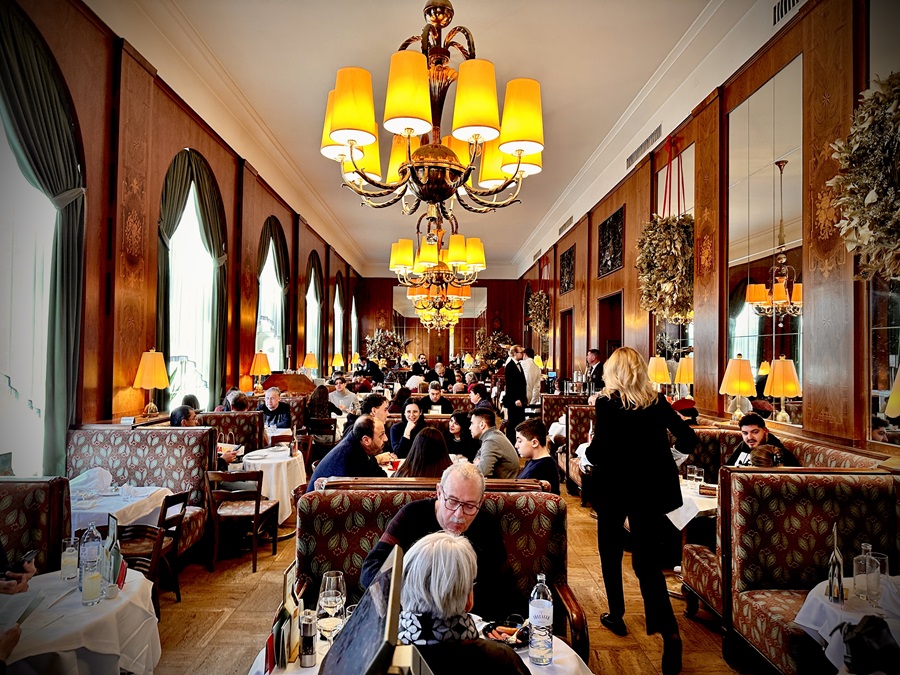
They had a modern glass conservatory but we were so glad to be shown to a table in their elegant main room. It felt perfectly golden era. We felt almost privileged. Cafe Landtman was established in 1873 and became one of Vienna's finest examples of its coffee house culture. It was apparently Sigmund Freud's preferred coffee house and its clientele list was filled with illustrious composers, writers and poets. The staff were a perfect blend of formal, as you would expect from somewhere so traditional, yet incredibly welcoming enough to make us feel at ease occupying a table and ordering just a cake and a coffee.
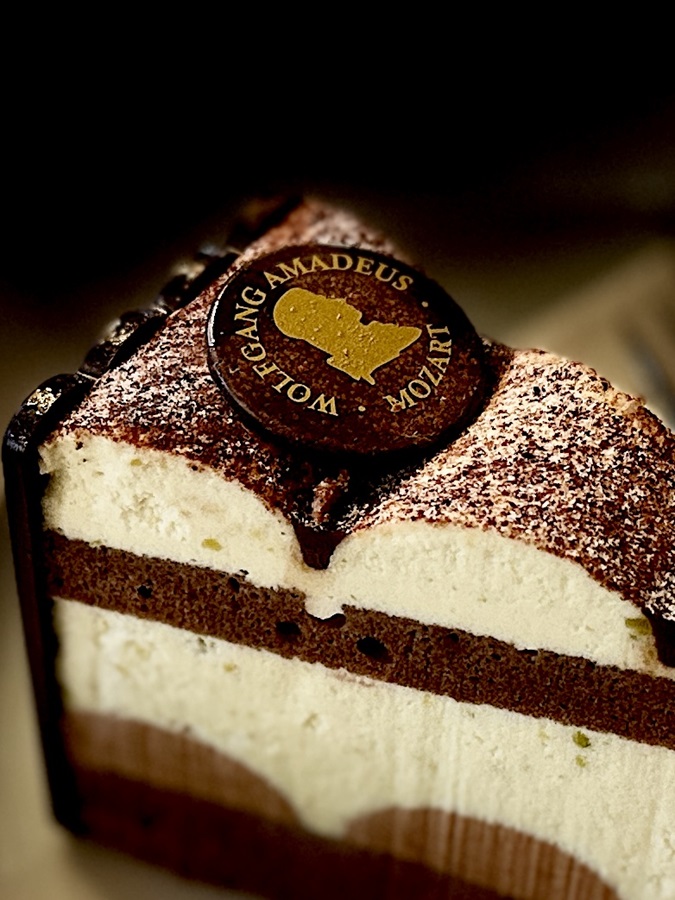
Although this was no ordinary cake and coffee. I decided to try the Mozarttorte, a layered cake, with a chocolate sponge, bitter chocolate mousse and then pistachio whipped cream, then another layer of sponge, and finally more cream. It was a work of art, almost too pretty to eat! To drink, I shyed away from coffee to try their Vienna Hot Chocolate. I'm not sure why a shot of rum made it especially Viennese? It was nice enough, although to be honest I probably would have preferred it without the alcohol kick.
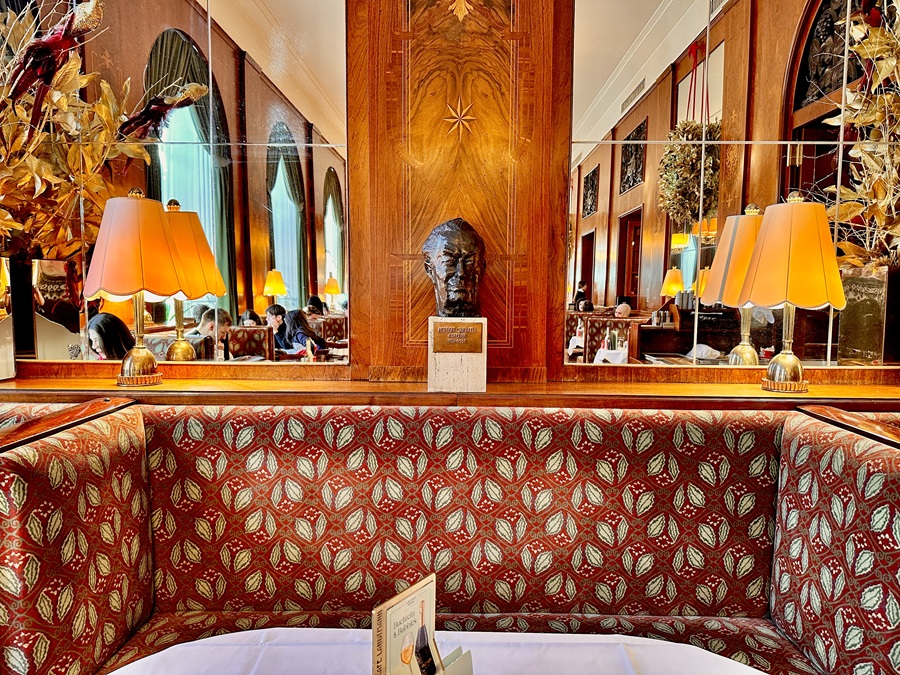
We felt so relaxed. The staff weren't in any rush to move us on. Julie got her cross-stich out. It felt like we could have stayed all afternoon, which is exactly as it should be. I even walked around taking photos. At the end of the room there was a bust of Herbert Querfeld, looking over his cafe he bought in the 70's, and the family still run to this day. This filled me with such admiration. They were custodians of a world heritage and they were doing it well. This was far superior to any visit to a Starbucks! After spending a most enjoyable hour in the bell epoque splendour of Cafe Landtmann we paid our bill and returned to the hotel. It was about 4pm when we got back. It didn't leave us long for a siesta. We had an early pre-theatre table booked for 5pm. So it was a frantic shower and costume change, then back out again for the evening. We popped on the underground to Karlplatz then walked from the opera house, in the direction of our restaurant.
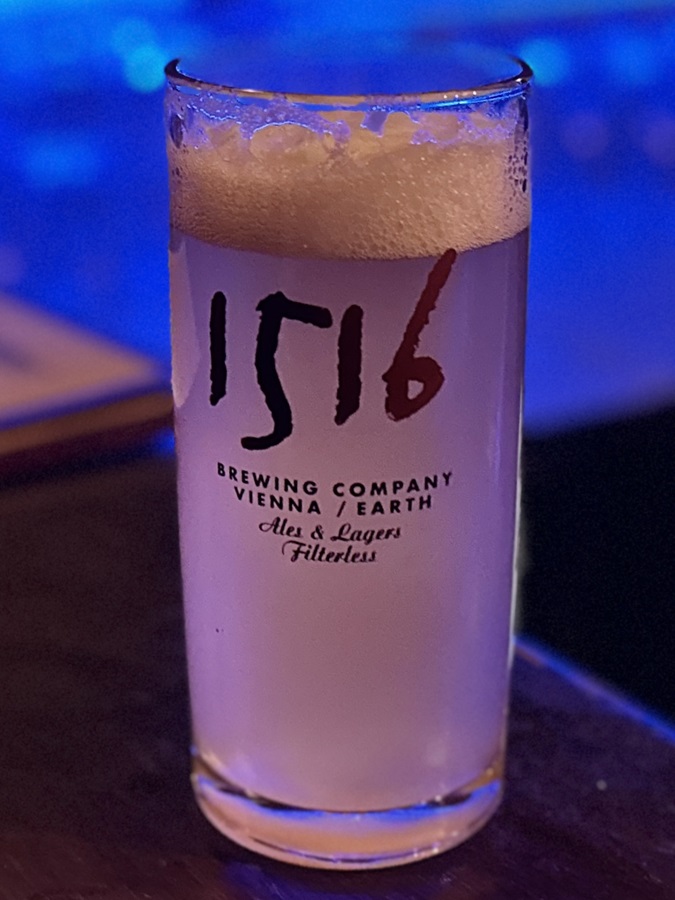
We made such good time that we were too early for our table, so we stopped at a microbrewery bar called 1516. It was incredibly busy. There were no free tables so we were ushered upstairs where two stools at the bar was our only option. It had a rowdy atmosphere, a little too noisy for conversation. It was fine if you didn't mind shouting!
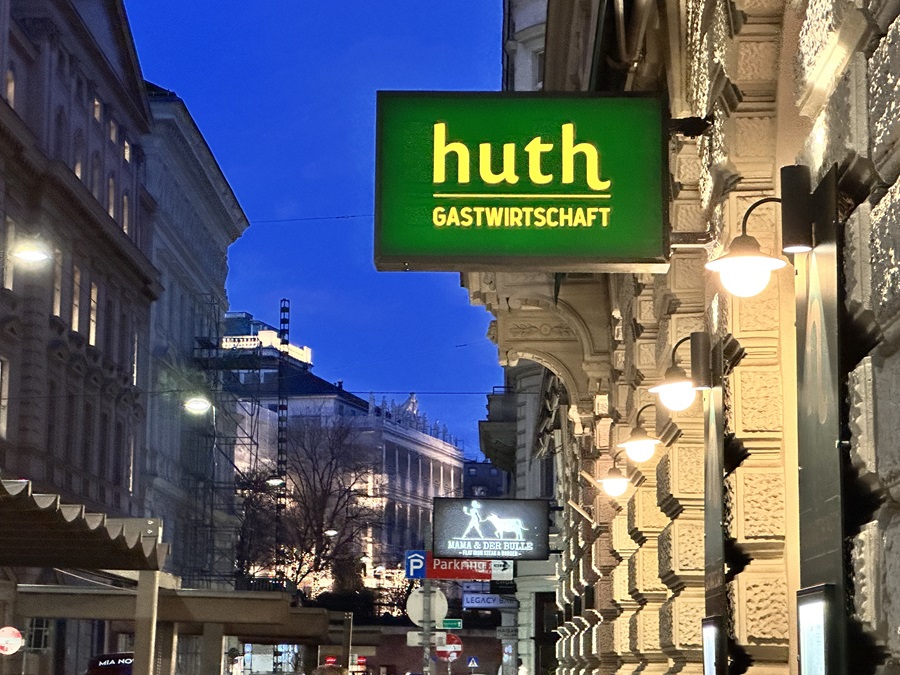
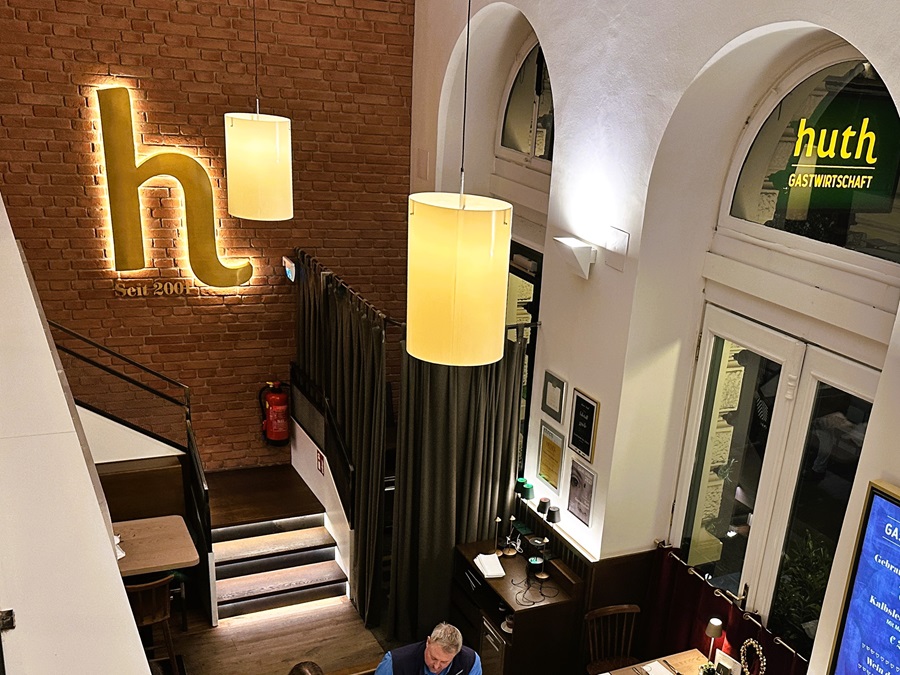
Restaurant Huth Gastwirtschaft wasn't far away, so we decided to turn up early rather than have a second round in 1516. In contrast the atmosphere at the restaurant was far more sedate. The ideal setting to relax and enjoy an evening meal.
Once again we were ushered upstairs, to their mezzanine level overlooking the diners below. We actually picked this restaurant after reading its menu on line where it described a dish, called Gekochter Tafelspitz, as Emperor Franz Joseph's favourite. Apparently he like this boiled beef (or rindfleisch) with a glass of Spaten beer every day at 11am. On the menu they also had a vegetarian "version" of the the dish which intrigued me.
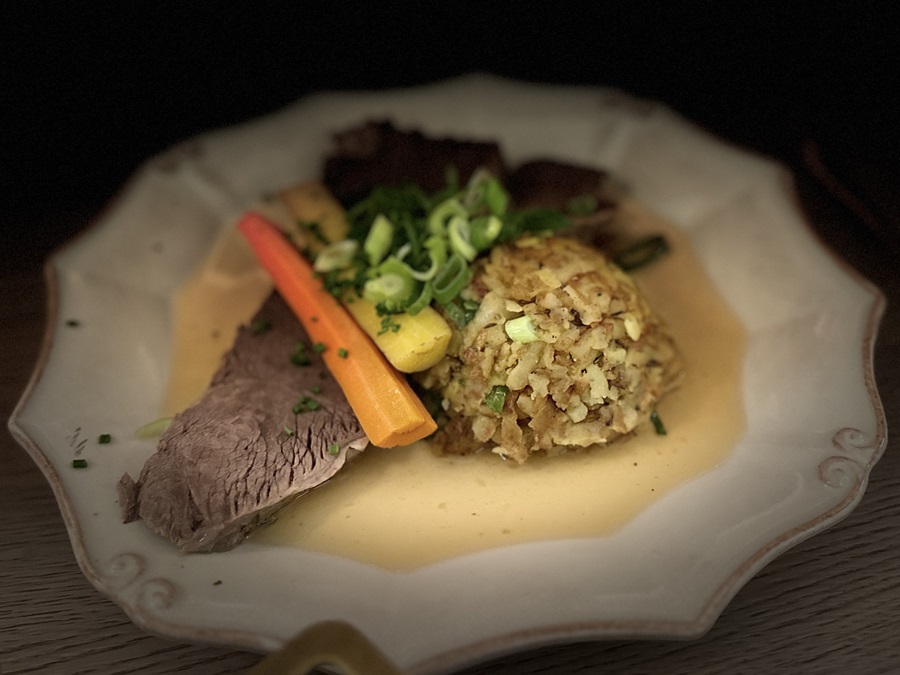
The Gekochter Tafelspitz arrived. The beef was really tender and tasty having been boiled in a broth. It was served with Apfelkren & Schittlauchsauce, an apple, horseradish and chive sauce which Julie thought was delicious. There was also a potato "hash-brown" bonbon and carrots.
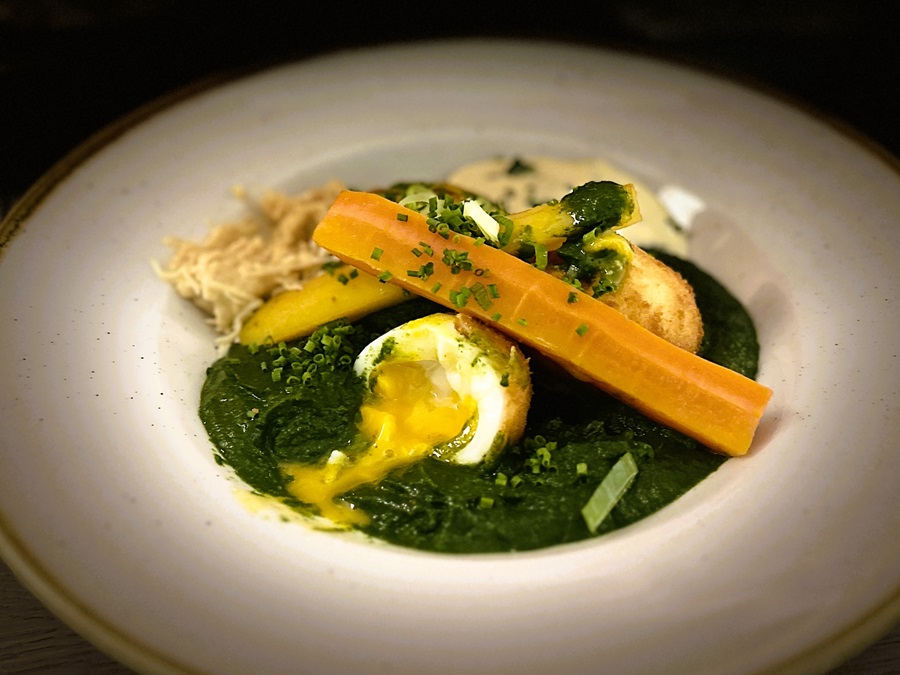
My Rind Ohne Fleisch which literally meant beef without meat, was mush nicer that I had anticipated. I was worried it was just going to be piece of seitan meat-substitute but it was an entirely different dish. I had two boiled eggs coated in a golden breadcrumb, on a bed of creamed spinach, served with carrots and the apple, horseradish and chive sauce. The creamed spinach was intensely green and so comforting to eat. Then, when I cut open the egg the yolk oozed out. That must have taken some delicate hands to create. It was a lovely crafted dish and good value for money for the €17.90 price tag. I also ordered a side dish if semmelkren, a bread sauce with horseradish which tasted amazing, with a good kick of horseradish. "I'll be trying this at home" I told Julie. We left the restaurant and made our way to the opera house.
The doors to the Wiener Staasoper opened at 6pm and we made it there just in time. There was a small group of people, like us, eager to get in. Before they swung open I hurried across the road to take a photograph of the beautiful Oper house. It was a fabulous sight illuminated in the dark. I made it back in time to rejoin Julie and be one of the first to step inside.
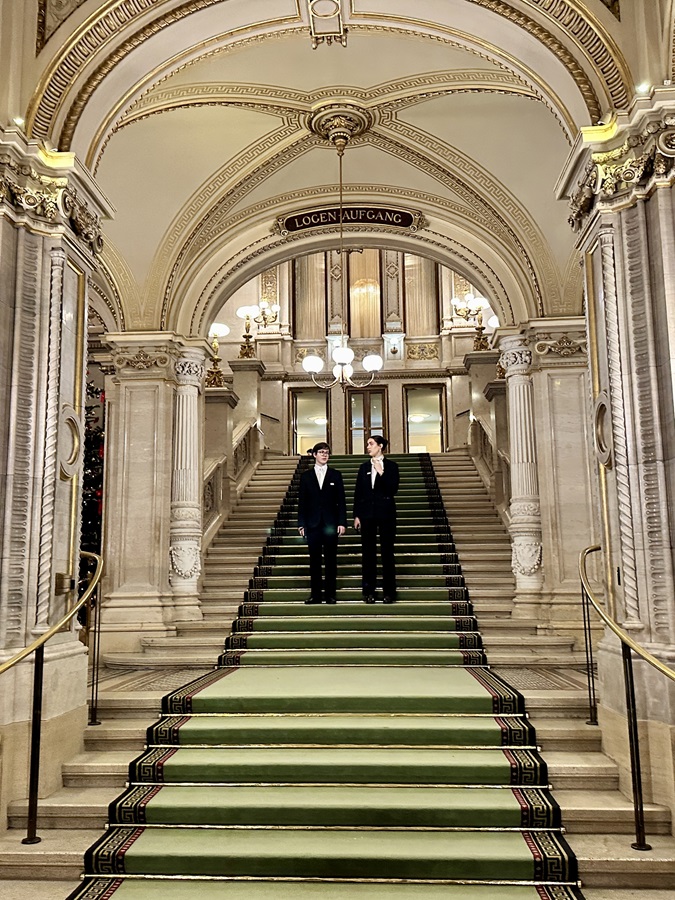
We were greeted by ushers who helped to show us the way. With tickets for the circle we didn't climb the pistachio green carpet of the grand marble staircase but instead headed up the stairs to the side.
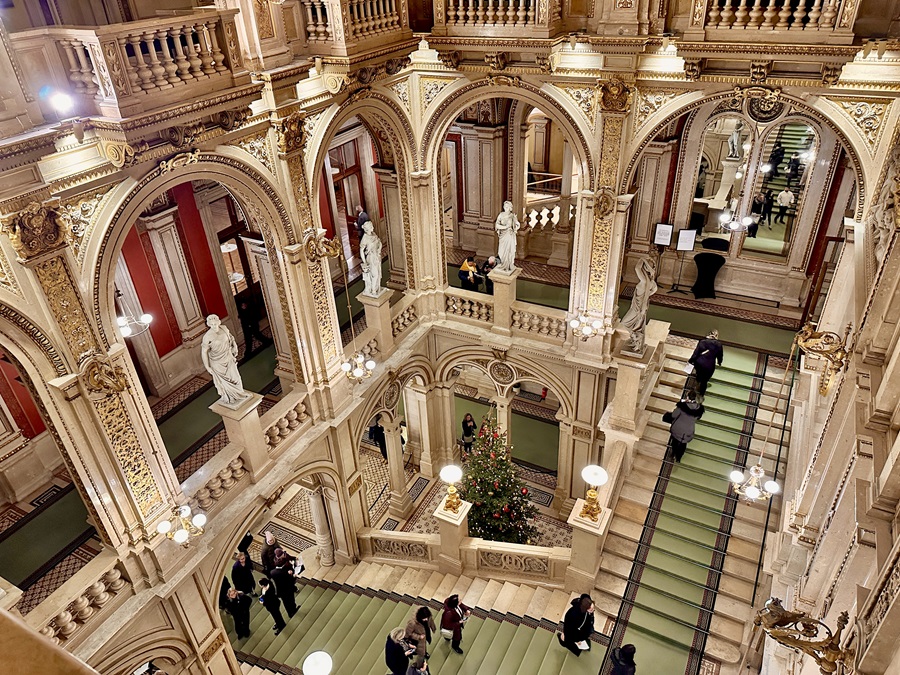
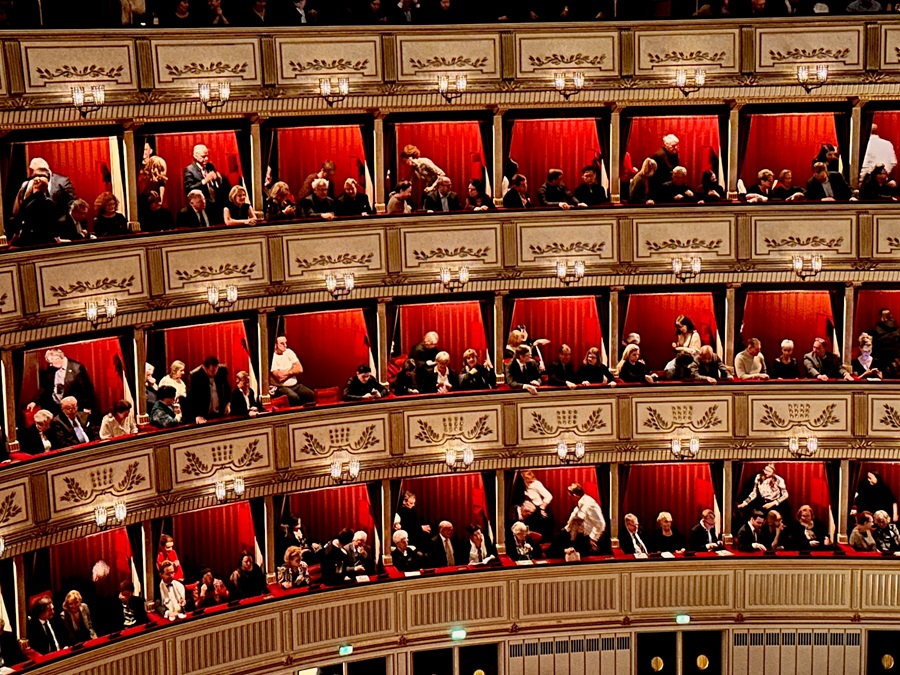
On the second floor we came out from the side to reach the balcony overlooking the breathtaking staircase and the loggia on the first floor. Marble statues stood in the centre of each spectacular arch. There were many elegantly dressed people making the effort to wear their finest clothes. We were smartly dressed but we felt a little underdressed, although there wasn't a dress code as such. They only mention that you would be refused entry if you were inappropriately dressed, such as wearing flip-flops or very short shorts!
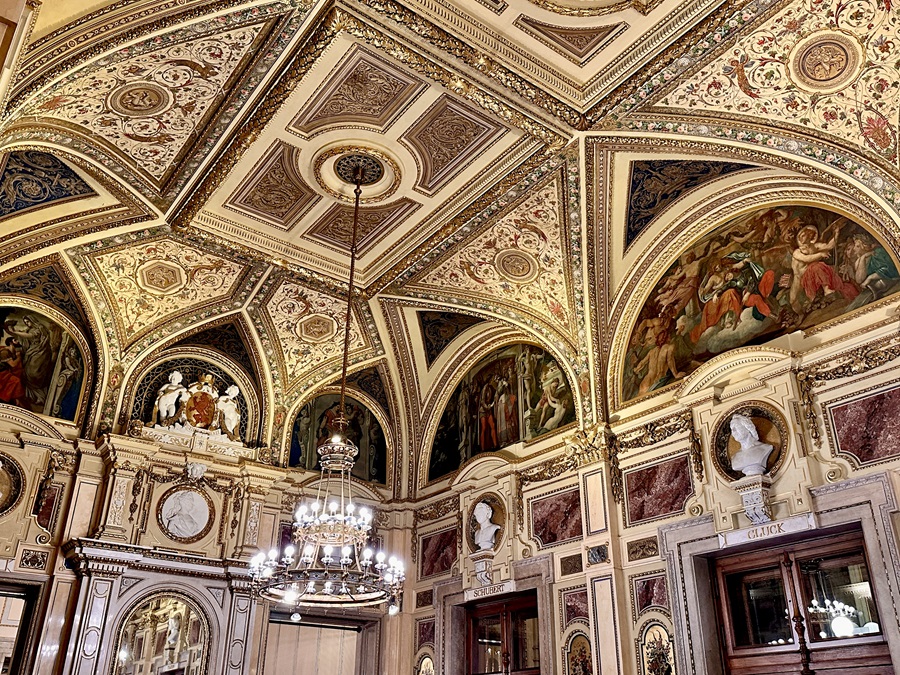
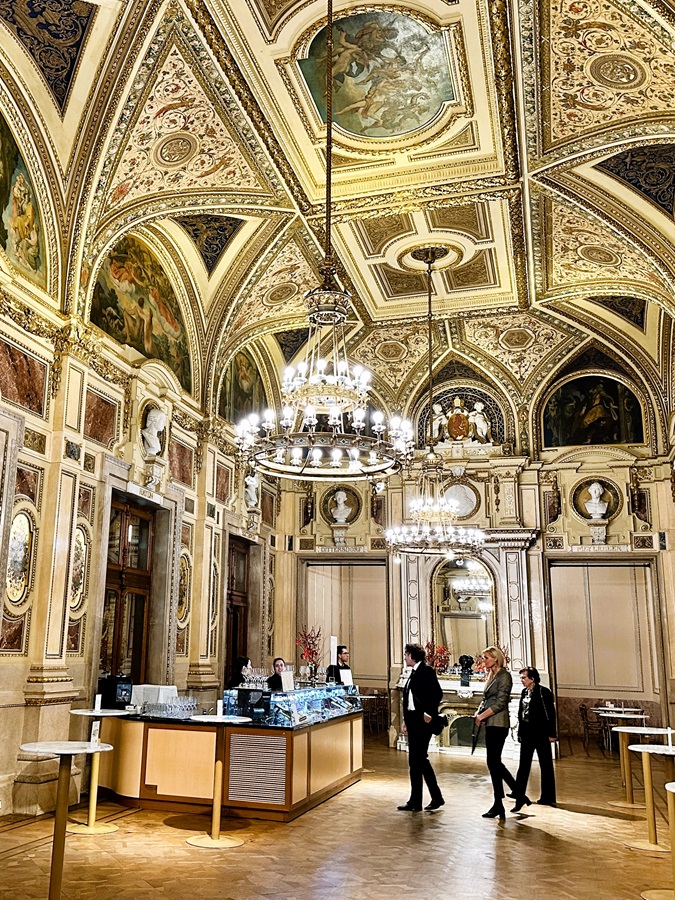
Before taking to our seats we explored a little and found a large interval hall. It was richy decorated with frescoes, busts, plasterwork, chandeliers. We queued at the bar for a glass of really nice wine each. Julie asked the lady serving about the interval, like "How long is it?" and "Is that enough time to queue again?" Tweny five minutes should be plenty of time but she suggested the option of reserving a table, where our drinks and any food could be waiting for us. We liked the sound of that and ordered nibbles and wine for the second intermission.
After dropping off our coats in the cloakroom we took to our seats. The view of the stage was a little restricted because we were not facing straight on and had to sit at a sharp angle to see everything. As we drew closer to 7pm the atmosphere built into an excited buzz as everyone took to their seats.
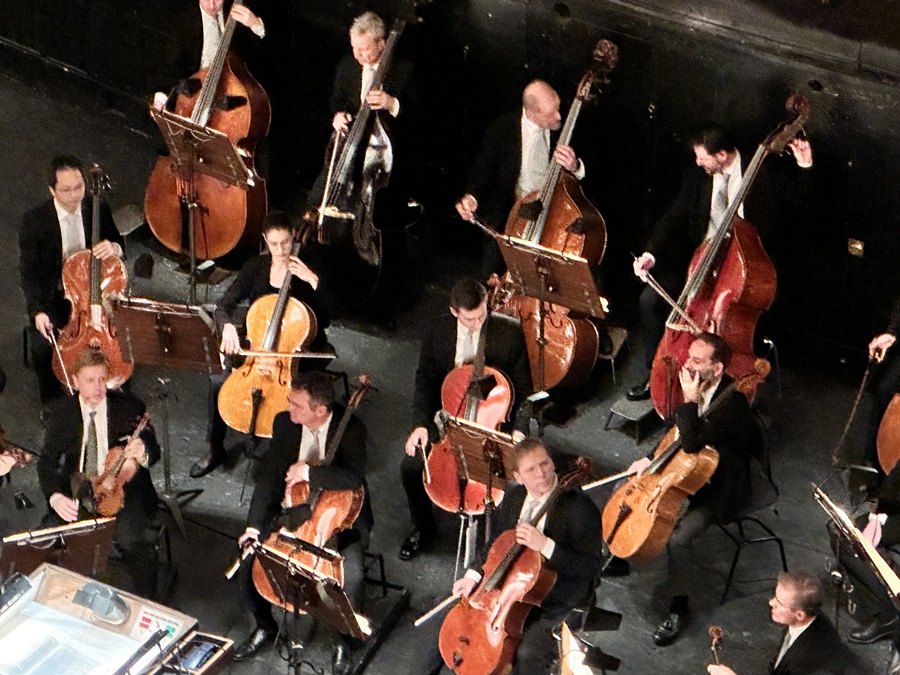
The orchestra arrived in the pit below the stage and prepared themselves. The lights went out, the curtains raised and the performance began. The first act is set in a lavish town house, the home of Gabriel von Eisenstein. With the songs sung in German we didn't really follow the story however we did get the jist of it. The maid, Adele, receives a letter inviting her to a ball. Unknown to her the letter was a fake, written by Falke, a friend of Eisenstein, as part of an elaborate revenge plot. However Adele, believing it to be true, asks Rosalinda, Eisentine's wife, for the evening off, concocting a story about a sick aunt as the reason. Falke, the friend, then arrives to invite his friend Eisenstein to the same ball. They both leave, telling Rosalinde he was going to hand himself in and serve an eight prison sentence he had been given for insulting an official but secretly planning on going to the ball. After they leave, another gentleman arrives, called Alfred, a former lover of Rosalinde. He couldn't have timed his visit any worse as it coincided with the prison governor, called Frank, arriving to arrest Eisenstein. Not wanting Rosalinde to be caught up in a scandal he went along with a case of mistaken identity and was carried off to prison. The plot thickens, setting the scene nicely for the second act. The curtains fell, the lights came on, and we made our way down to the bar.
We hadn't secured a table for the first interval, so we queued at the bar with everyone else. It didn't take us long to be served. It surprisingly wasn't that busy. The glass of Grüner Veltliner was excellent. We were back in our seats in plenty of time before the start of the second act. The scene had changed. We were now at the villa of Prince Orlofsky. The set was amazing. They had recreated a palatial reception room and through large glass doors we could see a large ballroom and dining hall. The whole set was enormous and it even transitioned from one scene to the next seemlessly with a rotating stage floor. An impressive technical feat. All the main characters were there, but beause it was a masquerade ball their true identities remained hidden behind their elaborate masks. Eisenstein posed as a Frenchman, Marquis Renard. He was introduce Chevalier Chagrin, who was actually Frank, the prison governor. Neither could speak French but both blurted out cliche French phrases. Adele pretended to be an actress and Rosalinde came up with a Hungarian countess as her backstory. The champagne was flowing and liasons were made. Frank made advances towards Adele, and ironically Eienstein seemed infatuated by his wife Rosalinde. All the while their identities were kept secret. It increasingly becomes a raucous party. The act comes to an end at six in the morning, as Frank and Eisenstein leave.
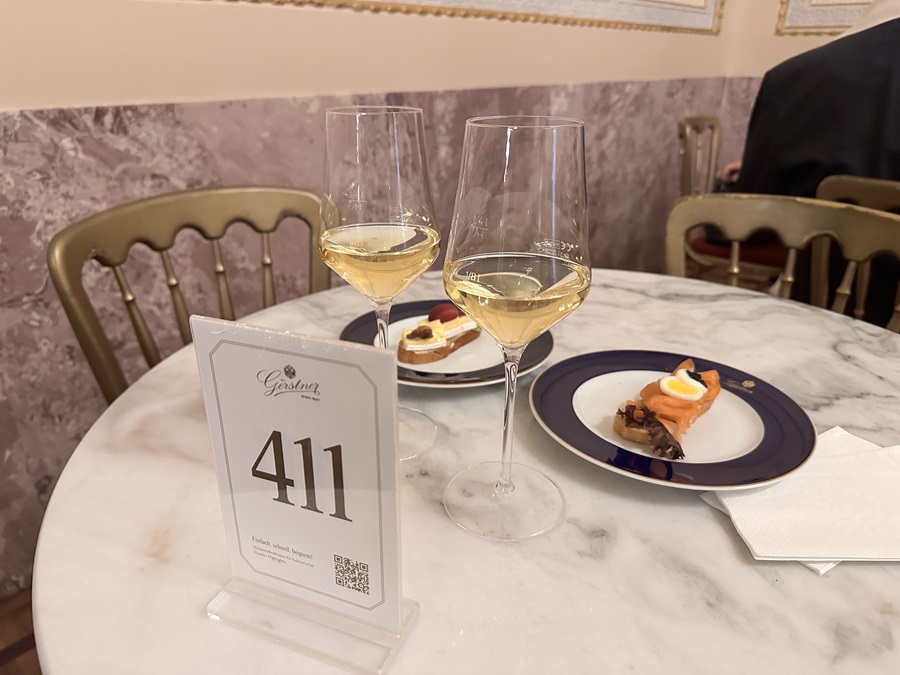
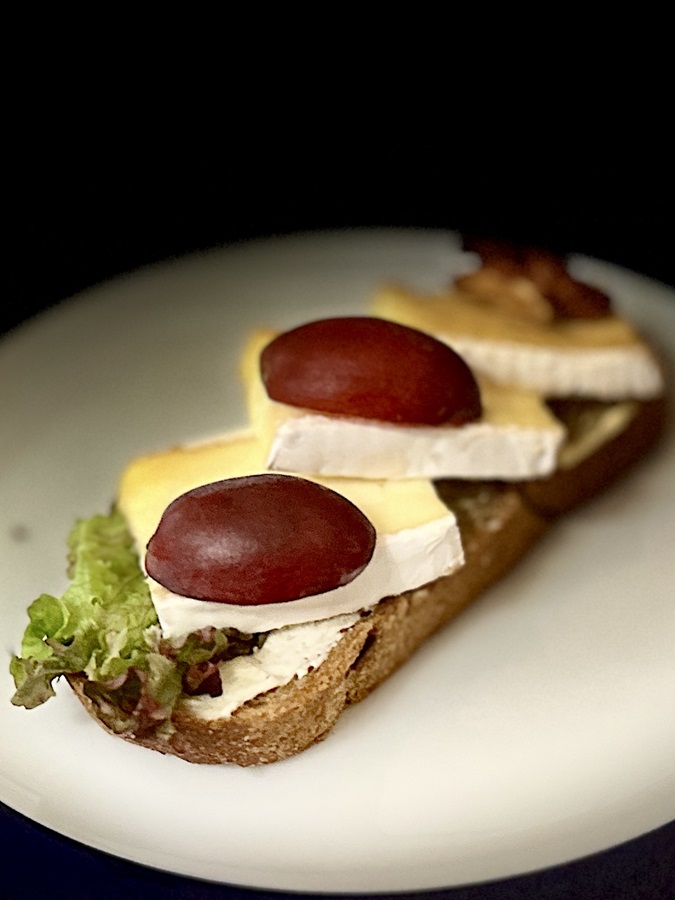
Waiting for us on table 411 were our nibbles and wine. It felt such a privilege to arrive and immediately sit down to our glass of Autrian wine, smoke salmon on rye bread for Julie and a brie on rye for myself.
I had a grape, halved and a kernel of walnut on top of my brie whereas Julie had a blob of caviar and a slice of boiled egg. She had to flick the egg off before she could eat it. Even then she was worried her salmon had been contaminated. Back in our seats before the second act we got chatting to the woman sat next to us. She was from Munich and was here with her daughter specifically for the opera. The two cities were seperated only by a two hour train ride. She asked us if we understood German and drew our attention to a small screen in front of us where we could follow the script translated into English. She joked that even some Germans found it difficult to understand the Viennese dialect! The lights dimmed, the curtain raised and the third and final act. The scene had now changed to the prison. It felt completely disconnected from the rest of the story. It just felt like the crescendo at the end of act two was a worthy ending.But the story wasn't finished. For some reason all the main characters come to the prison. All the masks come off. We made use of the translation. This act was heavy on dialogue and light on singing. It felt like it descended a little into pantomime as it often slipped into improvised unscripted banter. We discover the reason for Falke's need for revenge. A few years before the pair had gone to a fancy dress party where Eisenstein abandoned his friend in a very drunk state and dressed as a bat, (hence the name Die Fledermaus), in the centre of town. Falke didn't wake until the morning where he became a laughing stock. Alfred gets released from prison. Adele discovers Chevalier, the focus of her flirtation was in fact Frank and not the catch she was hoping for. Rosalinde confronts her husband for wanting to be unfaithful, even if it was with her. He begs for forgiveness blaming the champagne. It all finished on a happy ending.
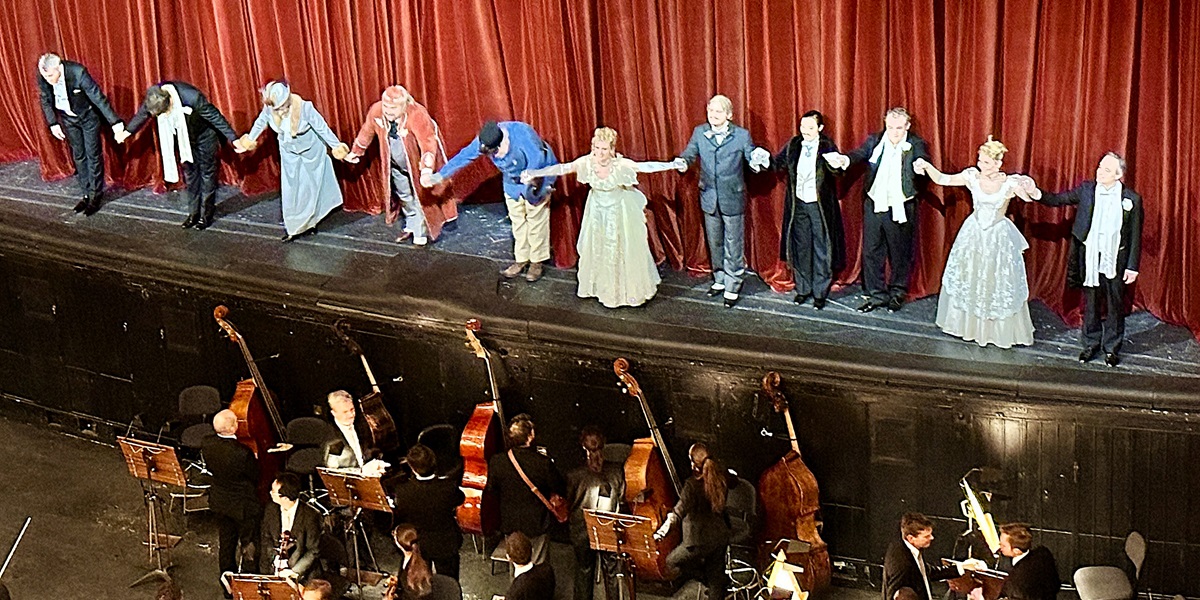
The curtain drops, the lights come on and the main characters come to centre stage to take a bow, and then they all return individually to milk the applause. It had been a very enjoyable if some what long experience. Including the two intervals the performance lasted three and three quarter hours! By the time we collected our coats and left the opera house it was 11pm. We were too tired for any late night revelry and headed straight back to our hotel. The bar was still open, "But not for cocktails" said the barman. So we had a quick nightcap before heading off to bed. Next Day >>> |
|
©Copyright 2000 - 2026 Colin Owen |