A Classic Case of the Habsburgs
Sunday 4th
January 2026
|
|
Oh, Vienna
A Classic Case of the Habsburgs |
|
|
|
After another wonderful night's sleep we woke refreshed and ready for today's full itinerary. It began with a video call from our grandaughter Freya excited that it had snowed heavily overnight in Bethesda. She was surprised that we were in Austria and we hadn't seen any snow yet.
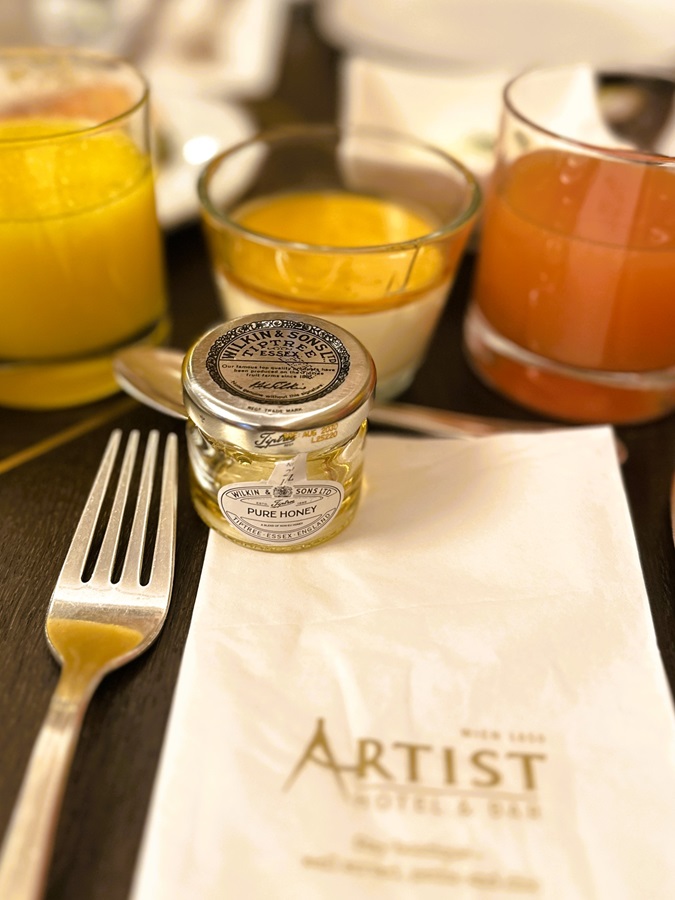
Breakfast this morning was again a real joy. We slowly grazed our way through the various choices. Despite being really busy all the items were still available. The waiter came around to take our order from the menu. I tried something different from the egg menu, ordering a cheese omelette. It turned out to be quite plain but I really liked it. Learning from her mistake yesterday, Julie avoided the veal sausages, choosing some bacon instead, which she fashioned into a classic butty.
At 10:30am we headed out on foot, past the city hall and the parliament, and through the Volksgarten. A statue, simply called "Youth Athlete", stood tall in front of the white neoclassical Theseus temple. All I could think was surely that's grammatically incorrect. It should either be "Young Athlete" or "Athletic Youth". The temple was in pristine condition having been renovated in 2010 and clearly well maintained since.
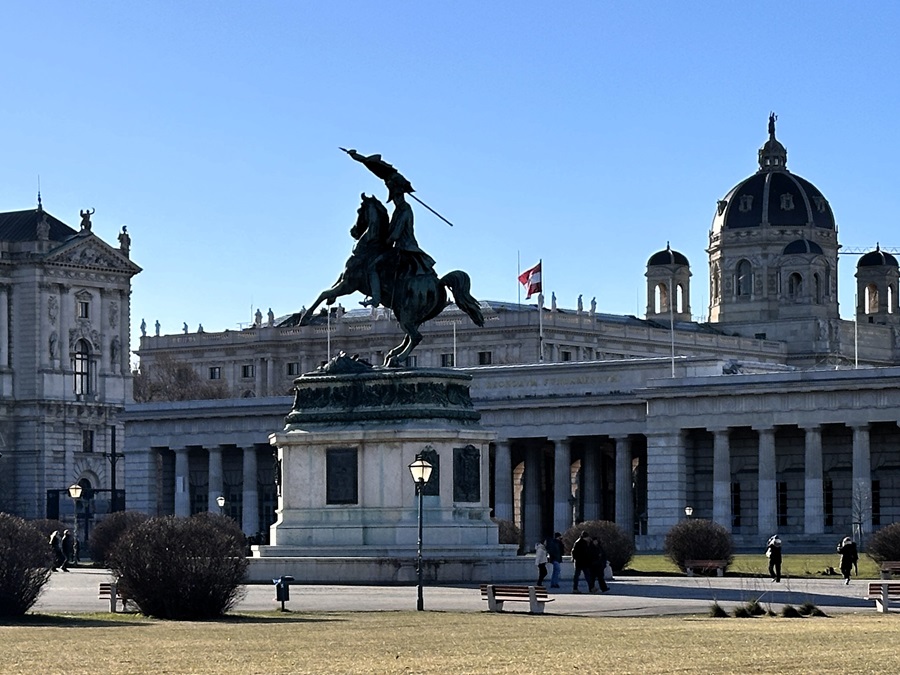
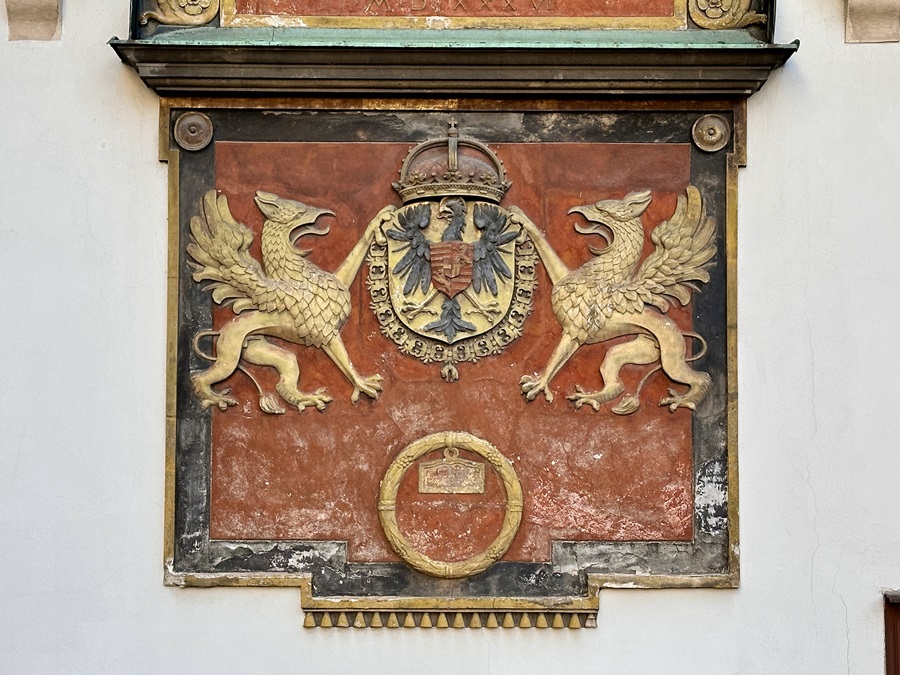
We continued walking towards Heldenplatz and the statue of Archduke Karl in front of the Hofburg Palace. Then through the arches along the passageway to the inner courtyard.
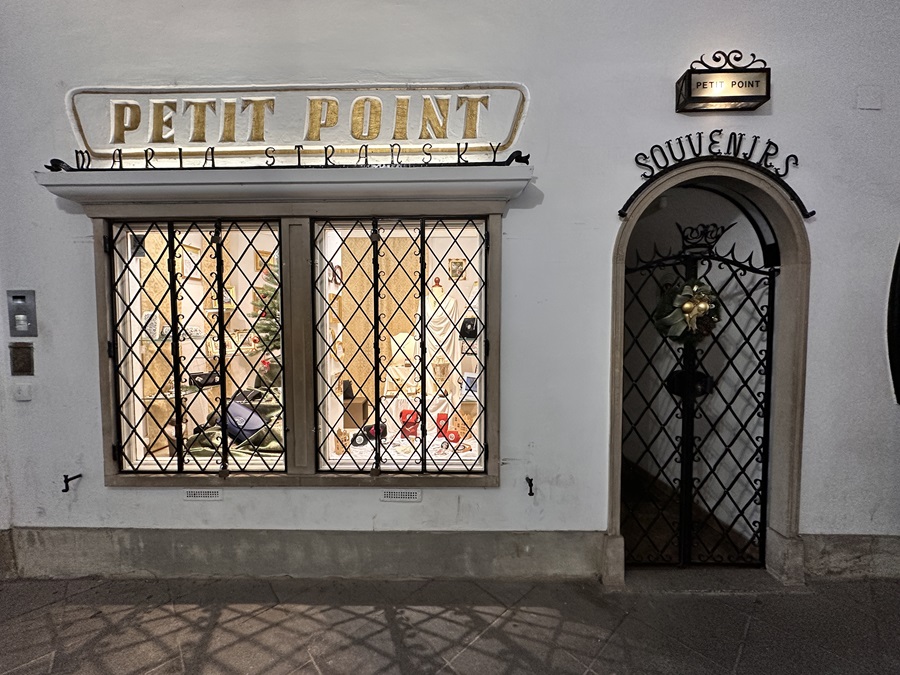
We peered through the window of a shop called Petit Point. It had jewelery, broches, necklaces, earrings etc created with some extremely fine embroidery. Needle point is Julie's current crafting obsession. Unfortunately for her, it was closed. We couldn't find its opening times but we did find the webpage of Maria Strarsky.
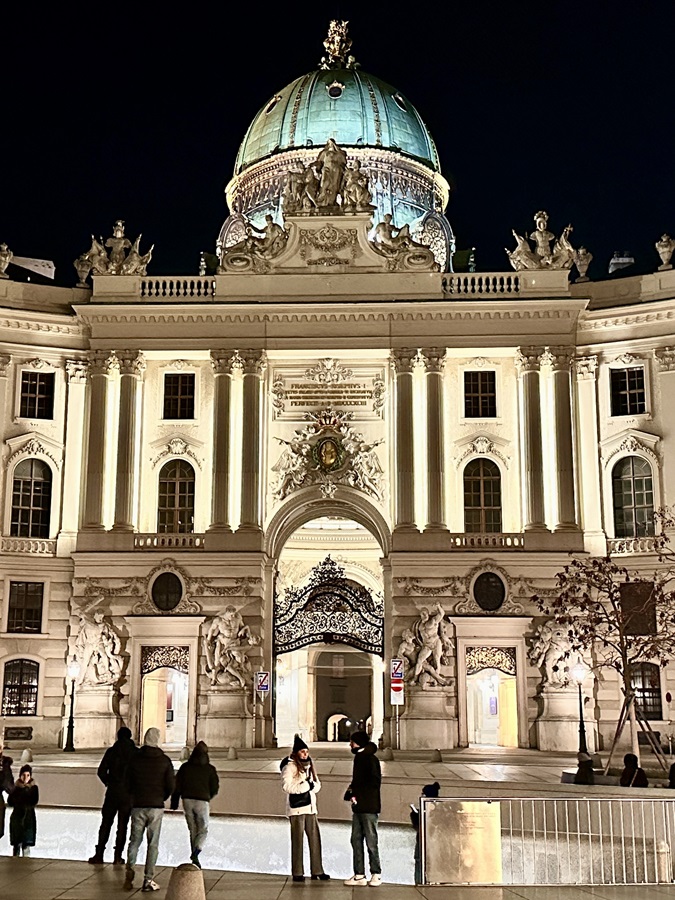
We were looking for the ticket office for the Spanish Riding School. I had a vague idea that it was inside the beautiful domed Michaelertrakt. I needn't have worried about finding it. Huge posters of the famous white Lipizzaner horses made it obvious we had found what we were looking for. The Spanish Riding School held regular performances showcasing the riders mastery of the horse. Unfortunately they were all sold out, months in advance. However, yesterday whilst browsing for inspiration I came across tickets to watch the horses and riders go through a training session. Our tickets were waiting for us behind the counter.
There was a small cafe and a gift shop inside. With half an hour before the morning excercise session began we sat down for a coffee and cake. I couldn't resist their apfelstrudle. It was so good. Light on the cinnamom and no raisins, it was simple but delicious. The entrance to the riding school was actually in a different location. We had to walk from Michaelerplatz the short distance to Josefplatz.
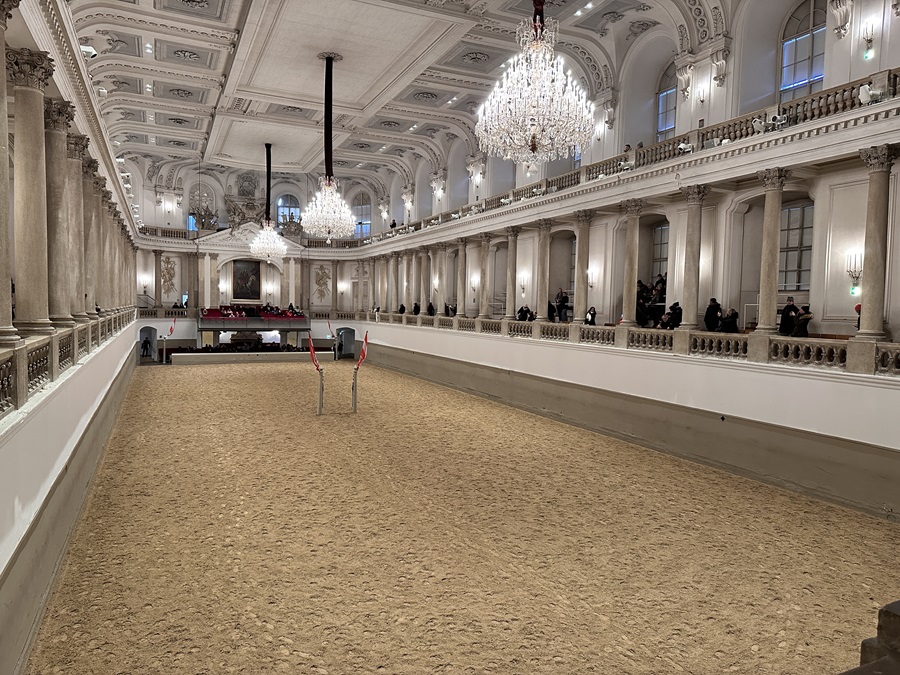
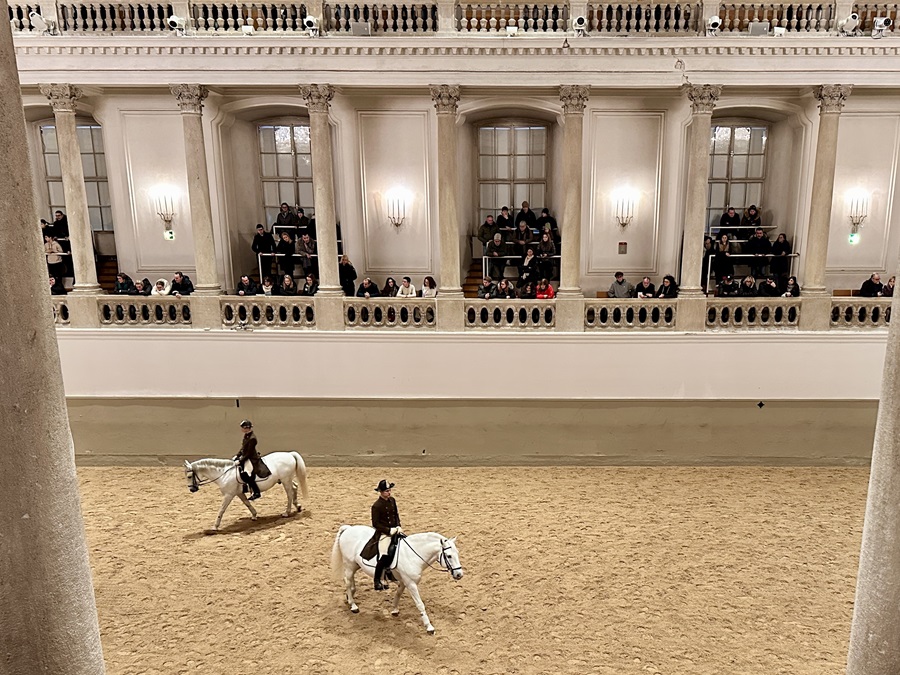
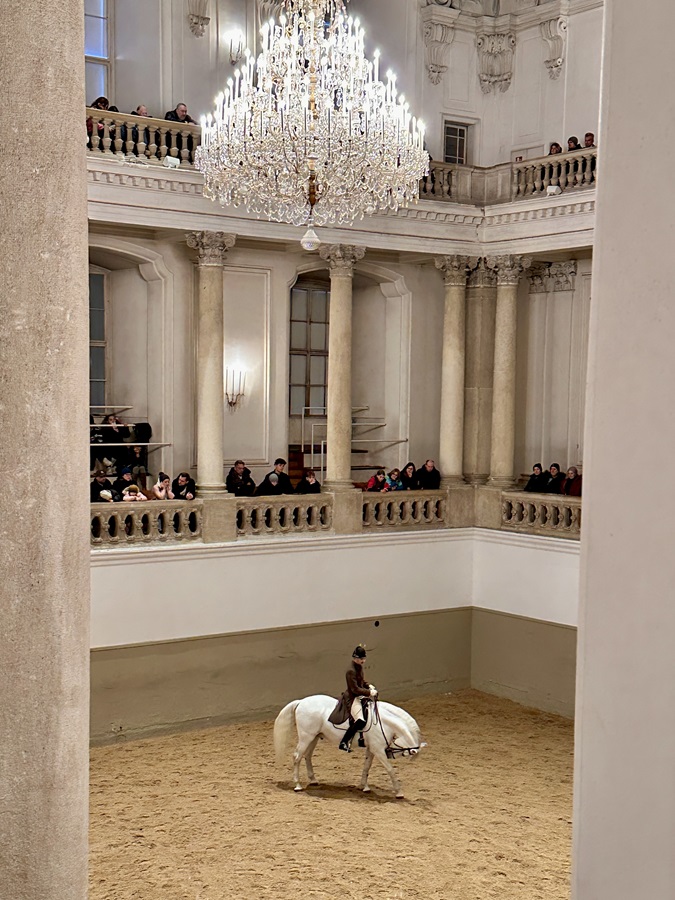
The arena of the Winter Riding School was stunning, as grand as any ballroom. Three enormous chandeliers were suspended from its high ceiling. There were two levels of balconies along its whole length.
The Spanish Riding School was established in 1565 and a hall was built for their training. However, the grand equine theatre we see today was comissioned by Emperor Charles VI and completed in 1735. At the far end was the Royal Box, with a portrait of the Emperor on horseback. All the seats around the balcony were already taken. It was first come first serve. Behind them, there were stalls where we could stand and watch the session.
At 11:30am the horses were lead out. There was five in total. They lined up in a row before their riders mounted, saluted the painting of the Emperor, and then began their gentle excercise.
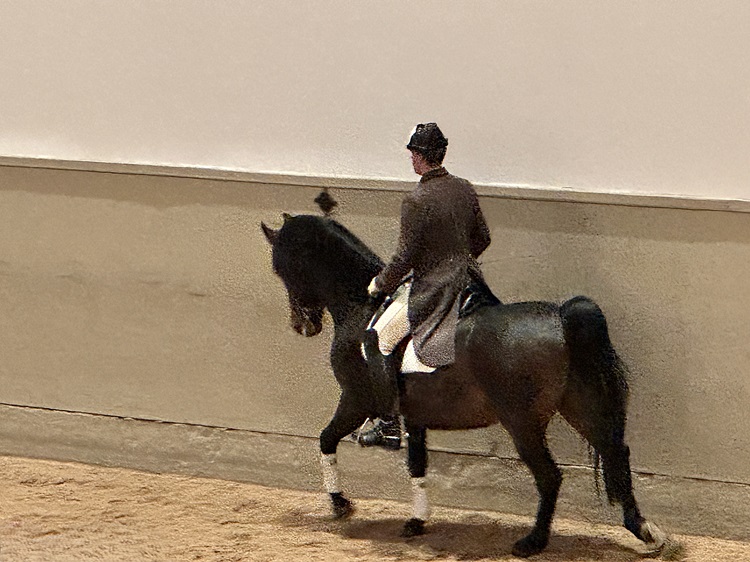
The first thing we noticed was the black Lipizzaner. It's very rare for a mature Lipizzaner to retain its dark pigmentation. This horse was fifteen years old, so well into adulthood. Their foals are actually born black or a bay colour. They then gradually turn grey by the time they mature, between 6 - 10 years. Despite looking pure white they are described as being a grey colour because of this process. After half an hour the five horses were replaced by five other.
We watched as they performed several technical dressage moves, attempting a pirouette, where the horse spun around, a piafe where it seemed to dance on the spot, and a levade, where the stallion reared up onto its hind legs. All the horses that perform at the riding school were stallions. I think it's a question of strength as many of the advanced moves require a great deal of power in the horses legs.
In the full evening performance the highest skilled horses and riders would display even more advanced moves, a collection known as "airs above the ground". They include the courbette, where the horse goes into the levade, and then does short jumps or hops. Then there's the dramatic capriole where the horse jumps into the air, as if it were flying. It's like ballet for horses. The hour watching them excercise went by in a flash. It certainly made us want to return one day to Vienna to watch the full performance.
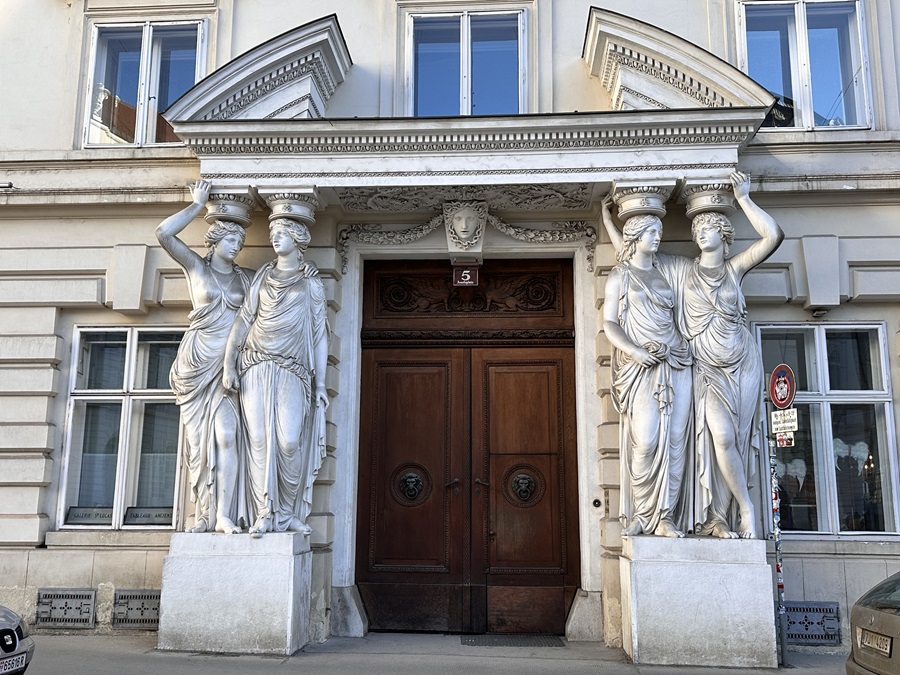
We exited the riding school, out into Josefplatz. We passed the dramatic entrance to the Palais Pallavicini which looked familiar. They reminded me of statues we saw recently in the classic 1949 film The Third Man. It was set in post-war Vienna. The reason why they looked familiar was because they were the apartment of Harry Lime, the character played by Orson Welles. We had some time to kill so we headed towards 1516, the microbrewery we drank in last night. I knew they had a TV showing the football and United were playing today.
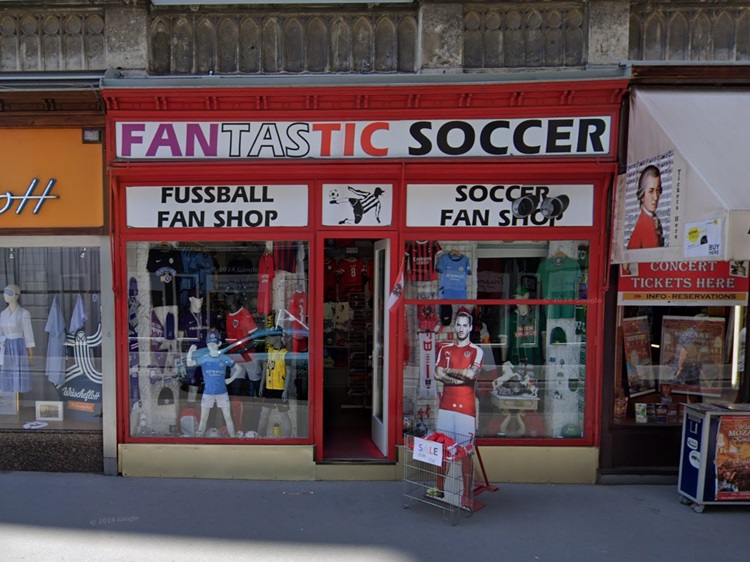
Along the way we stopped in a small sports shop selling replica football shirts. I try to buy a shirt on every trip. I was on the lookout for an domestic Austrian club, like Rapid Wien, or Sturm Graz but they were so expensive, not much change from €100. Even the sale rail was expensive! So I left without buying anything. We soon reached Helmut-Zilk-Platz at the back of the opera house, pausing briefly to get our bearings. Then choosing the correct street (there were many choices) off the square we continued towards our microbrewery on Krugerstrasse.
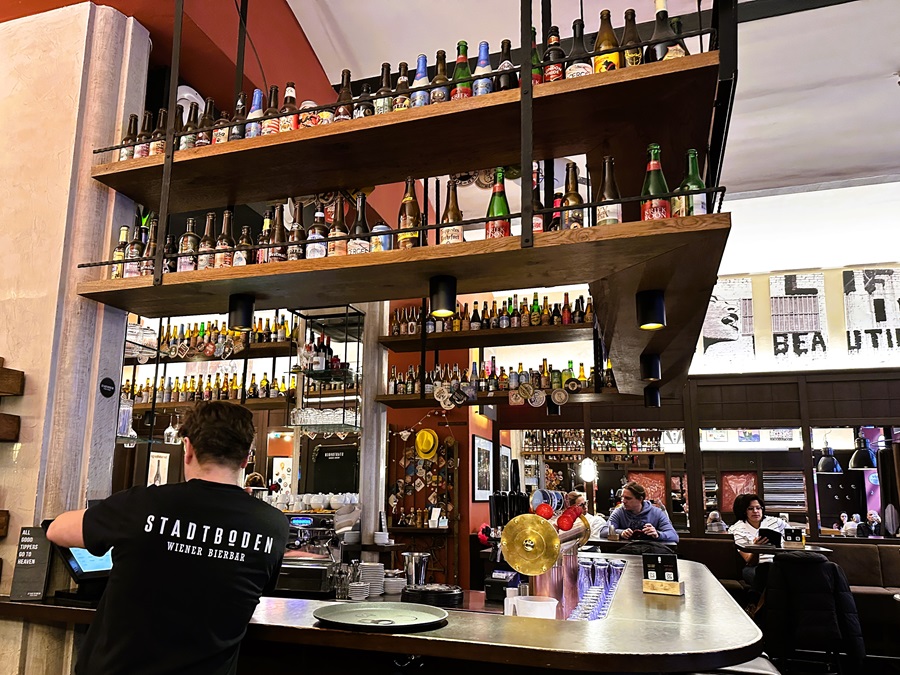
We were too early for the kick-off, so we stopped for a drink at Stadtboden. All this walking was thristy work. It had a really nice vibe but no TV screens to watch the football which was a shame. We felt like we could have stayed all day.
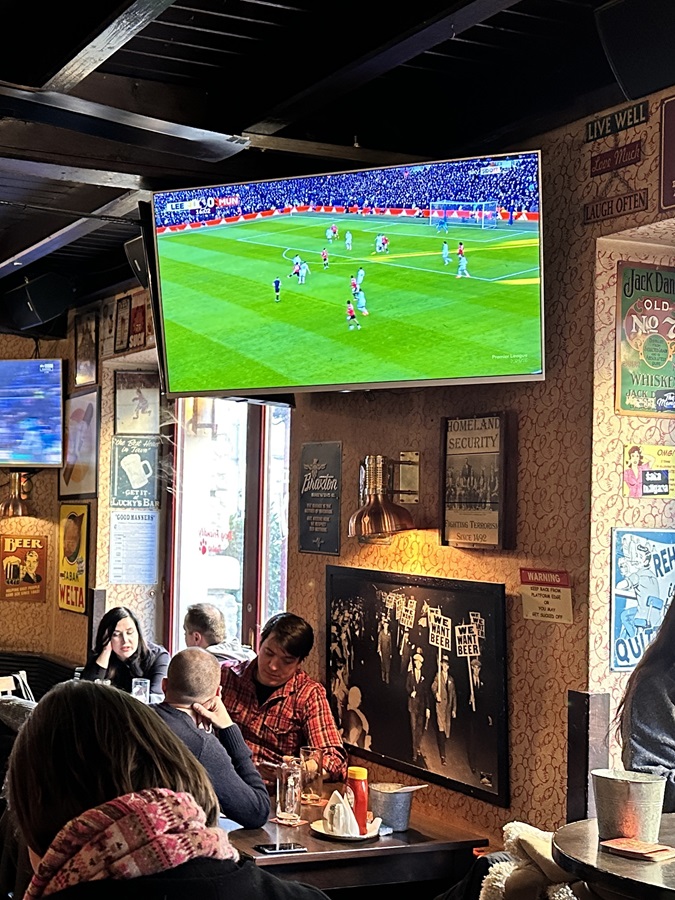
At 1:30pm we moved to 1516 Brewing Company. There were several TVs, but not all were showing the Leeds United v Manchester United game. By some chance, just as we walked inside, a table came free, with a great view of one screen that had the game on. We had missed the first 5 minutes and a disallowed United goal. It was a difficult game to watch. Manchester United's performance was typical of their whole season; just not good enough. Even the most patient supporters are begining to lose patience with the manager.
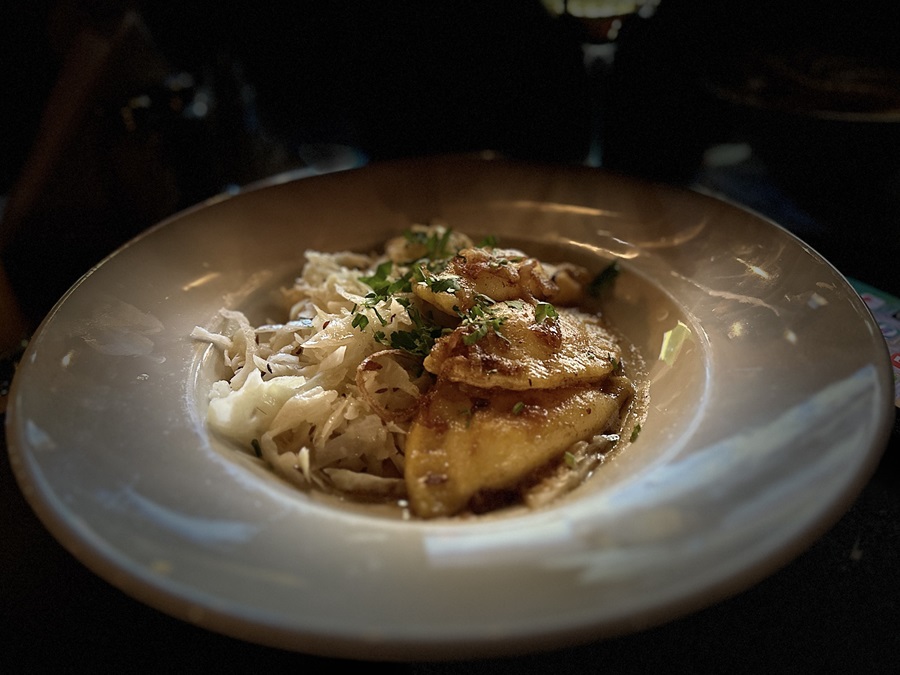
It had gone lunch time so we thought best to order some food. They had cheesy pierogi (Polish dumplings) on the specials board. We shared the plate. We both really enjoyed them but we left the plain cabbage it was served with! At half time with the score 0-0 we left 1516 Brewing Co. and walked to the underground near the opera house, catching the U4 in the direction of Hüteldorf.
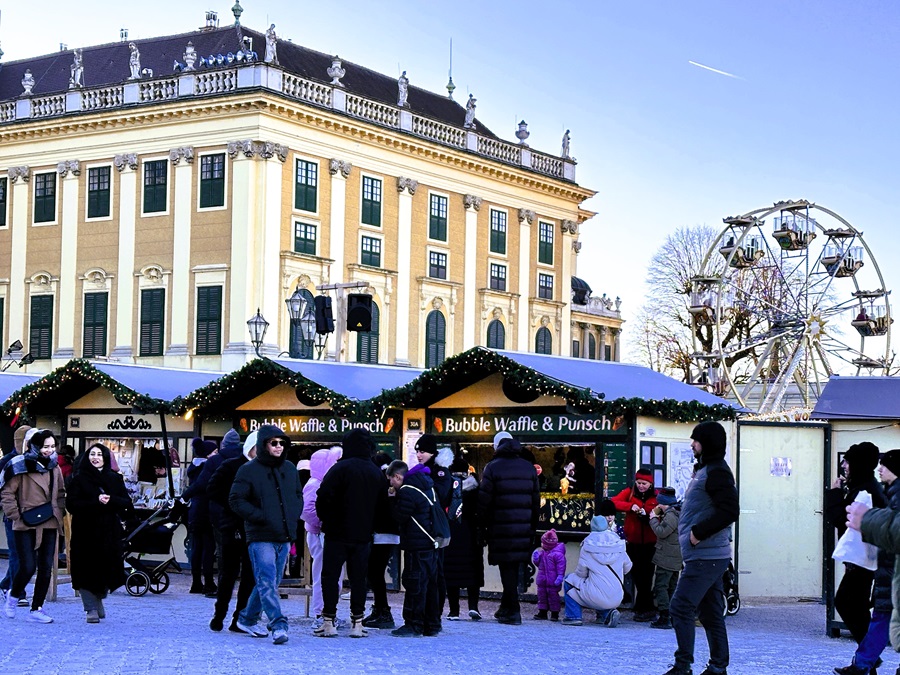
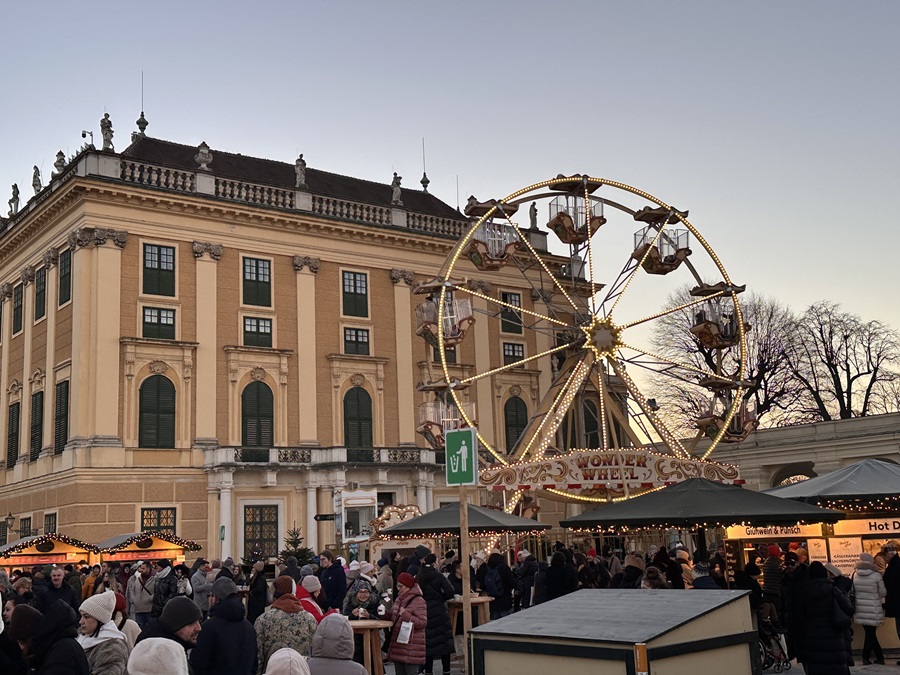
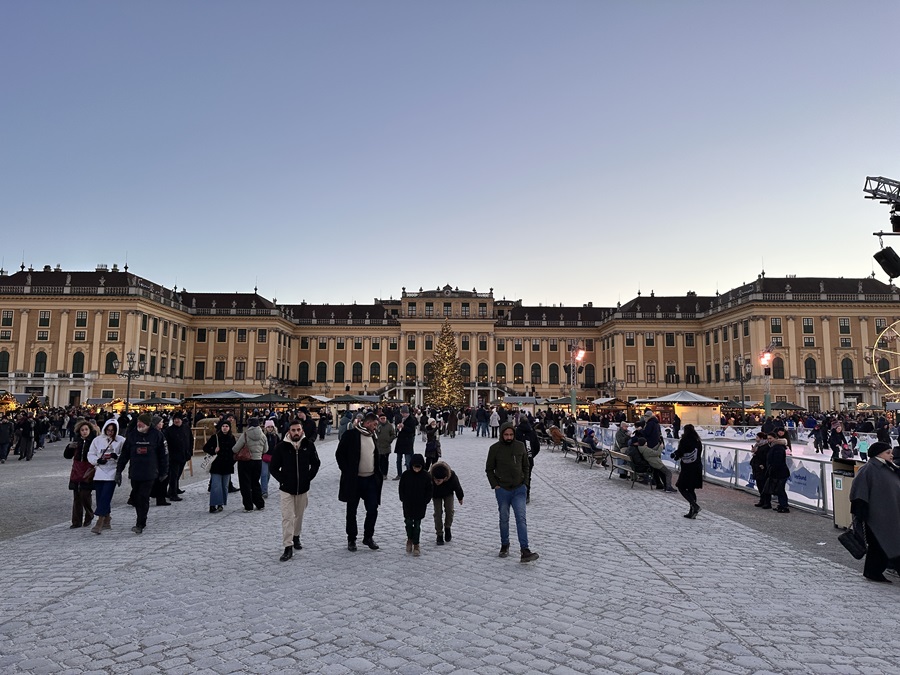
We got off at Schönbrunn and walked up to the entrance of the palace. A christmas market was still in full swing within the grounds. Apparently it continued here until the 6th January, the traditional 12th day of christmas where it all had to come down.
There were several stalls selling all the things you would expect like glüwhein and punsch. We stopped for a drink, but nothing christmassy, just regular beer and wine. Plenty of stalls were selling food from waffles to pork belly. We were still hungry. Our shared lunch was hardly filling, but we decided against eating, mostly because of the cost. They were just too expensive. Having done this sort of thing myself with a vegetarian food truck I know that these traders had no choice but to charge high prices to make any kind of profit. The exhibitors fees are just so extortionate.
Once we finished our drinks it was time to find the main entrance. Our tickets were specifically for entry at 3:30pm. We walked towards the front door, in the middle of the palace but that must have been reserved for royalty. We had to use the tradesman entrance to the left hand side. Having found the appropriate door, we dropped our bags off at the cloakroom. Oddly enough for a cloakroom, they wouldn't take our coats. As soon as I managed to get the PDF of the tickets from my e-mail to display correctly on the phone's screen we were both handed a head set and we began the audio tour of the palace.
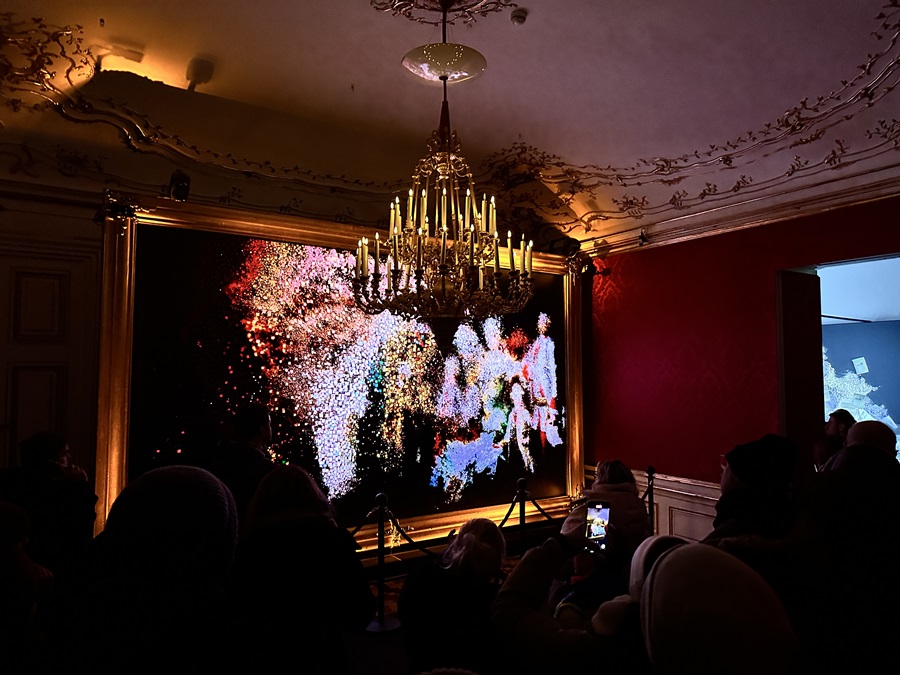
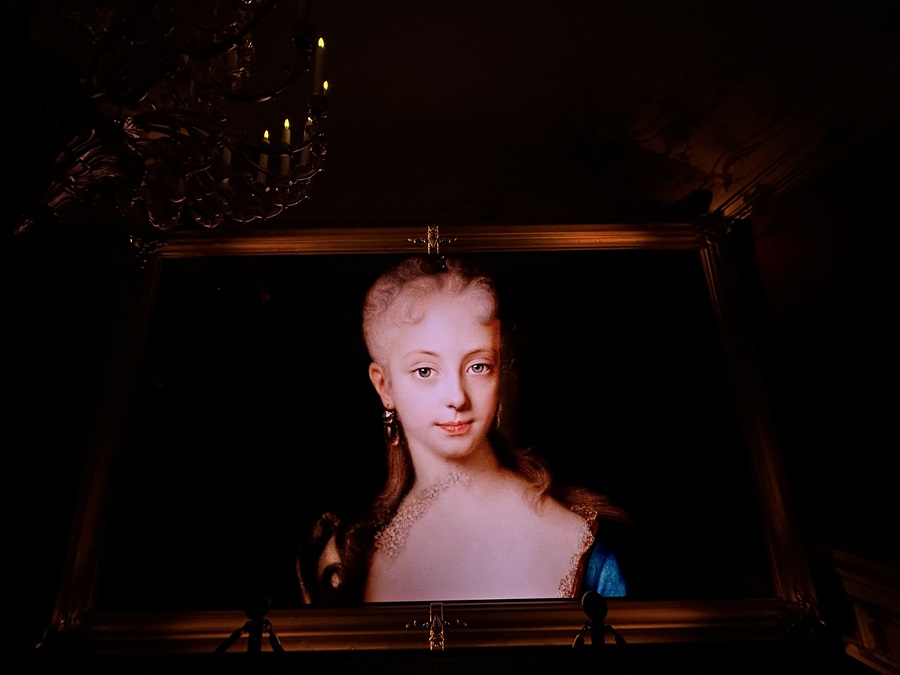
The first few rooms described the how and when the palace was built. It was excelently done with animations bringing the story of the Habsburgs to life. The Austrian royal family originated in the early middle ages, increasing its influence around central Europe over the centuries. Towards the end of the 16th century Emperor Maximillian II created a royal hunting ground and a small residence was built, called Katterburg.
By the 18th century the Habsburgs had become one of the most powerful royal houses in Europe. The Schönbrunn palace was comissioned under the rule of Empress Maria Theresa, the first female ruler of the Austrian Empire. The construction began in the 1740's and became the summer residence of the royal family.
After the interactive section we entered the museum part of the palace where rooms of varying degrees of oppulence stunned us. After the Guards Room and the Billiards Room we entered the Audience Chambre. The walnut panelling gave the room a warmth the previous ones did not. A bust of Emperor Joseph II, co-regent with his mother Empress Maria Theresa towards the end of the 18th century watched us as we walked through. This was the last room that a public audience could be arranged before entering the private appartments.
The following rooms were decorated by the Emperor Franz Joseph, the grandchild of Empress Maria Theresa. His study, his bedroom, the Kettler room were reconstructed to represent his influence on the palace. The next room that really caught our interest was the Empress' dressing room. She was the wife of Emperor Franz Joseph, and more affectionally known as Sisi. It wasn't anything spectacular but there was a mannequin with incredibly long hair. It represented the Empress Sisi who apparently spent several hours a day attending to her magnificent head of hair.
We walked through the marital bedroom shared by the Emperor and Empress before then entering the Salon of Empress Elisabeth. It's feminine beauty hid a tragic end to her life. Empres Sisi struggled to come to terms with the suicide of her son Rudolf in 1889, withdrawing from public life, becoming increasingly depressed. Nine years later she was assasinated in Geneva, stabbed almost by chance, by an Italian anarchist who intended to kill someone else but having missed the opportunity to murder a French Duke he then set his sights on the Empress.
Having passed through another sequence of rooms, including the Yellow Room, because of the bright fabric upholstery, we came to the Hall of Mirrors. Whilst being a mildly attractive room its significant lay in the fact it's believed to be the place a 6 year old prodigy by the name of Wolfgang Amadeus Mozart once played for the Empress Maria Theresa in 1762. I loved that connection back to a legendary moment in history.
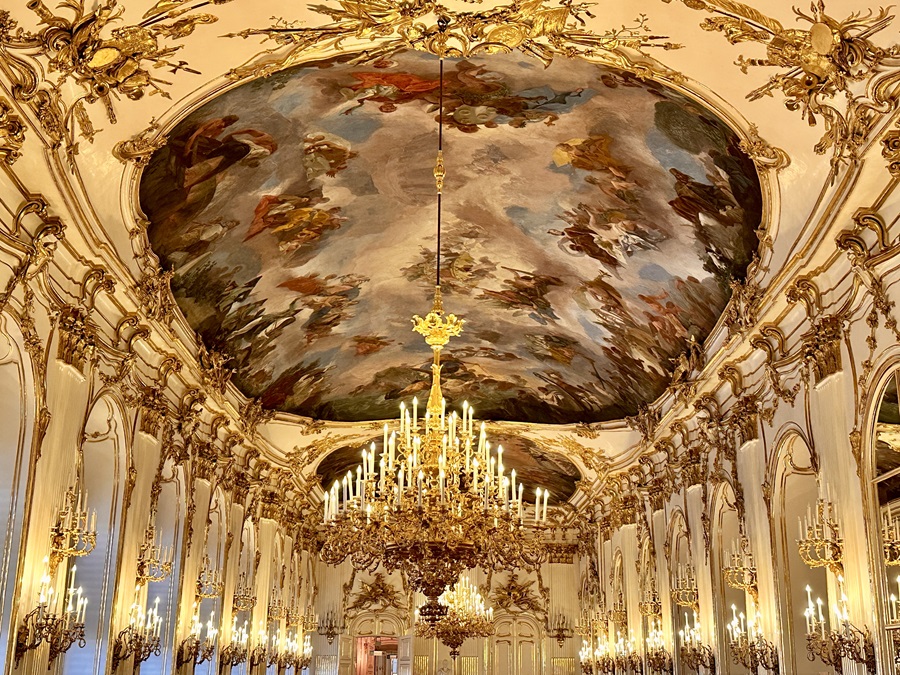
When we entered the great gallery our jaws dropped. It was breathtakingly beautiful. The Rococo design was dripping with gilt stucco decoration and three large frescoes adorned the ceiling.
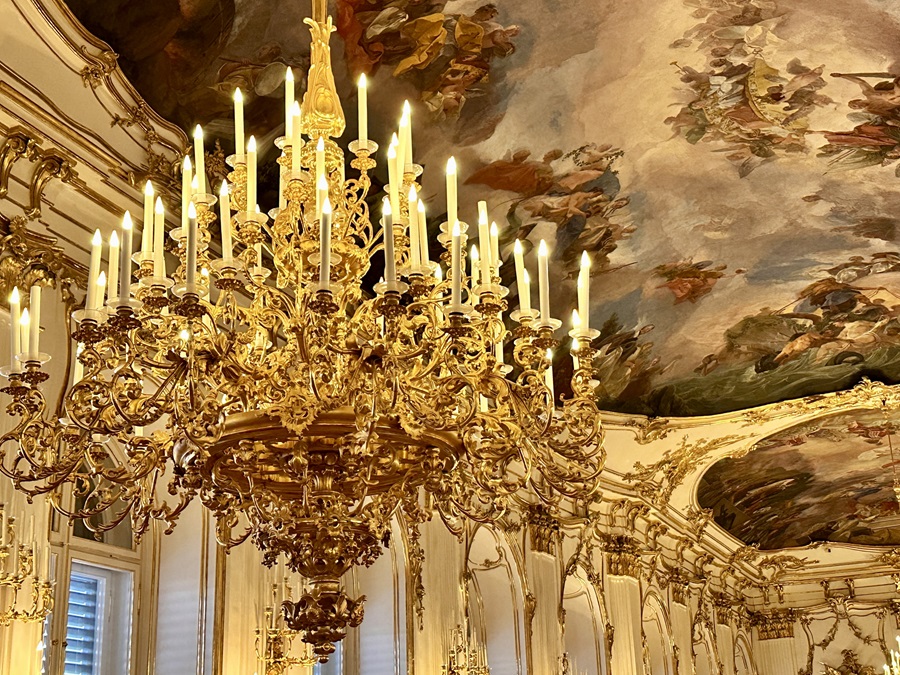
The two chandeliers were stunning. They each held 72 candles. Of course these days they are illuminated by flickering LED light bulbs, immitating a flame not actual candles. The hall was the centre of the world's attention in 1961 when President John F. Kennedy and Nikita Krushchev of the Soviet Union agreed to meet during the height of the Cold War. It came after the failed Bay of Pigs invasion in Cuba. The meeting was held here in the Great Gallery. It didn't resolve anything. In fact it probably made things worse between the two countries. Months later the Berlin wall was built, and a year later the Cuban missile crisis brought the world to the brink of a nuclear war.
Just off the Great Gallery there was a smaller gallery, and off it were two almost identical rooms, the Round Chinese Cabinet and the Oval Chinese Cabinet. We weren't allowed inside either but we could see inside. The gilt stucco decor continued throughout, here they were inlaid with Oriental laquer panels. A painting of the Empress Maria Theresa was displayed on an easel in the oval room. She would host intimate parties in these smaller rooms.
We returned to the Great Gallery and left through to the Carousel Room. There was a painting on the wall showing a Ladies' Carousel, a tournament of carriage driving. It was held in the Winter Riding School in 1743. The rooms kept on coming, another hall, another dining room, another yellow room but called the Blue Chinese Room. We rushed through them, not really breaking our stride.
In the Vieux Laque room black and gold laquer panels covered the walls. Empress Maria Theresa dedicated this room in honour of her husband Franz Stephan who died in 1765, aged 56. She was nine years younger than him. Heartbroken following his death she wore only black mourning dress.
The next room was called the Napolean Room. The French ruler may or may not have stayed in this room but there was a story to tell and they needed a room to tell it. He did stay at the palace during his time in Austria when his army occupied Vienna in 1805. Napolean Bonaprte then married Marie Louise, the eldest daughter of Emperor Franz I in 1810. They had a child called Napolean II Franz. His portrait stood in the corner of the room.
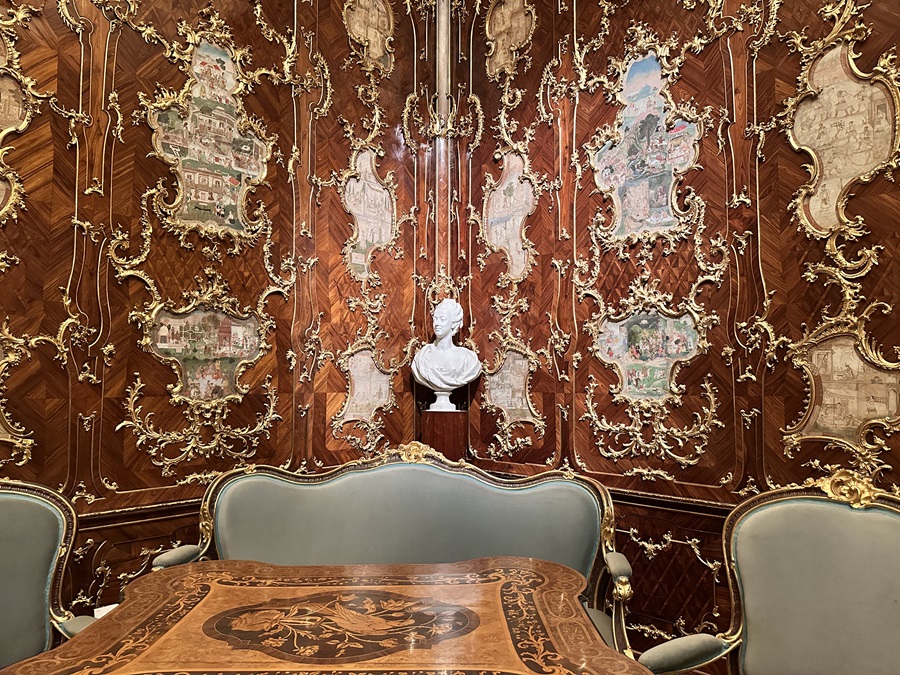
After the Porcelain Room, where the walls looked like blue painted delicate china pottery, we came to the Millions Room. I can't remember how it got that name but it was a stunning room. On the dark rosewood panelled walls miniature watercolour painting from India and Persia were framed by extravagant cartouches. It certainly made us stop and look.
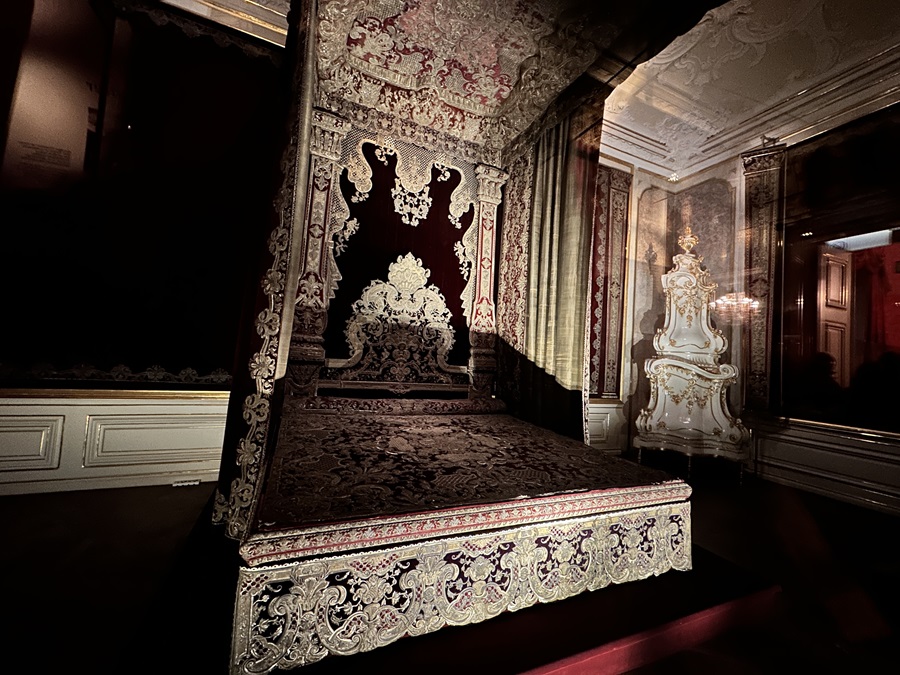
Another sequence of rooms followed where we just walked through them until we came to the Rich Room. Here was the sumptuos state bed of Empress Maria Theresa. Dramatically illuminated and protected behind glass, it demanded we stopped to have closer look. The stunning fabric was a dark red velvet, emroidered with gold and silver thread. It was mind-blowing to think it was almost 300 years old! Thankfully we only had two more rooms to walk through, palace fatigue was setting in. It had taken us almost an hour to walk through over forty rooms, only a small percentage of the 1441!
After collecting our bags from the cloakroom and frantically trying to find the toilets we walked through the Christmas market on the way out. There was a wonderful atmosphere with plenty of revellers enjoying the festivities.
We decided not to hang around, opting instead to head back to the hotel for a short break before our plans for the evening.
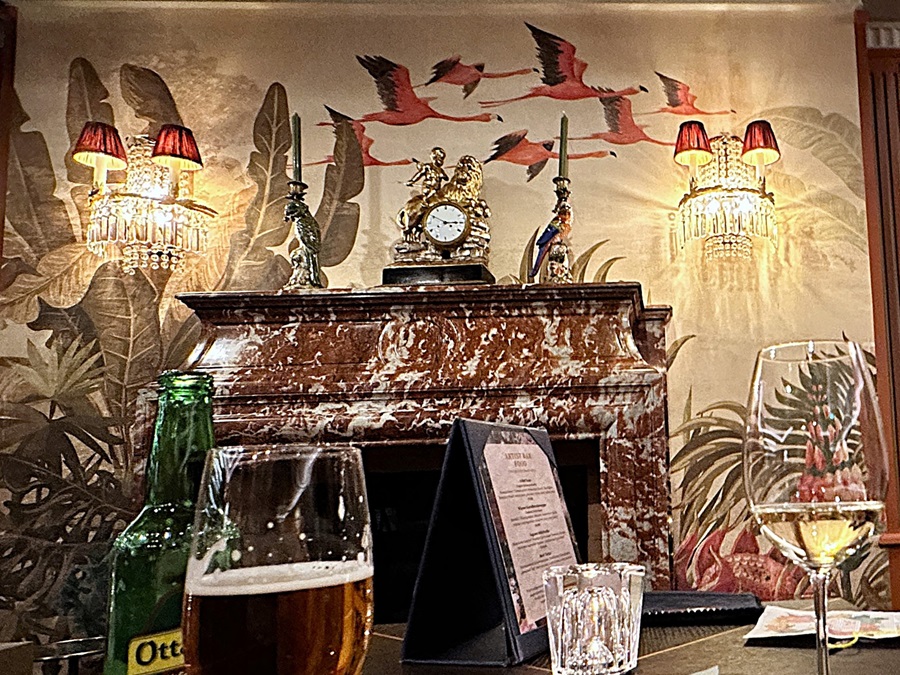
It was 5pm by the time we reached Hotel Artist, where in the bar we relaxed with a drink, in a room that wouldn't have looked out of place in the palace. The grand marble fireplace, the gold clock on the mantlepiece and the awful wallpaper mural with pink flamingoes, could easily have been from some stately home.
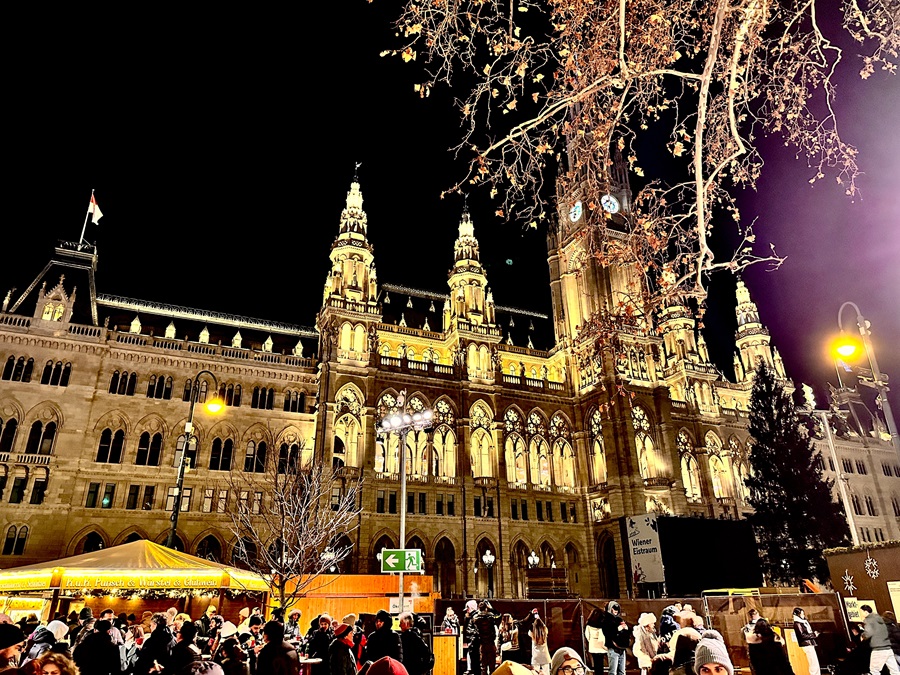
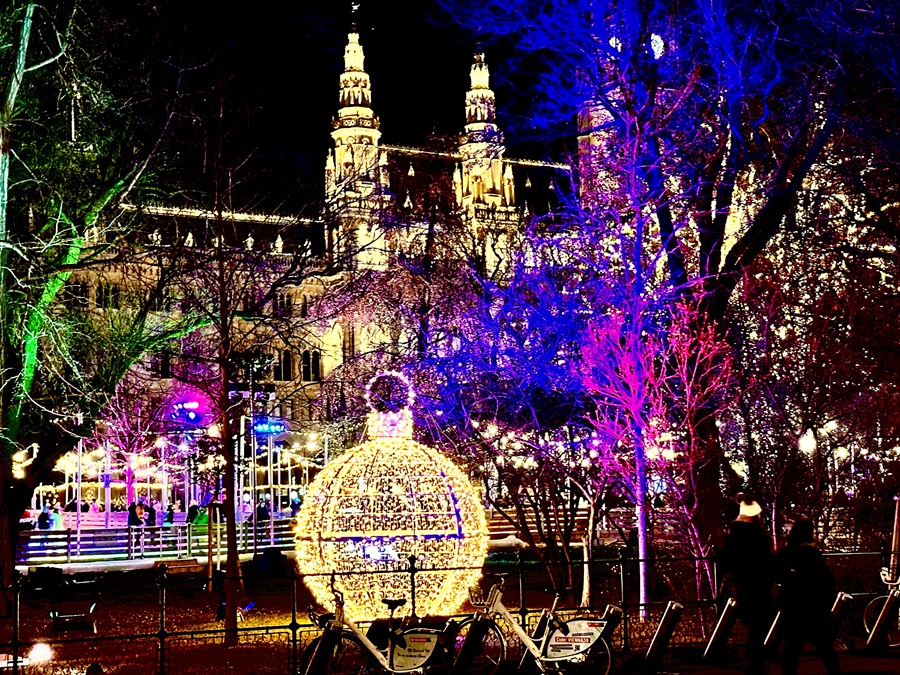
After an hour and a half in our room we returned out for the evening. It was a lovely winter's evening. We walked the now familiar route into the city centre. The Rathaus looked magnificent lit up against the clear dark starry skies.
The busy Christmas market added even more light and colour. Some were still skating around the track but it was mostly filled with people drinking glühwein. As tempted as we were to join the party we carried on our way.
The gates to the Volksgarten appeared shut so we followed the ringroad past the parliament building appearing even more striking illuminated in the night.
On to the Heidenplatz where an image was projected onto the facade of the Hofburg palace complex. It was the creation from light and media artist Victoria Coeln titled the "Bright Spots of Austria". Julie didn't like it. The grid pattern was making her feel nauseus. She has this odd reaction to symmetrical patterns, especially honeycomb. All we could make out were chains. This was the first of the "bright spots", the breaking of the chains in 1945 when Austria regained its independence after the Second World War. The other momentus moments celebrated were a signing of the State Treaty in 1955 and the membership of Austria into the European Union in 1995.
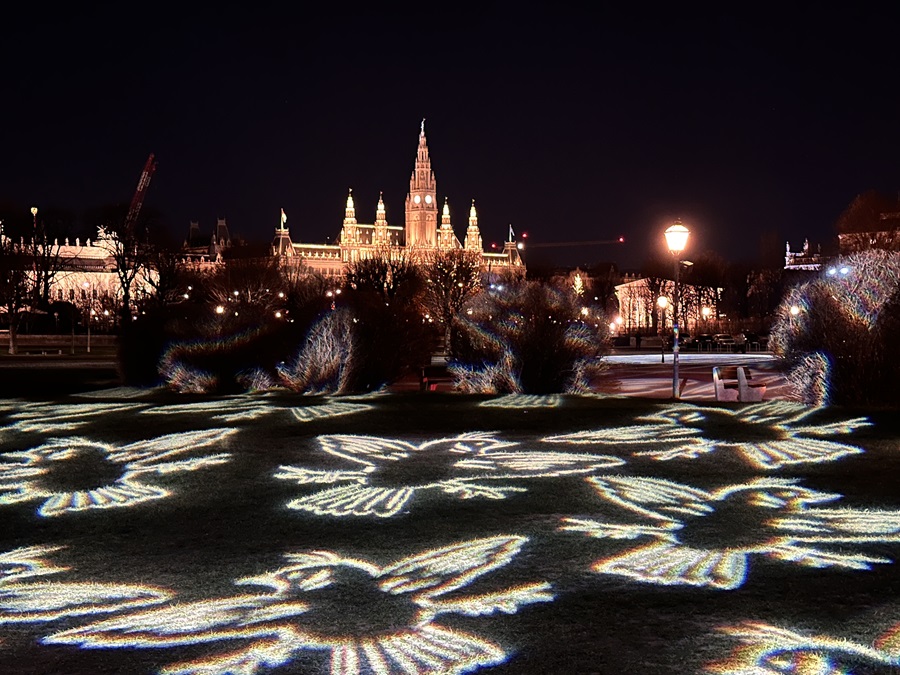
It wasn't all heavy symbolism. Looking back towards the Rathaus, pretty patterns of flowers, birds and splashes of colour danced about the square. Julie much preferred this side of the light show.
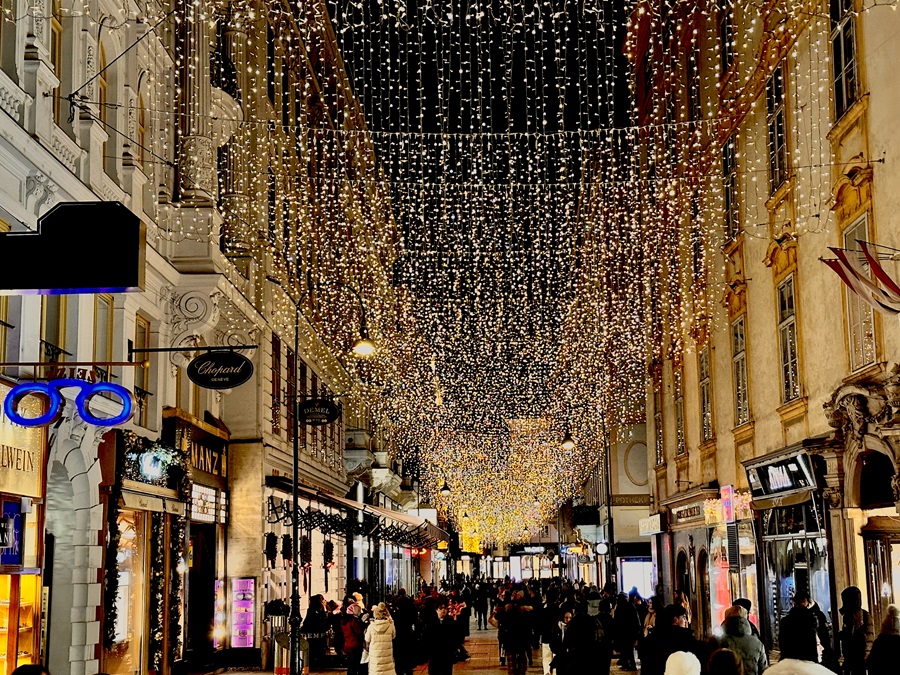
Having walked through Michaelerplatz we continued up the high end shopping street Kohlmarkt. Dolce Gabbana, Tiffany & Co, Gucci, Dior, Cartier, Bvlgari, Louis Vuitton were all represented within a few steps of each other.
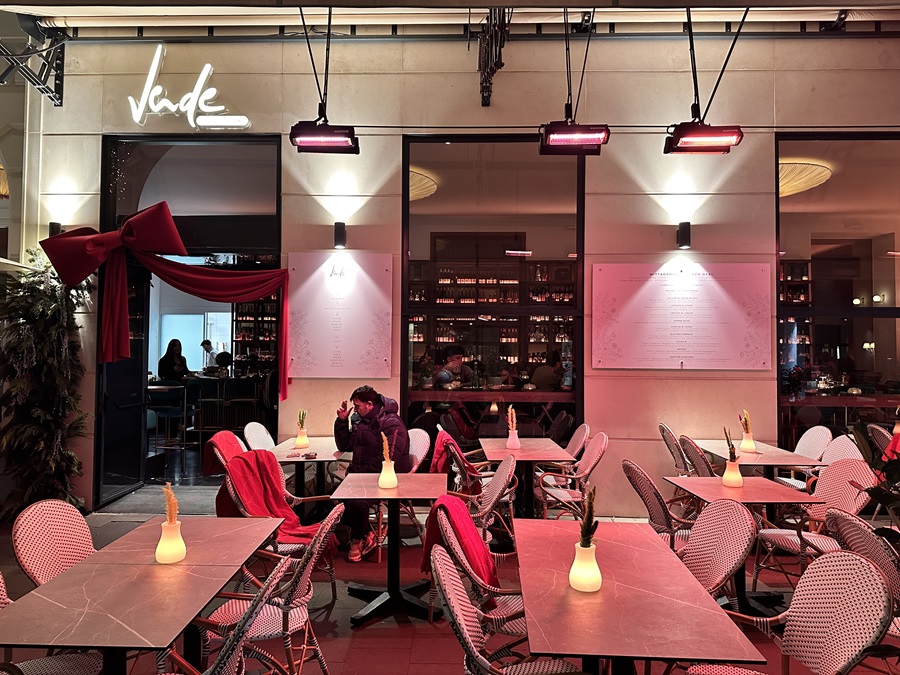
Not having eaten since sharing some Polish dumplings six hours ago we decided to grab a small snack to stop the tummy rumbles. Down a side street we saw an inviting outdoor area with heated lamps. "Is it ok for just a drink?" we asked popping our heads inside Restaurant Verde. "Sure" was their super welcoming answer and we we shown to an area near the bar,
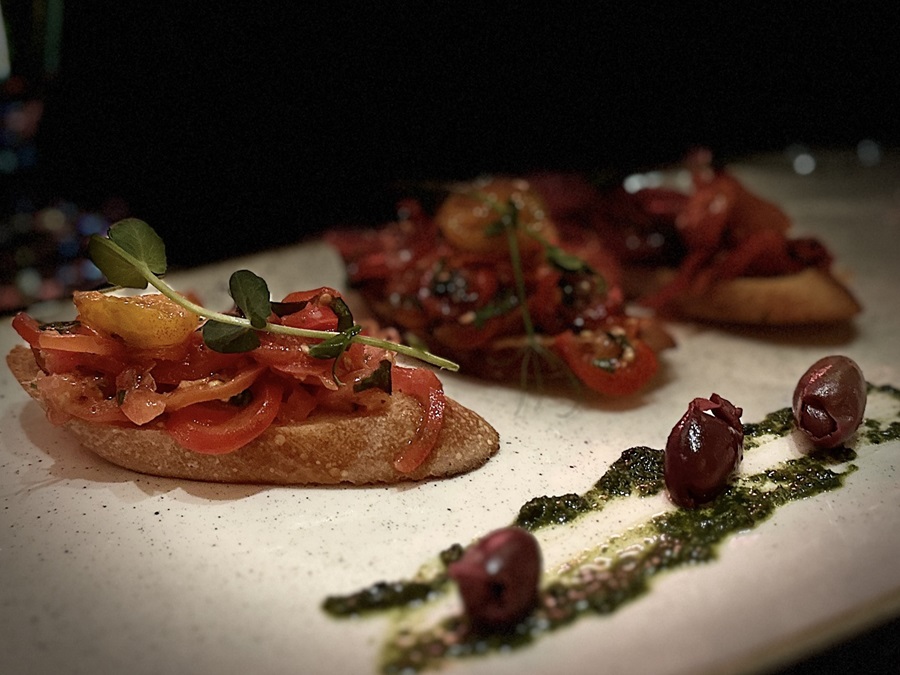
It was a very trendy place, with chill out vibes oozing from the speakers and the staff. In the end we actually had something to eat, sharing a tomato bruschetta, which was incredibly delicious. It didn't take us long, we didn't have long. We needed to be at Peterskirche by 8pm.
Moving on we continued on our way, reaching the square of Graben. It looked fabulous with the Christmas lights all around the baroque Wiener Pestsäule, or the Plague column that has stood in this square since 1694!
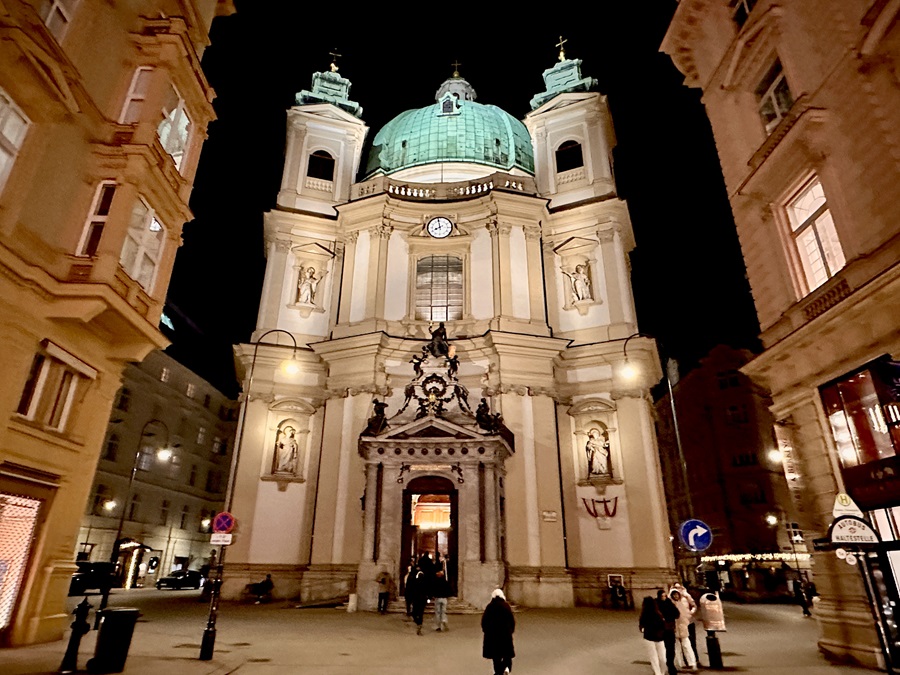
We reached Peterskirche with only a minute to spare. I gave them our booking reference and began to explain that the tickets were for a performance tomorrow. It was a long story and thankfully I didn't have to explain it. They had been expecting us.
I'm not too sure why we received the VIP treatement but we were shown to the front row! Perhaps it was because they had made an error on their availabilty. There wasn't a performance tomorrow. They contacted me in plenty of time to reschedule and I accepted without complaint. I guess it was a goodwill gesture, one we really appreciated.
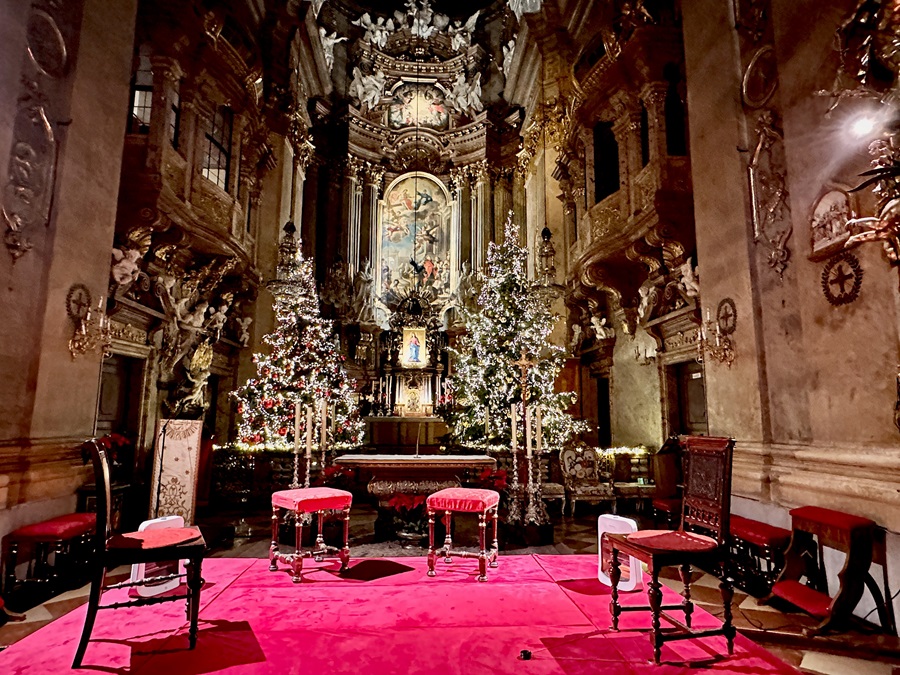
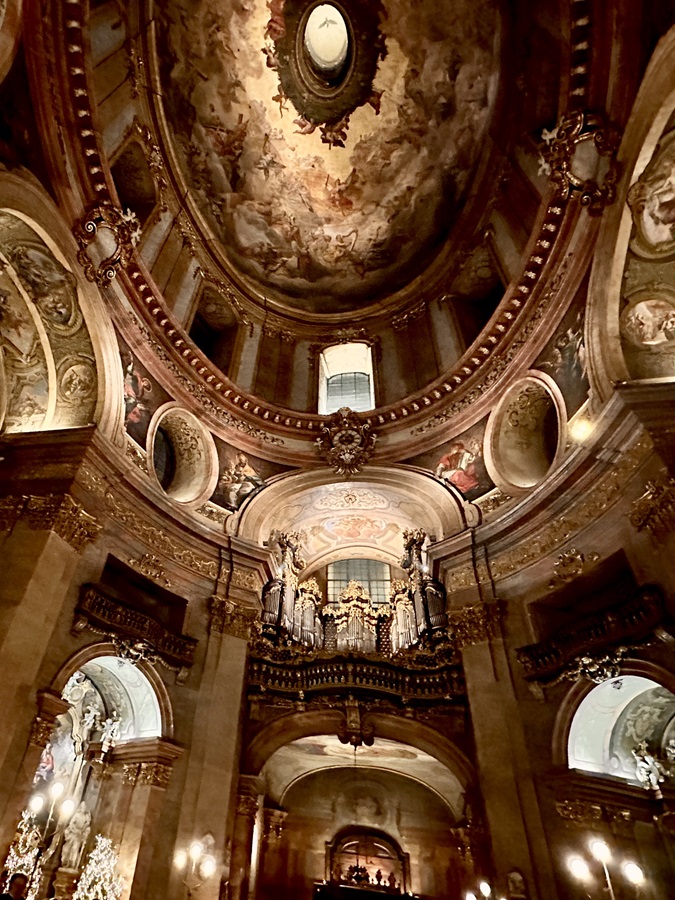
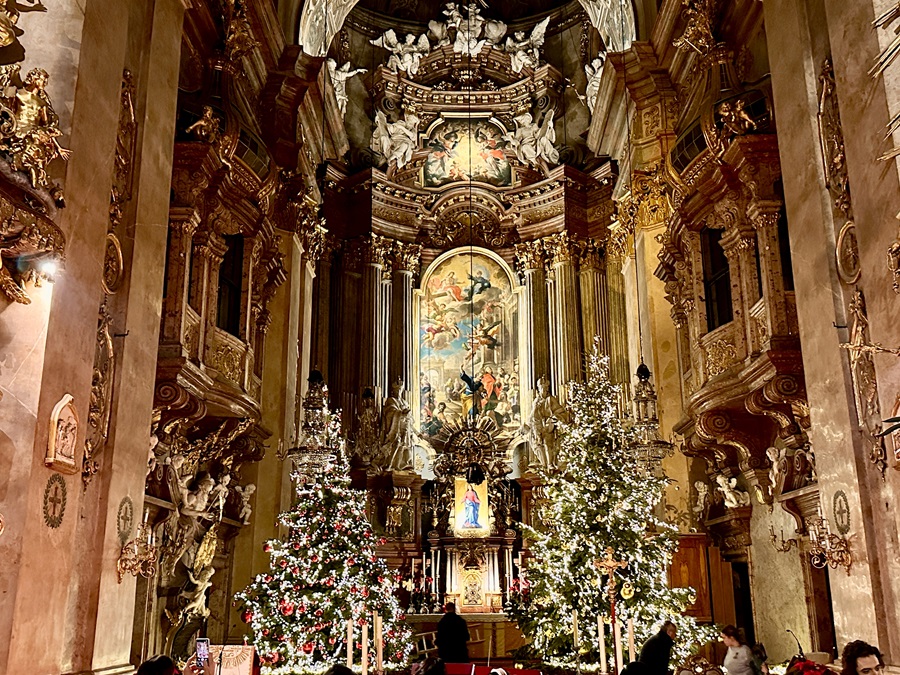
Whilst we waited for the performance to begin, we admired the gorgeous Baroque church. The dome above us was dark and brooding. Every each way we looked there was beauty and gold.
The altar was especially stunning and a pair of glittering Christmas trees added to the magical setting for the classical ensemble.
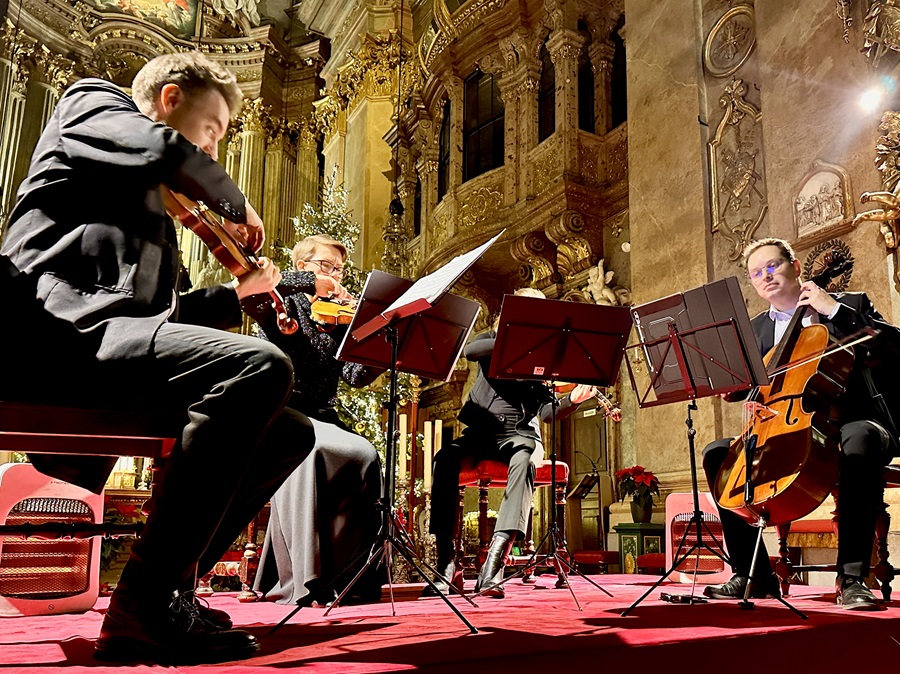
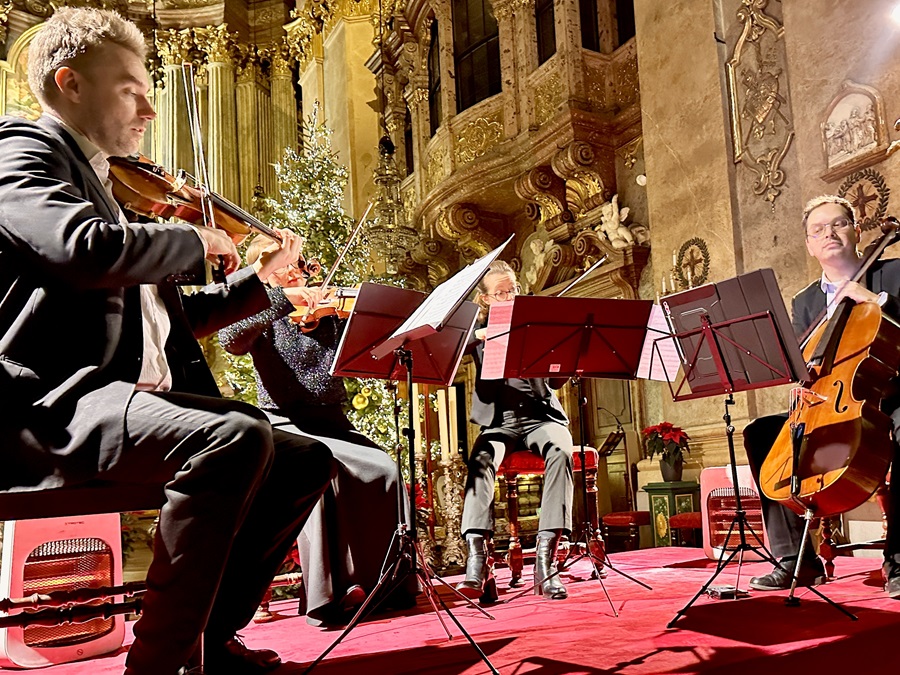
At 8:30pm the musicians took to the stage. There were four of them, in a classic string quartet. The program listed the performers as Lukas Medlam on violin, Sofia Protasova also on violin, Stephanie Drach on viola and Thomas Weisflecker on the cello (oe violoncello as it was described). Sitting at the front made the experience very intimate. We could see how the four interacted with each other whilst playing the pieces, their glances, their smiles, their intense concentration.
They kicked off with a familiar tune, Eine Kleine Nachtmusik by Mozart, an upbeat joyful piece. Then it was L'Inverno (the winter) from Vivaldi's Four Seasons, another one of classical music's greatest hits. The Italian composer Antonio Vivaldi had a tragic connection with Vienna. He moved to the city in 1740 by the invitation of Emperor Charles IV (father of Empress Maria Theresa). Unfortunately the emperor died very shortly after he arrived. Vivaldi found himself out of work and less than a year later, destitute and in bad health, he died. Next up it was a Christmas Concerto by Arcangelo Corelli which we had never heard before, neither the piece nor the composer. He's actually buried in the Parthenon in Rome so he must have been quite a big deal. We then had Austrian Franz Peter Schubert's "Tod und das mädchen", which was a beautiful piece of music. It was followed by German Johann Sebastian Bach's BWV 1068. He compsed so many pieces that they are often refered to by their catalogue number but this one is better known as "Air on a G-string! An absolute classic. Julie and I aren't really into classical music but we got carried away by the melody. It felt almost like a dream. It was a difficult act to follow, and "American" by Czech composer Antonin Dvorak laboured a bit before they ended the evening with a medley of three Johann Strauss II compositions. The upbeat polkas of Vergnügungzug and the Pizzicato Polka, which was mostly picked on the strings, and the famous waltz "The Beautiful Blue Danube". They received a standing ovation, thoroughly deserved. Feeling generous they performed an encore, a real crowd pleaser where we were all encouraged to join in with hand claps. It was a piece by Johann Strauss Senior called Radetsky March.(? I think.) We left having thoroughly enjoyed a magical evening.
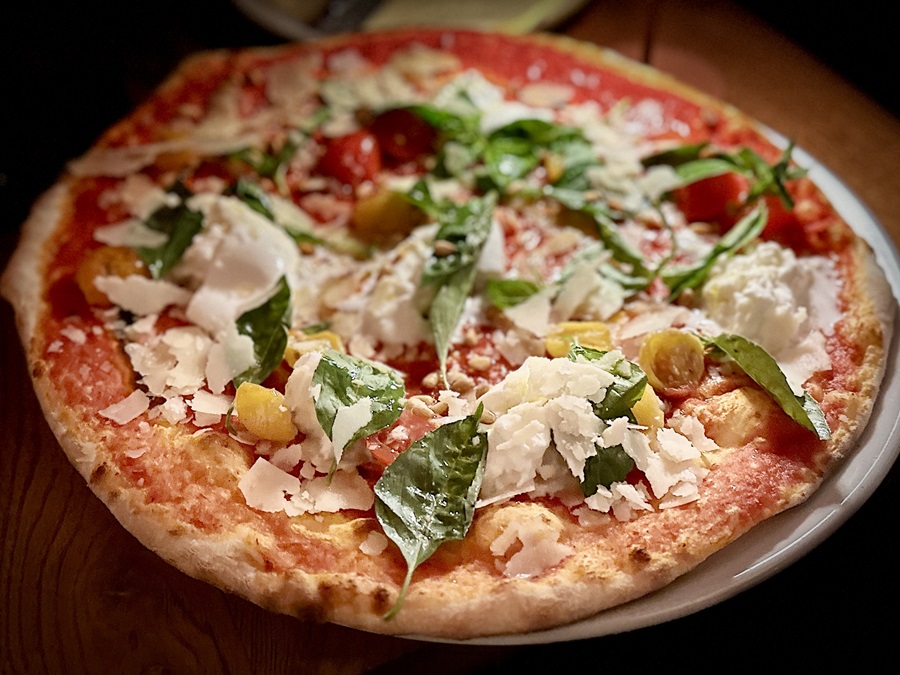
We made our way back towards the hotel, stopping at Restaurant Verde where we ate earlier. It was almost 10pm but the kitchen was still open. I ordered a pizza which which was described as Dominiks Lieblingspizza, with buffalo mozzarella, cherry tomatoes, datterini gialli (yellow cherry tomatoes), fresh basil and truffle oil. It sounded really interesting but at €21.50 it was very expensive. Thankfully, despite the basic base, the toppings were fresh and tasty.
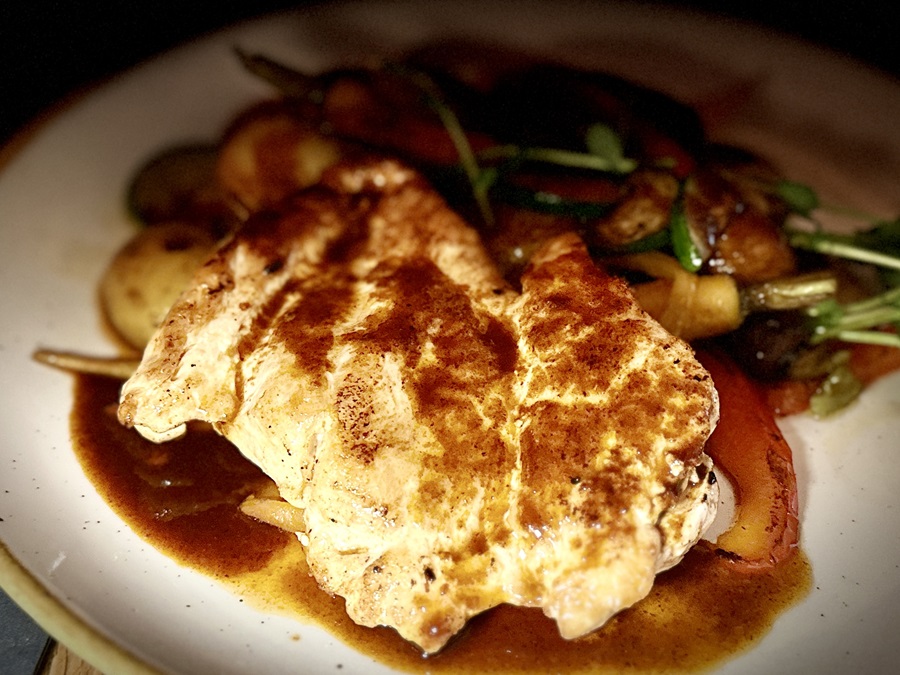
Julie found chicken on the menu. More often than not she decides to go off-menu and tonight she asked to be spared the creamy polenta, because it's something she hates, and tried her luck asking for some potatoes. They were more than happy to substitute.
Fed and watered we were ready to make the long walk back, through the Michaelerplatz, and around the Volksgarten. It was getting increasingly cold so we decided to catch an underground train to the Rathaus from the Volkstheater stop. We saw the U-bahn sign and took the steps below ground. It then felt like we walked for a mile to reach the actual platform, only to sit on a train for a minute and get off one stop later. I'm sure we would have got their quicker if we had just carried on above ground.
Anyway, either way, we reached the Rathaus in time before Bar Centimeter closed. We enjoyed a night cap before ending up at our hotel where we then decided to have another night cap. As we were finally calling it a night a Russian woman leaning on the bar was having a proper rant to anyone who would llisten, about how she felt the whole world didn't like Russians. Julie politely told her to go to bed! She said it in a caring and polite way but before anything escalated we left for our room. Next Day >>> |
|
©Copyright 2000 - 2026 Colin Owen |