On the Rocks
Thursday 18th
May 2017
|
|
The Full Monty
On the Rocks |
|
|
|
The mattress was old, definitely well slept in, the bedding was old fashioned sheets and blankets, none of these modern duvets, and we possibly had the best sleep of our lives! Neither of us remember waking up in the night, not once. It had been over 11 hours! There was an air-freshners dispensing a pffft released every 15 minutes, and there was a clock, with the clockwork tick worthy of a Grandfather clock, but even they didn't keep us awake. Breakfast was a challenge. We had bought sliced bread for toast but there was no toaster, not even a grill in the oven, nor a gas hob to char the bread. With hindsight perhaps we could have fried some bread (without oil) but instead we made a sandwich with incredibly white butter, which I worried was just lard, and lashings of cream cheese. Another thing missing to kick-start our day was coffee. We forgot to buy any. There was some left-over green tea, but that didn't really get us going. At about 11am we decided to start the day. The nearest cash point was in the town of Risan, 5km away, so that was our plan.
The town of Risan appeared to have no character, certainly nowhere near as nice as Perast. The Venetians didn't leave much of a mark here, that's for sure. It did have a small old town but it was lost amongst the over development. There was even a large modern resort called Hotel Teuta, named after an Illyrian Queen. Risan was once the seat of their power, and a fort discovered here is one of the earliest settlements on the Bay of Kotor dating back to the 3rd century BC.
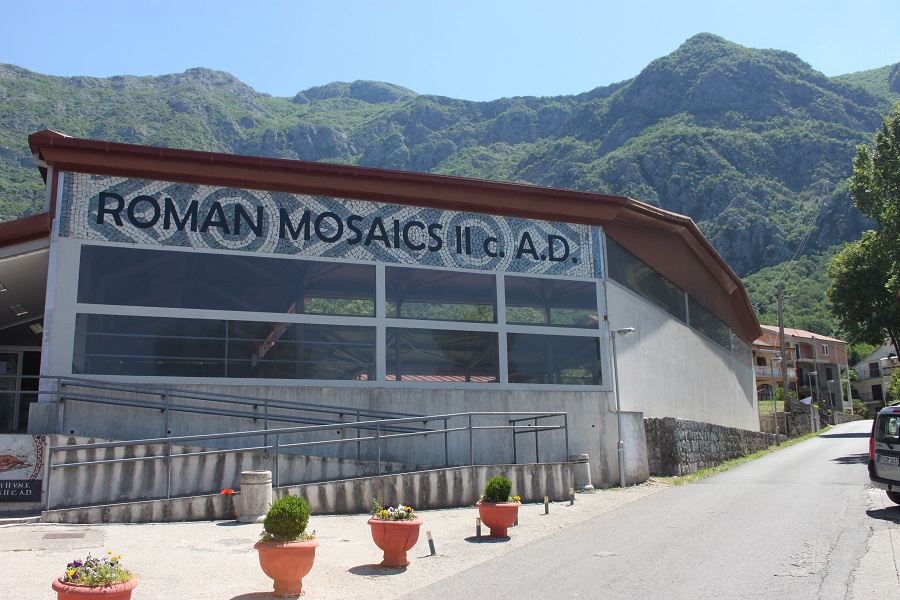
Then the Romans came, saw and conquered, establishing the port of Rhisinium. Not much remains from that time but a 2nd century Roman villa was found. It was possible to visit so we parked the car on a side street and walked up to find the museum. A coach load of people arrived just before us, swamping the place but they literally spent five minutes inside before leaving. After which we had the place to ourselves.
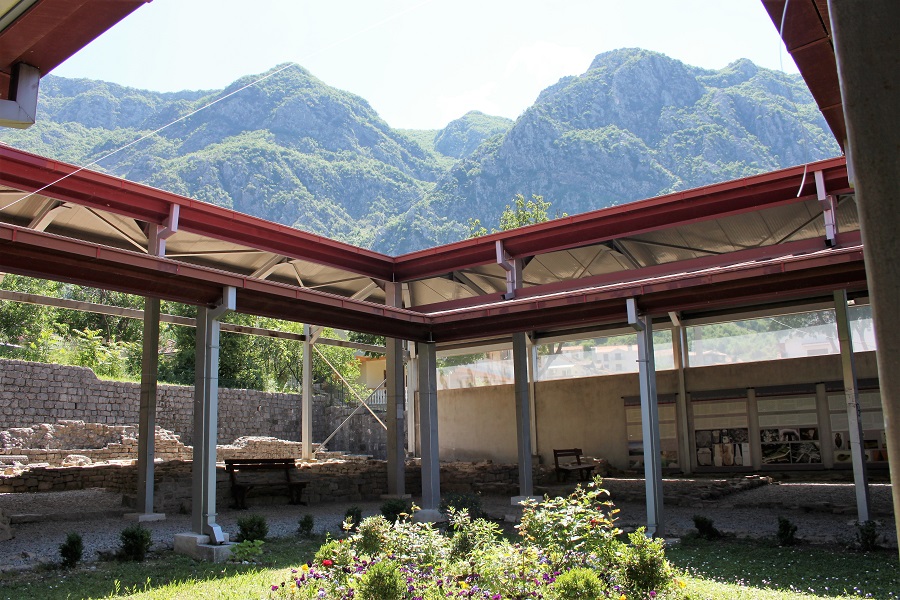
A large steel structure had been built over the site to protect it from the elements but the large inner courtyard was open. We walked along an elevated walkway, allowing us to get close to the mosaics without trampling on anything important.
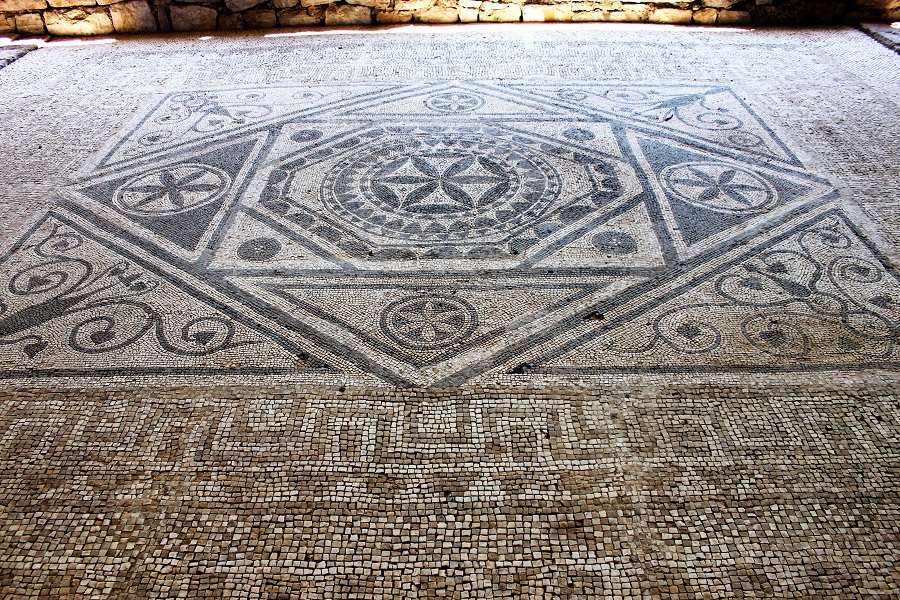
Discovered in 1930, Polish archaeologists carefully excavated seven rooms revealing beautiful mosaic floors. It's believed that the villa was in fact a hospitium, a kind of hotel and tavern.
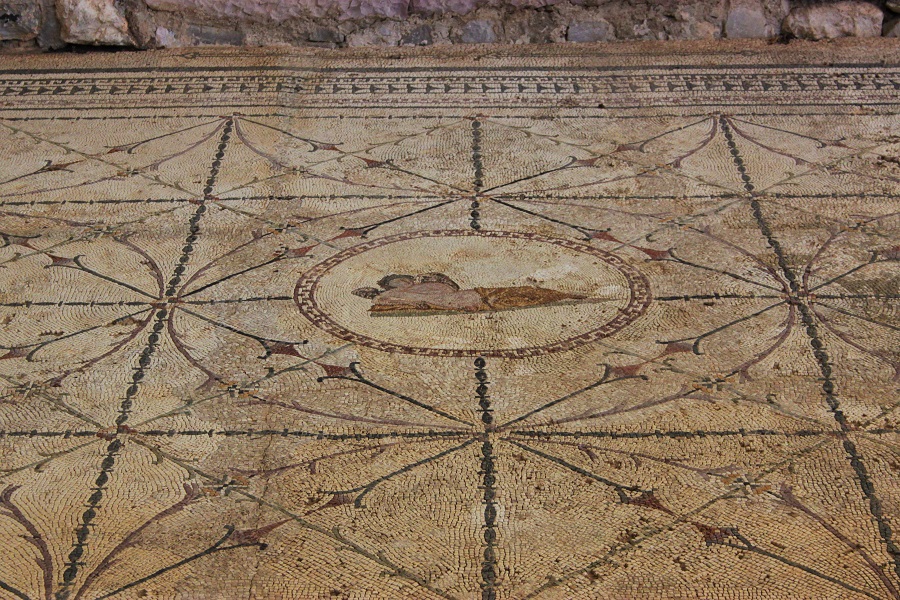
The most important of the floors was a mosaic depicting a reclining figure of Hypnos, the Greek god of sleep. Whilst the others were mostly black and white geometric patterns, this used very fine tiles to weave an delicate design. The use of many colours was also noticably different. Apparently it's the only example of a mosaic floor specifically attributed to Hypnos. As fascinating as it all was, and after rolling our eyes at the coach load that came and went in a flash, we ourselves probably spent no more than 15 minutes inside.
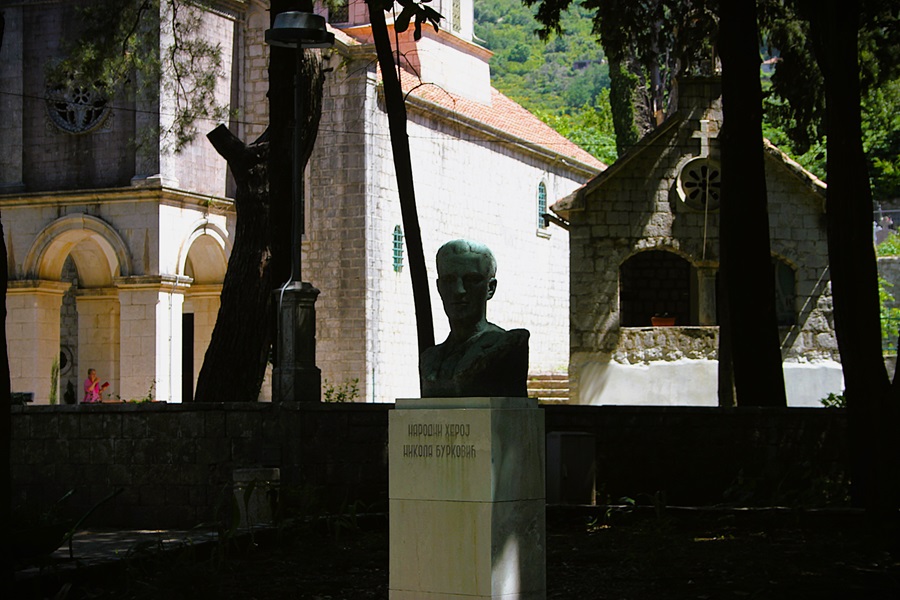
Next we walked back into the town, to look for an ATM. The path took us through a small shady park with the bust of a "National Hero" called Nikola Đurković. Just behind it was the small church of the Archangel St. Michael and the much larger orthodox church of the Saints Peter and Paul. The most predominant organised religion in Montenegro was the Serbian Orthodox Church, a branch of the Eastern Orthodox Church expanded during the Byzantine era.
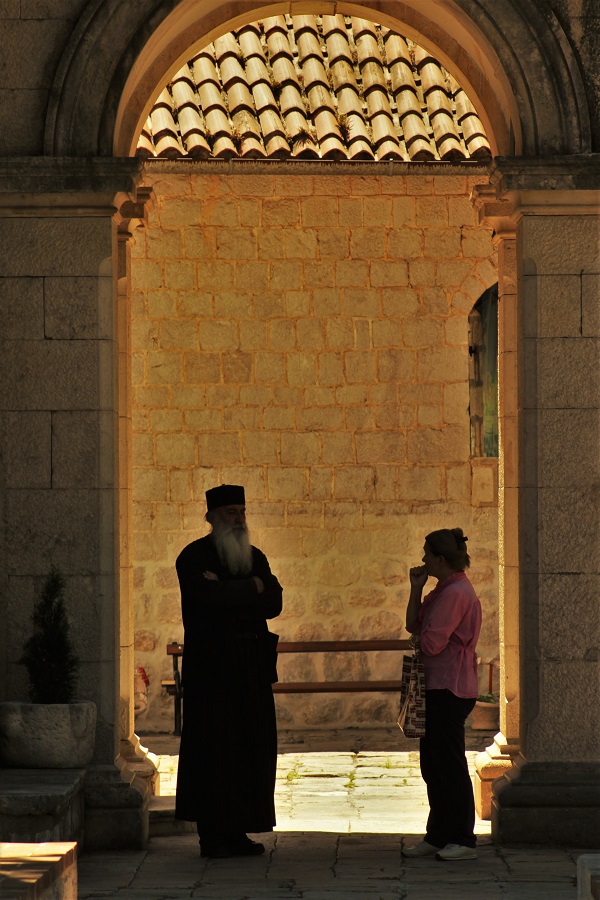
A priest came out of his church, dressed head to toe in black, with a long white beard, very much looking the orthodox part. We popped inside a small supermarket and picked up some supplies, then found the post office, which was literlly a room with a small desk and a very big safe behind it. On the wall outside there was an ATM. I took €200 out. Unfortunately the machine in its wisdom dispensed two €100 notes. "That'll be handy when we pay for my €2 beer!" I moaned. Next door was Cafe Hipnos, we now know, named after the Greek god.
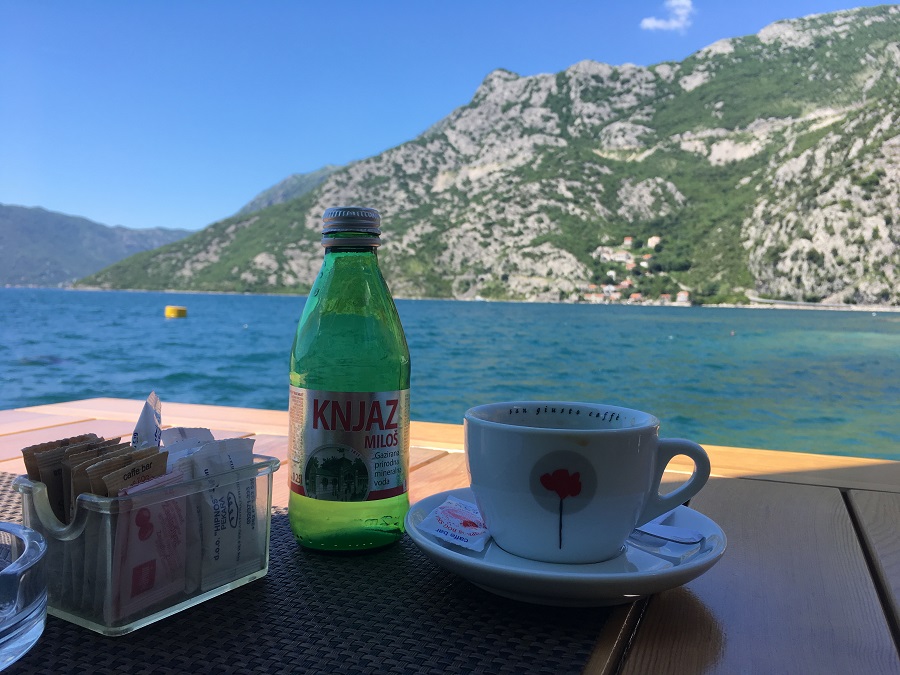
They had some waterfront tables a little further down the road. Missing my morning coffee I ordered an Americano and Julie had water. It was a peaceful spot, despite being on the main road. The water was incredibly clear. We could see the fish swimming deep below the surface. I stared at them for so long they became very hypnotic, which was ironic. We returned to Perast and parked the car. It was a lot busier than when we left with several large coaches taking up all the space. Two guys were directing us to a space but I ignored them and continued all the way down to the end, mostly to drop Julie off with the shopping bags. As it happened there was a spot to park right there. Both unofficial "parking attendants" came down and demanded €2. We knew it was free to park but didn't argue with them. They had the power to look after or not look after our car.
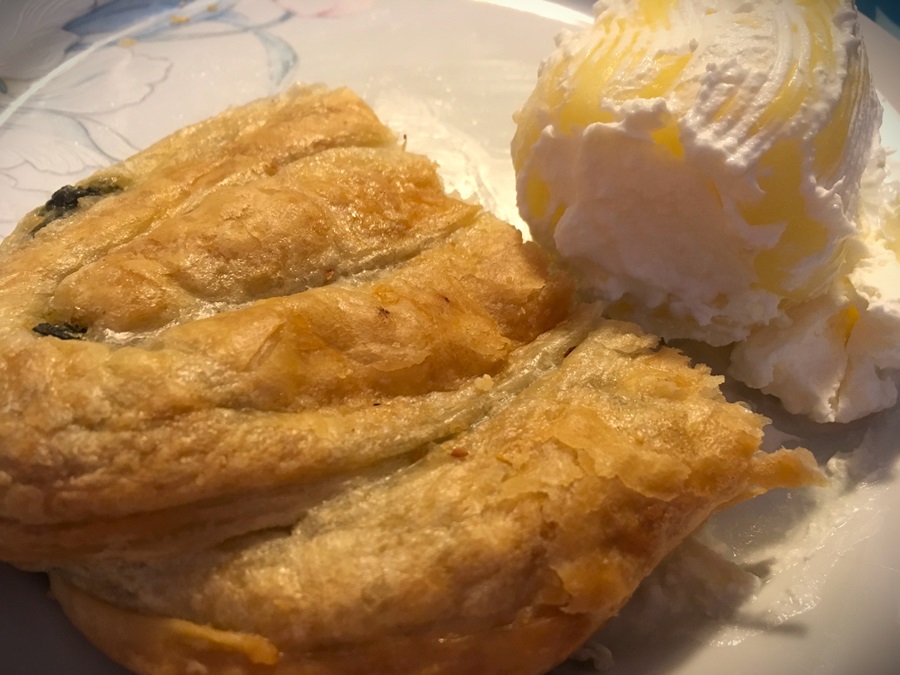
Back in the apartment we had lunch. Julie was looking forward to the potato salad we bought yesterday but it turned out to be yellow pepper stuffed with a cream cheese. She was so disappointed. It was labelled as Paprika u Pavlaci Milkop but our Serbian wasn't up to scratch. I quite liked it but we couldn't eat much of it. The cheese was over seasoned, very peppery and far too much salt. At least we had a delicious Spinach & Cheese Borek to enjoy.
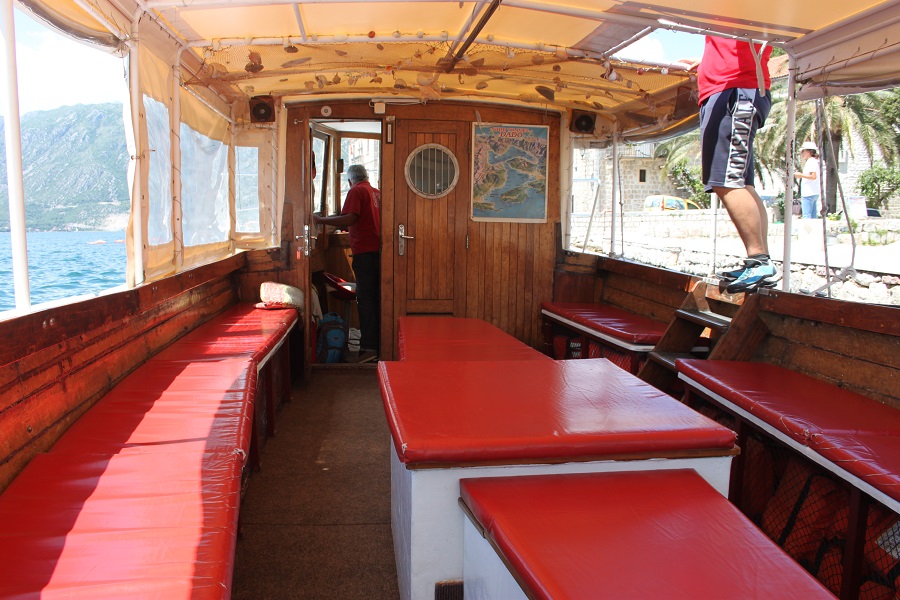
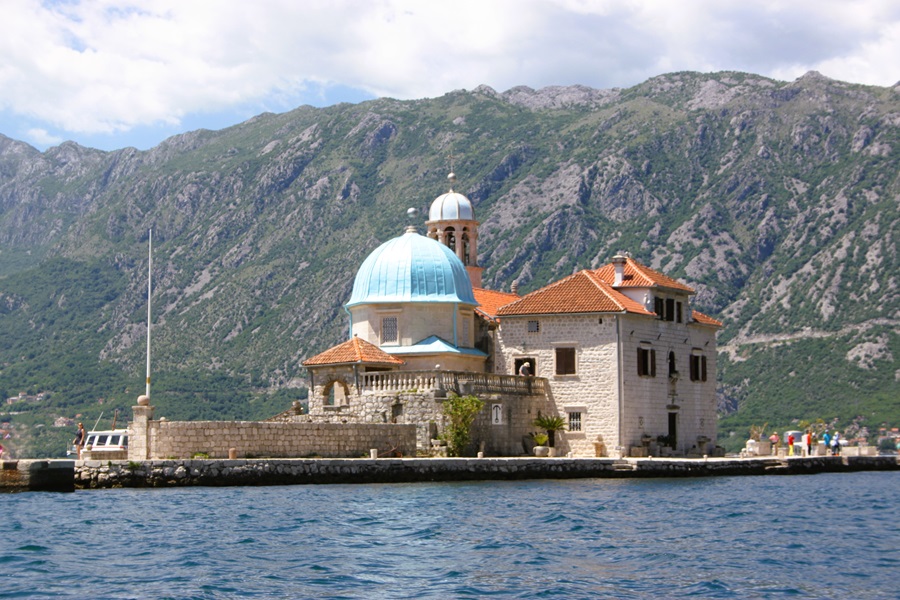
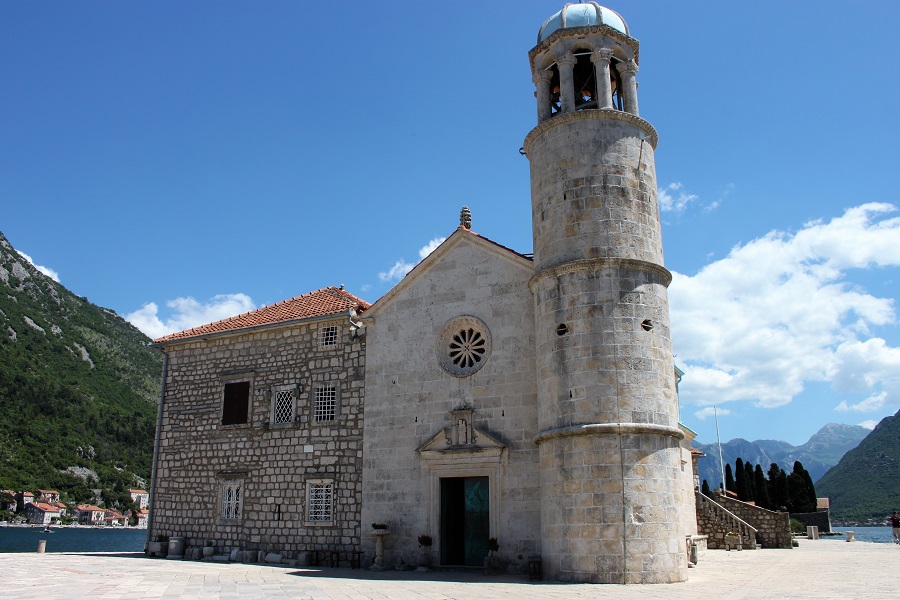
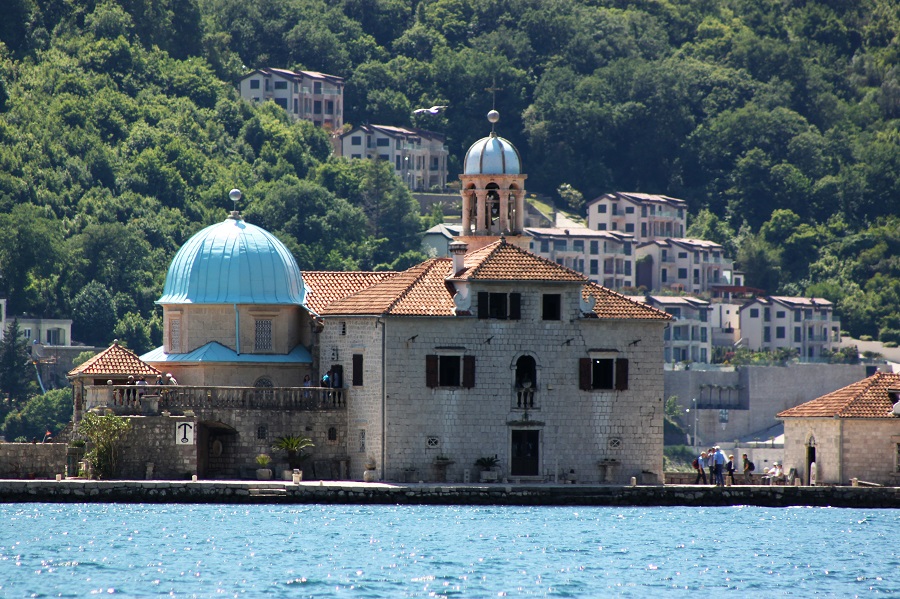
Pondering what to do next we decided to visit Crkva Gospa od Škrpjela, the church in the lake, the Church of Our Lady of the Rocks. Small boats were moored literally opposite our apertment, waiting to ferry people across to the small island. It cost us €5 each.
It was actually an artifical island created by the sinking of large rocks and scuttled boats. Legend has it that a tradition began in the 15th century. On the 22nd July, the anniversary of sailors finding an icon of the Madonna and Child on a rock out at sea, locals still drop rocks into the bay. It's a tradition known as Fašinada.
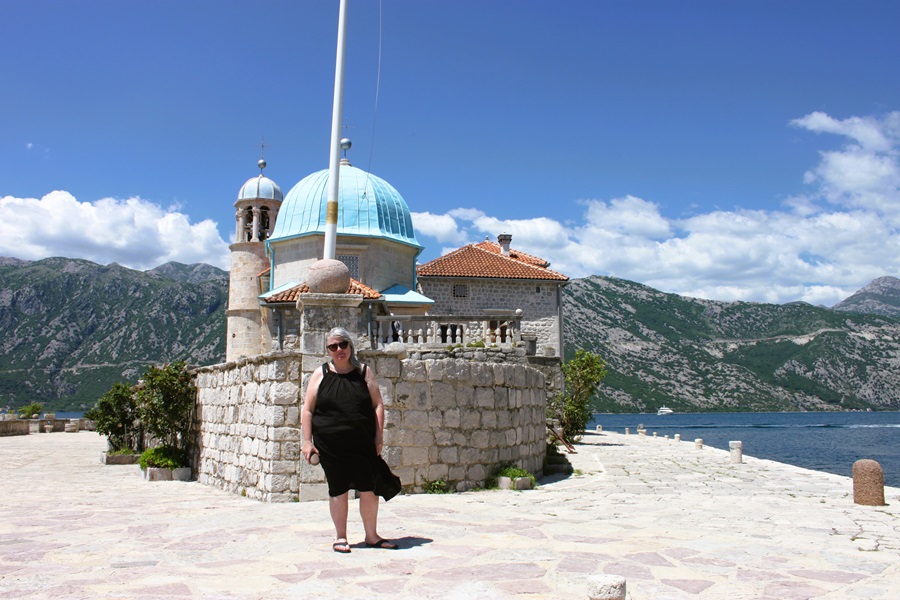
By the time we arrived on the island we almost had the place to ourselves with only one other couple noticably wandering about. "Everyone must be having lunch" supposed Julie. We walked around the island from one end to another and back again. The walls of a garden came to a tip, almost like a boat.
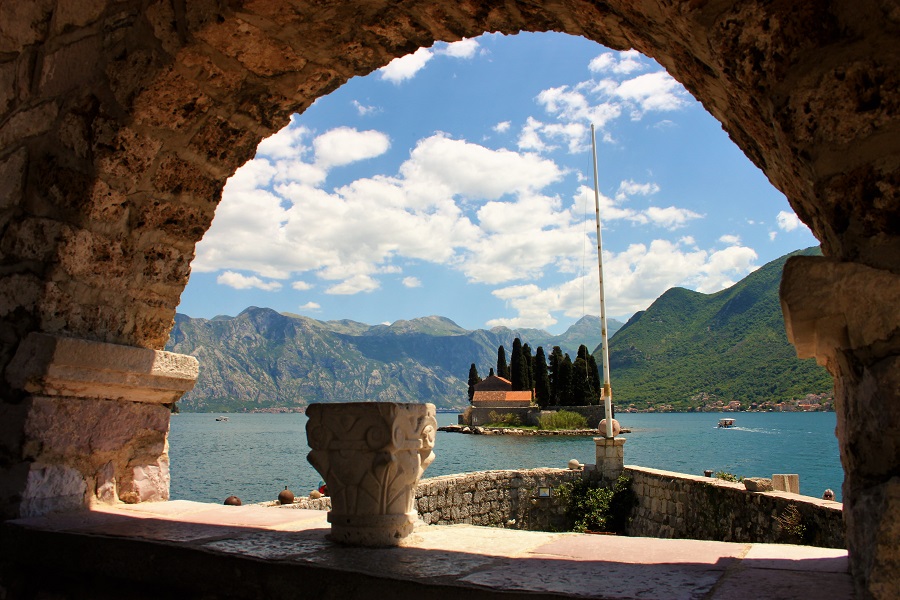
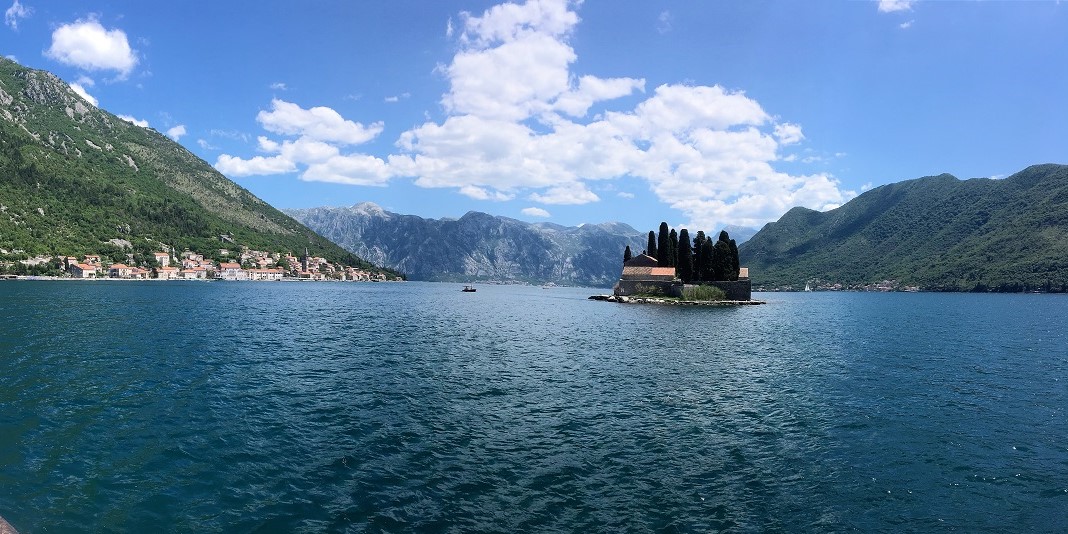
We then walked up steps to a balcony looking out towards Sveti Đorđe the other small island in the Bay of Kotor. Unlike the "lady of the rocks", Sveti Đorđe (St. George) was a natural island. It consists of a small 12th century Benedictine Monastery, a cemetary of Perast nobility and sea captains, and a cluster of Cypress trees. It's sometimes refered to as the Island of the Dead and at one time was also cursed by the Pope after a priest was murdered. The view, especially framed by the arch, was exquisite.
We looked East towards the Lovćen mountain. Then, just across the water the red rooftops of Perast at the bottom of Sveti Ilijah hill . We were right in the middle of the butterfly shaped Bay of Kotor, in a very strategic location, opposite the Verige strait, the narrow entrance to the bay. It has over the years been used as a military base by the Ottomans, the French, the Sicilians, even the British, before the Austrians arrived.
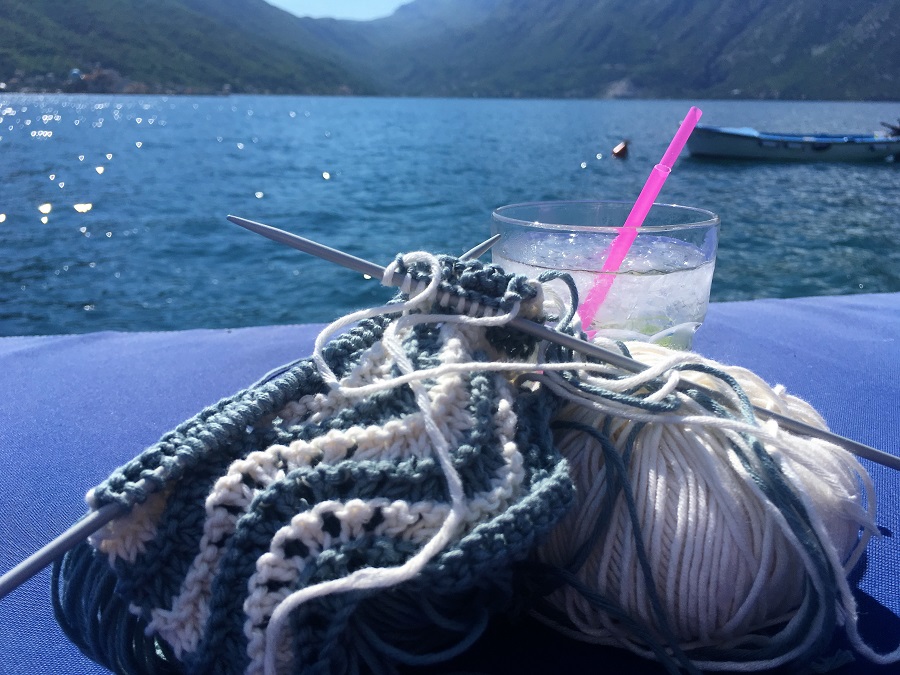
The entrance to the church was at the other side. As with many churches they are often built on top of the one that fell before and this replaced the previous one when it was destroyed after an earthquake in 1667. I paid €1, although this was to enter the museum, not the church. At first I went in alone, whilst Julie sat outisde knitting her latest project.
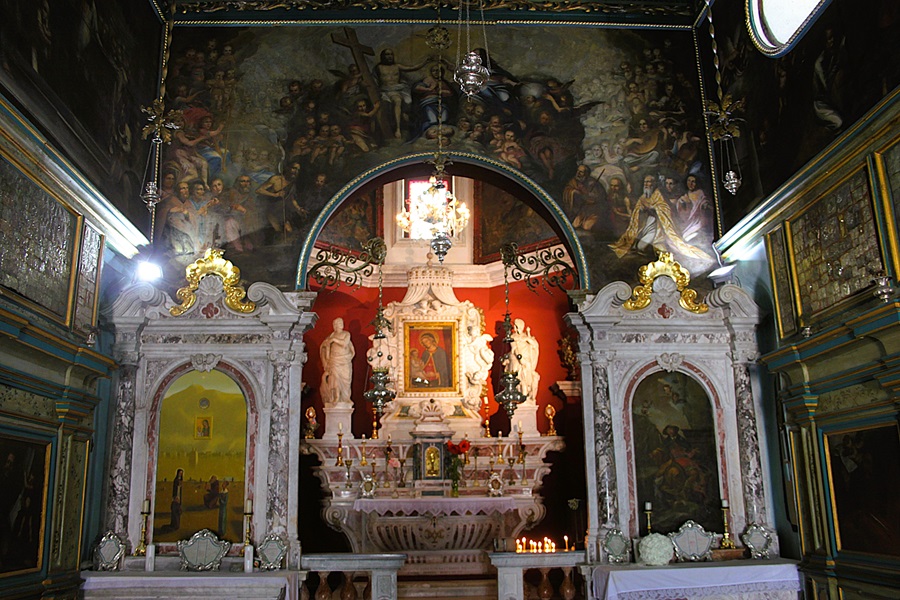
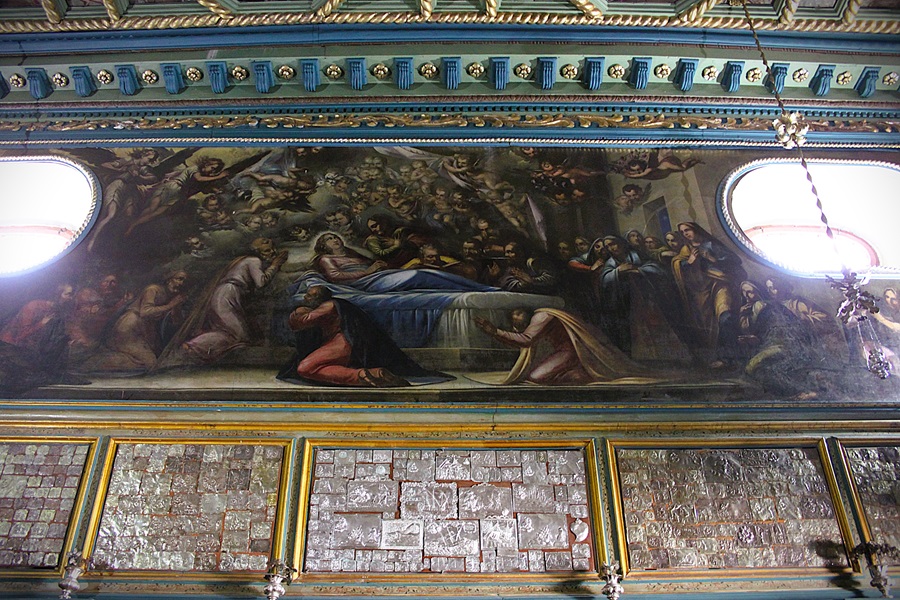
It was dark inside. Some natural light came in from a few windows high up on the right, a small chandelier above the marble altar and a few spotlights. Once my eyes adjusted I began to appreciate the frescoes that covered the walls and ceilings. The scene of the crucifixion above the altar was the largest and most dramatic of them all.
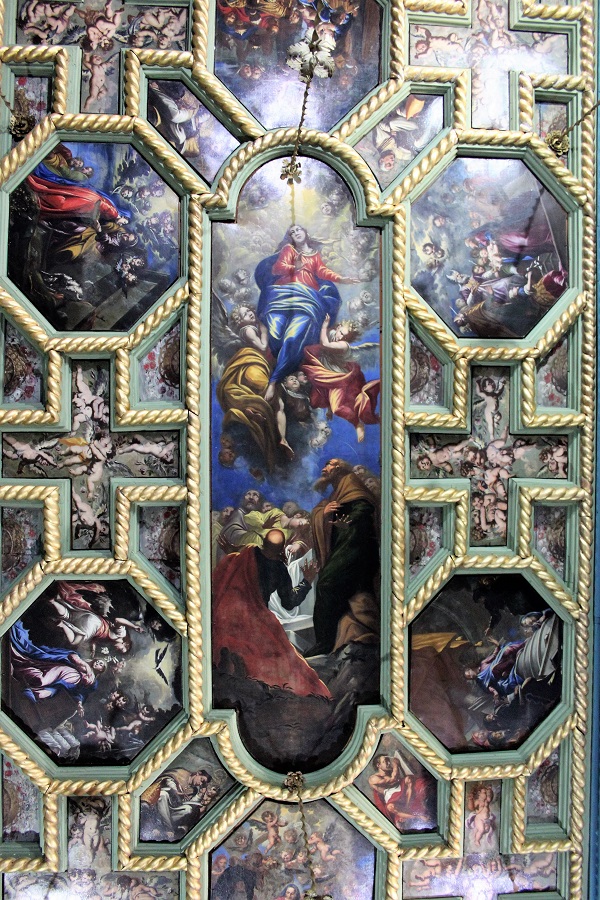
A scene of the ascension to heaven in the centre of the ceiling was also interesting. I didn't count them but there were meant to be 68 individual paintings, all painted by Perast-born 17th century Baroque artist, called Tripo Kokolija.
Another feature of the chapel was a row of over two and a half thousand silver votive tablets, offerings to the Virgin Mary from thankful sailors returning from safe travels. I had never see such a collection before.
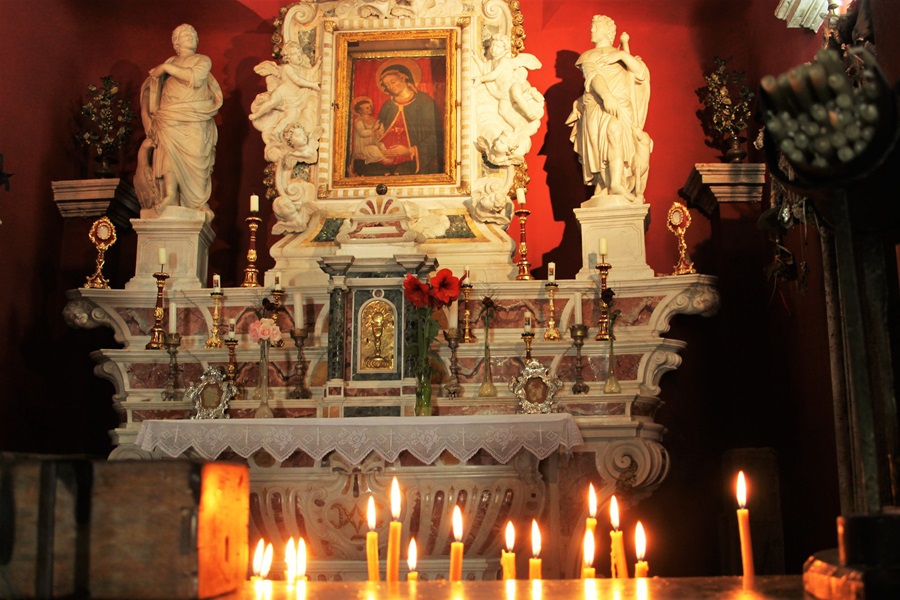
I walked up the imposing altar with a painting of the Virgin Mary and baby Jesus. There was also a gold tablet in the centre but I couldn't make out the image. Through a door tucked away to the side was the entrance to the museum.
I quickly returned to Julie. I wanted to let her know that I may be sometime exploring the museum. She decided to join me. We paid another €1 and walked through the church .
The door lead to a small room, which in turn brought us to the house attached to the church. There were a many random items on display, many had nothing to do with the church, like a dusty old gramaphone or a meat grinder. There was some pieces connected to the maritime heritage, such as a collection of muskets, artwork of ships and some oversized keys.
However, the highlight was connected to the church. It was a needlepoint tapestry, embroidered by local woman, Jacinta Kunić-Mijović whose husband did not return from the sea in 1803. She produced this offering to the Virgin Mary using Chinese silk, and threads of gold and silver. The story goes she aslo weaved in some of her own hair. It took her 25 years but her prayers for her husband's return were never answered.
Another thing that caught my attention was a collection of stone tablets, figure heads and pieces of the original church.
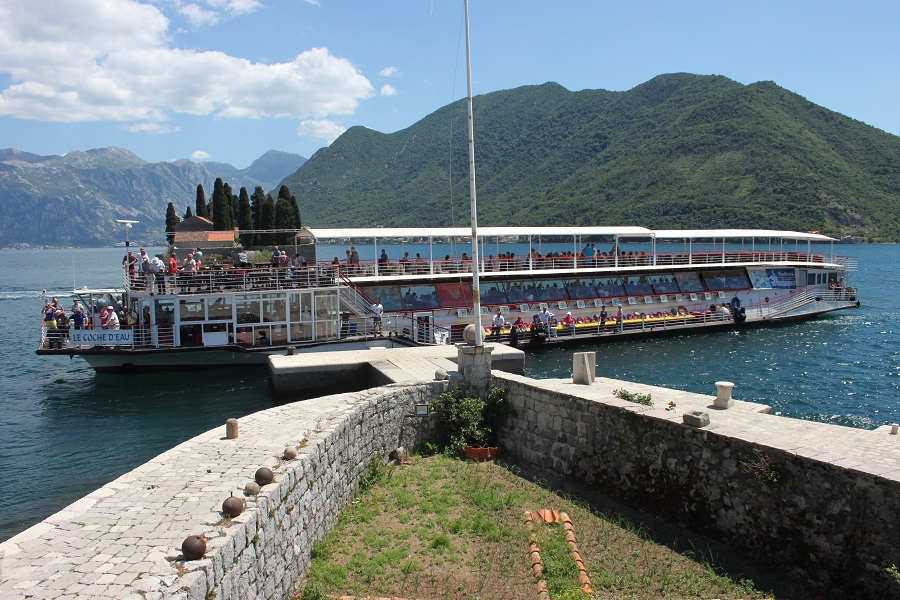
When we finished the musuem this enormous boat moored up. There must have been over a hundred tourists disembarking. It was time for us to get the next boat out of there!
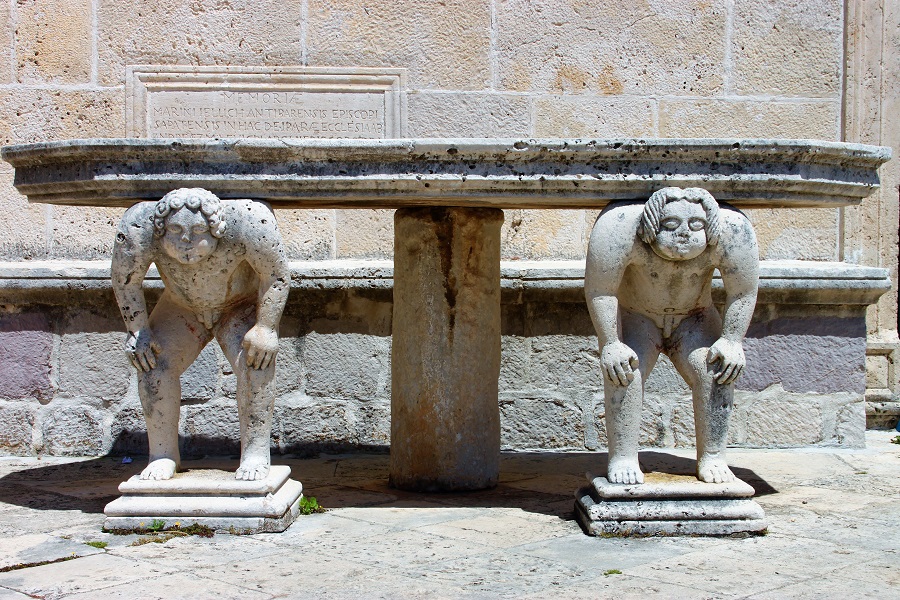
Whilst we waited for our little boat to turn up we sat on a ledge at the side of the church, next to a quirky marble table. A pair of telemones, statues of hunched men, equally bearing the weight of the slab. Legend has it that quarelling villagers were brought here to resolve their differences. They were locked in a room until an apology or a compromise was reached. Once resolved they would sit at this table to share food.
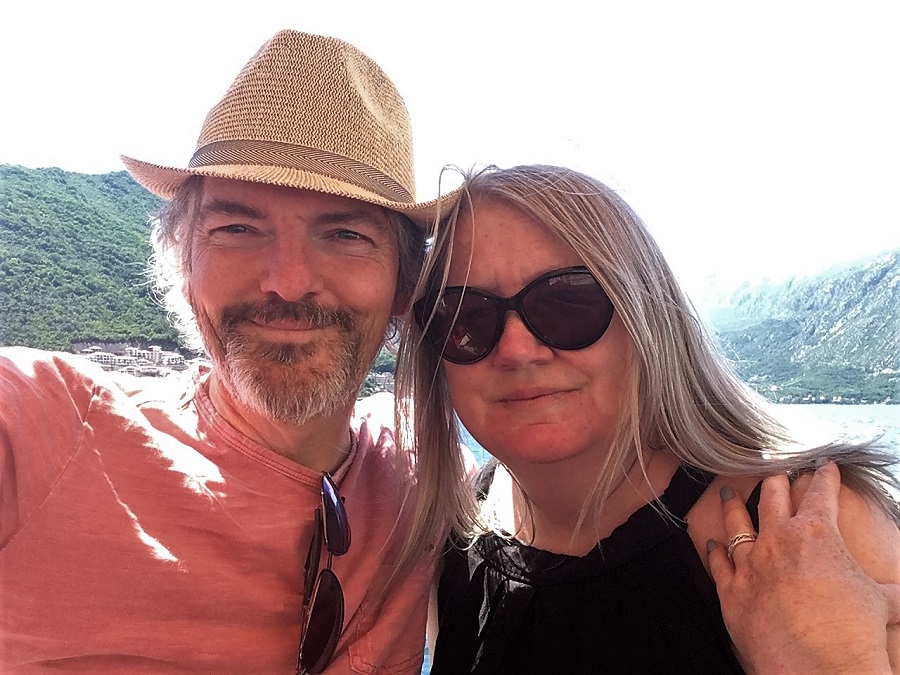
Whilst we waited for our boat to turn up we took a few selfies of ourselves. Moments later our little boat arrived. We were the first to get onboard. After only a few minutes of waiting we left, sharing the ride this time with two other couples.
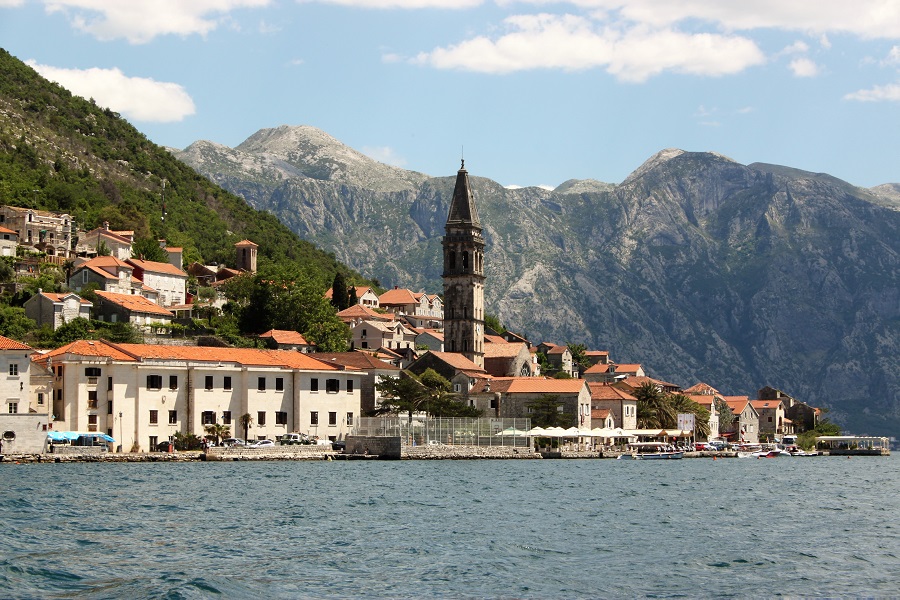
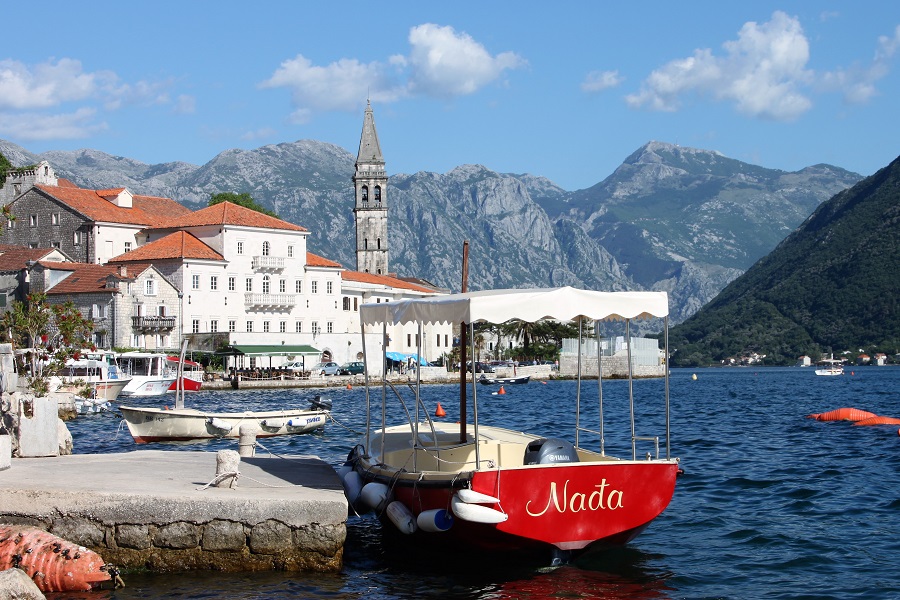
Approaching Perast from the water gave us a dramatic perpective on the village, with the mountains in the background and the bell tower of the church of St. Nicholas in the centre. The same view returning sailors would have seen for centuries.
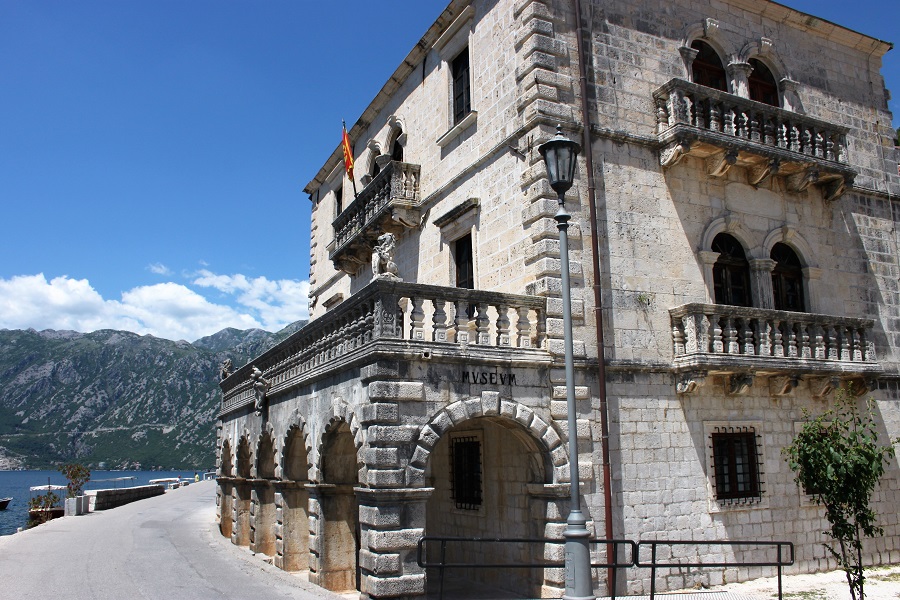
Once back on dry land we decided to visit the Perast Museum, housed in the former Palazzo Bujović. It was an impressive Venetian palace, with a loggia to the front and balconies beneath several of the windows. As with every old house, they have a tale to tell. It was built by two brothers Ivan and Vicko Bujović at the end of the 17th century. The latter was a distinguished military commander serving the Republic of Venice. He later became the Town Captain, leader of Perast, and was even given the title of Duke. However, it all ended in tragedy. He brought shame on another noble family of Perast, the Zmajević family. They were guardians for the daughter of an Ottoman general. Vicko ran away to Dubrovnik with her, she converted to catholicsm and they married. A few years later, thinking that it had all blown over, they returned to Perast. But the feud between the families continued. On the 6th May 1709 he was provoked into a street brawl and murdered .
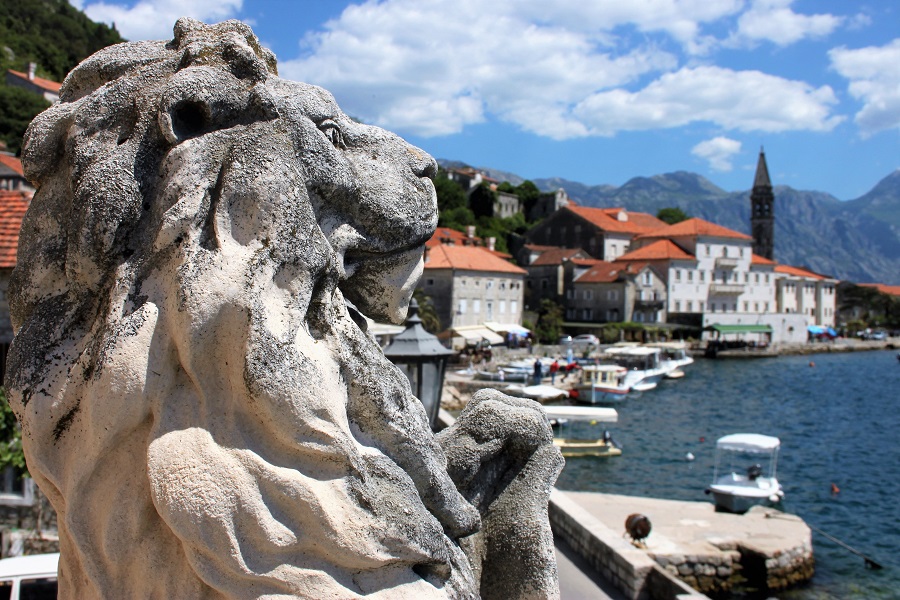
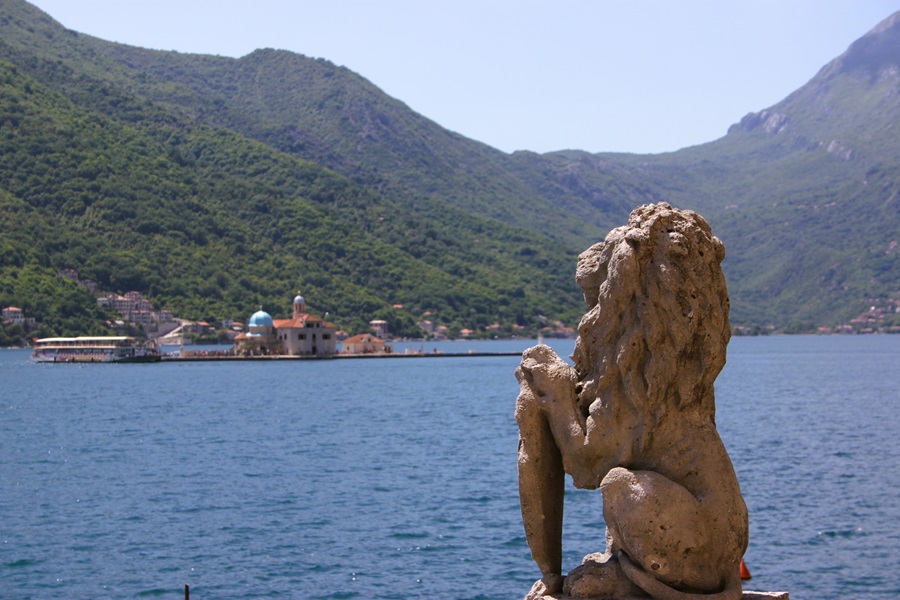
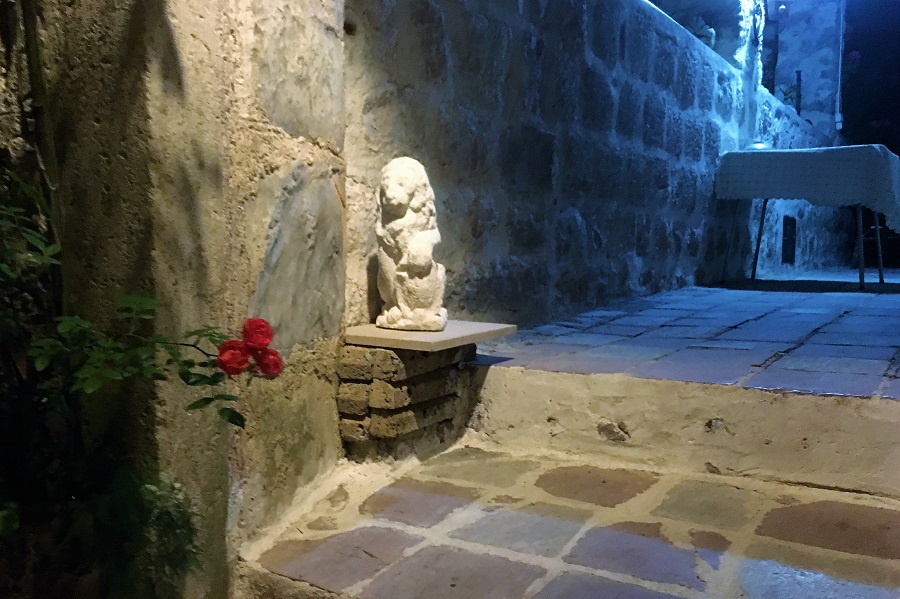
We paid €2.50 each to enter, although they were quite relaxed about collecting the money. The museum had plenty to see, three floors of historical items mostly donated over the years since it opened in 1937. However, it's best feature was the large balcony above the loggia. We stepped outside, feeling like royalty, looking down on the peasants below. Two regal stone lions stood watch. One on either side.
The view was certainly elevated by their presence as we admired this breathtaking location, completley surrounded by the lush green hills, creating a hidden paradise.
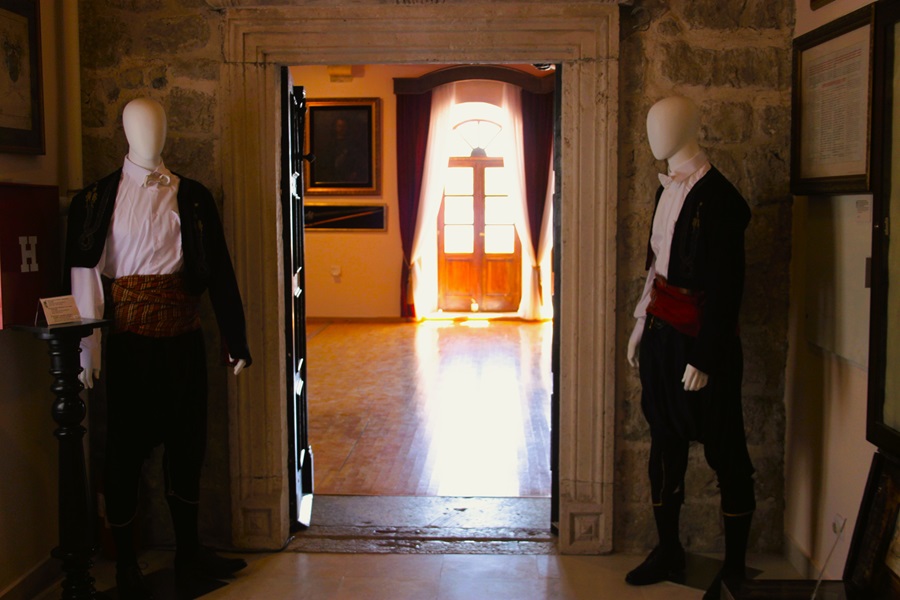
The museum itself had plenty of things to look at, like models of ships, oil paintings, traditional folk costumes, flags, and countless documents. Although we only gave them a cursory glance. I don't think we spent much more than 15 minutes here and most of that was on the balcony, but even so, it was still worth the entrance fee.
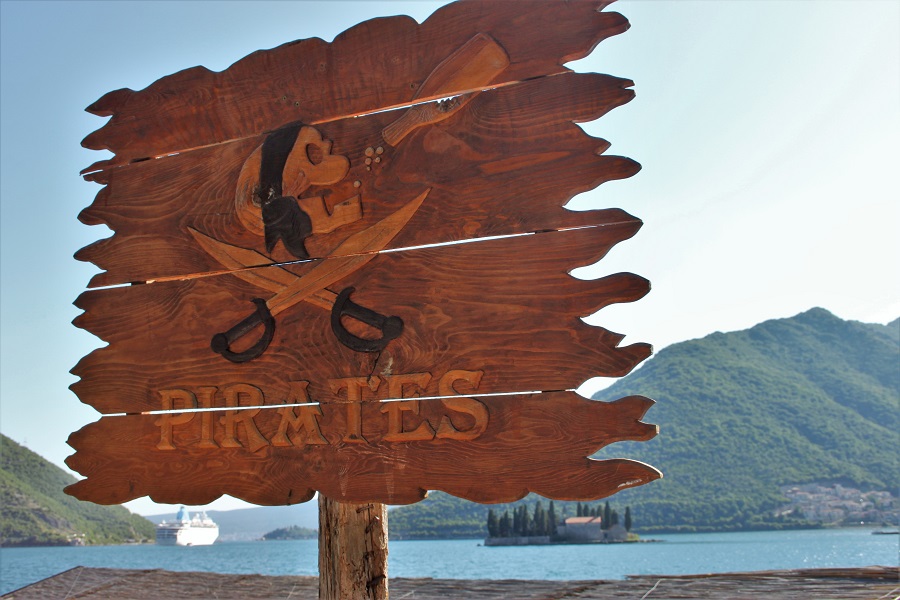
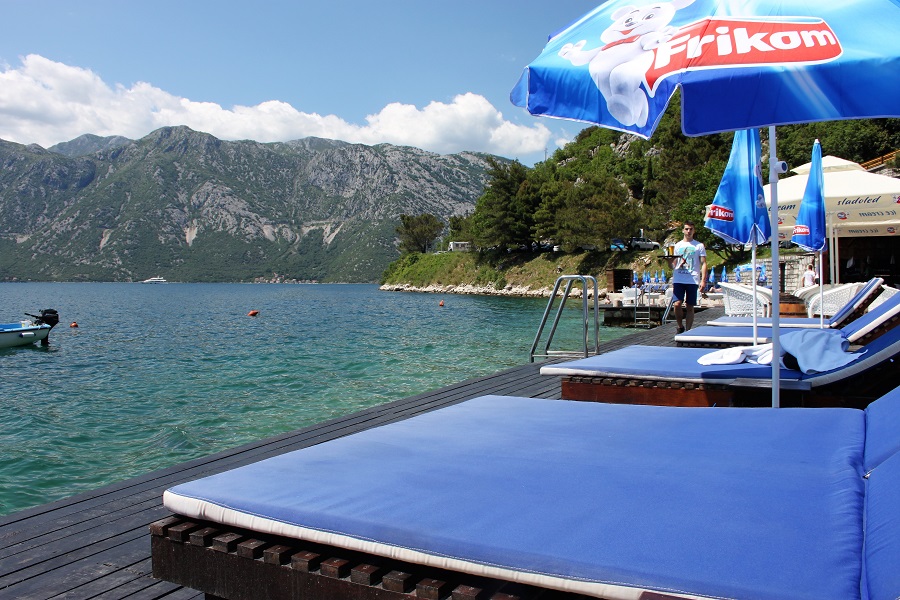
From the museum we walked up towards the car park to a waterfront bar called Pirates. It was 2pm and we felt like lounging the remainder of the afternoon away.
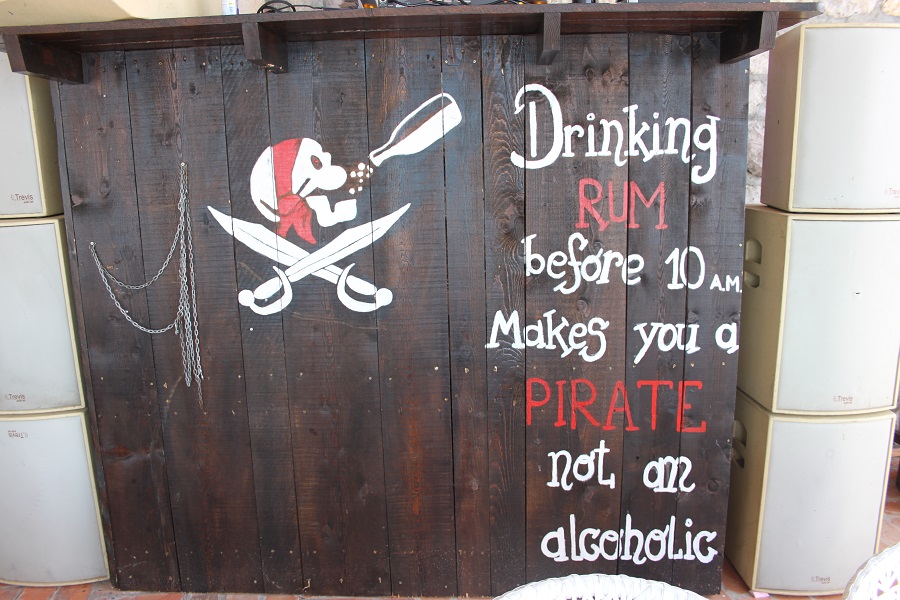
They had this funny sign on the outside that said "Drinking rum before 10am makes you a prirate not an alcoholic."
They had daybeds for hire which was perfect. Their day rate for a lounger was €10 and despite us only having another four hours until sunset they were still demanding the full amount. Having set our minds on lounging we still paid the fee.
Julie continued with her knitting, I scribbled into my journal, and we sipped our cold drinks lounging in the sunshine. It was blissful. The weather at home had been attrocious. The last warm sunny day we could remember was last summer! We both dazed in and out of sleep. Neither one of us fancied a dip in the lake but there were others taking the plunge. The water looked cold. It was only Spring and hadn't absorbed the heat of summer. "Is that a bhuoy?" asked Juile. "No it's that bald headed man." I explained. "He better be careful or someone's going to tie a boat to his head!" she replied.
We looked across to the island of the Lady of Our Rocks. It appeared to be floating on the water with the land barely a metre above the lake. I'm sure they already have in place a contingency plan for climate change and rising sea levels. They're going to need it before long. Behind it, on the other side of the bay, was the village of Kostanjica and a large new development called Boka-Projekt, a resort village, bulit on the slopes high enough from the waters edge.
Time passed slowly which was wonderful. It was 5pm when we decided to leave the Pirate's Bar. We walked slowly back, taking our time to take note of the old houses as we past. For such a small town, only a mile long and a population of around 250, it had a remarkable 16 churches and 17 palaces.
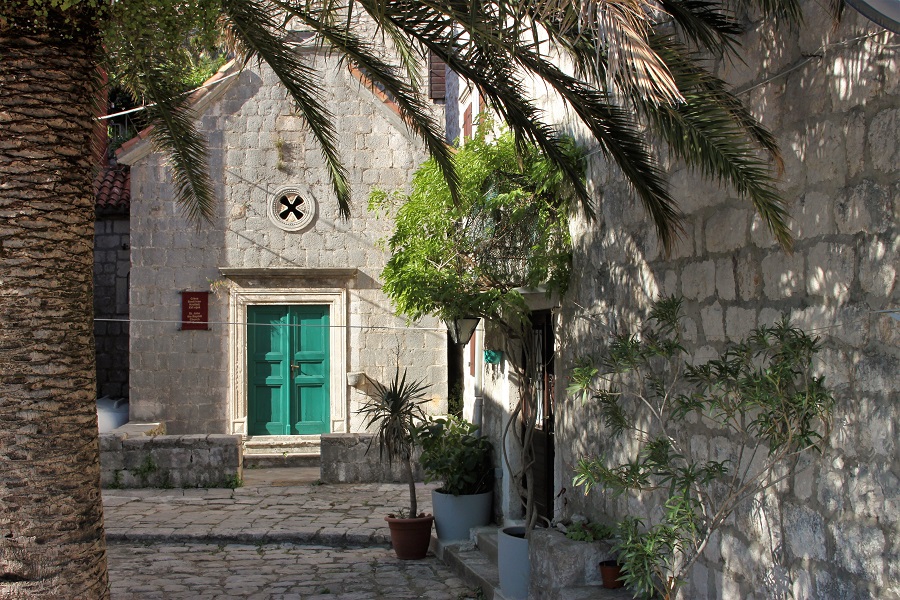
The first was the tiny Church of Saint John the Baptist. Despite being literally next door to our apartment and having a bright green door, we hadn't noticed it before.
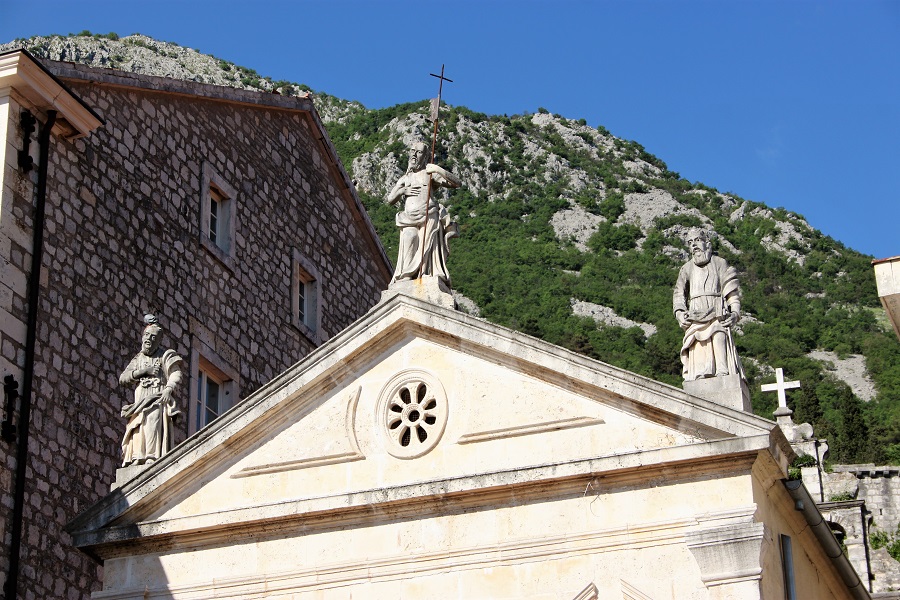
We continued past our apartment, continuing past Armonia, the bar we stopped in last night, tucked by the side of Smekja Palace. We then came to the Church of St. Mark. There were figures of three saints on the roof. They were Saints Mark and Matthew, with apparently Christ in the center. It was built in 1706 and had a winged lion above the entrance, the mark of the Republic of Venice to whom Perast pledged its allegiance. It remained Venetian until the end of the 18th century when the empire collapsed, surrendering to Napolean and its lands divided up.
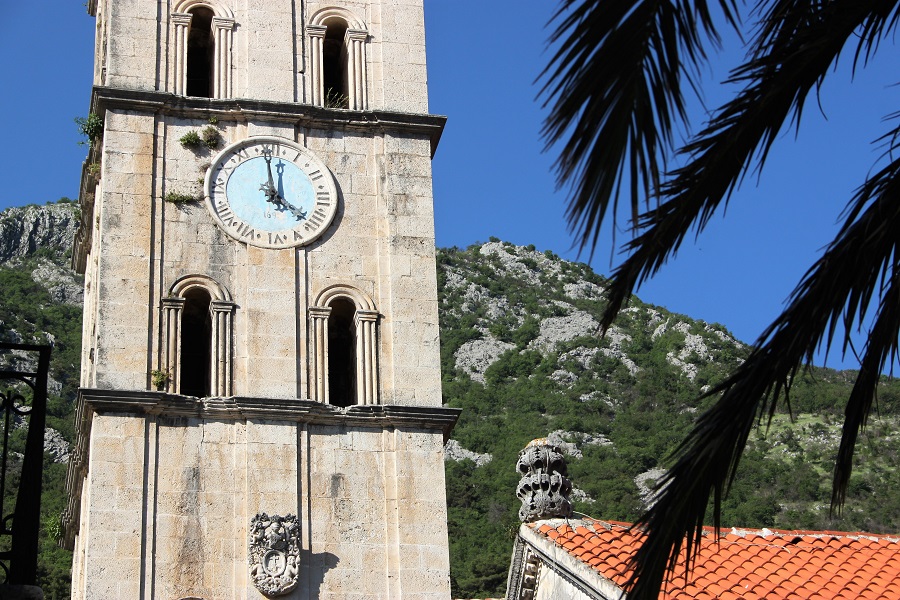
We continued until we reached the Church of St. Nicholas. It was interesting to see how the church came in two different styles, an older one built in 1616. Then in 1740 construction began on a larger cathedral but was never completed. Halted by the Napoleonic wars. The bell tower was built sometime in between the old and the new. At 55m in height it's the second tallest along the entire Adriatic coast.
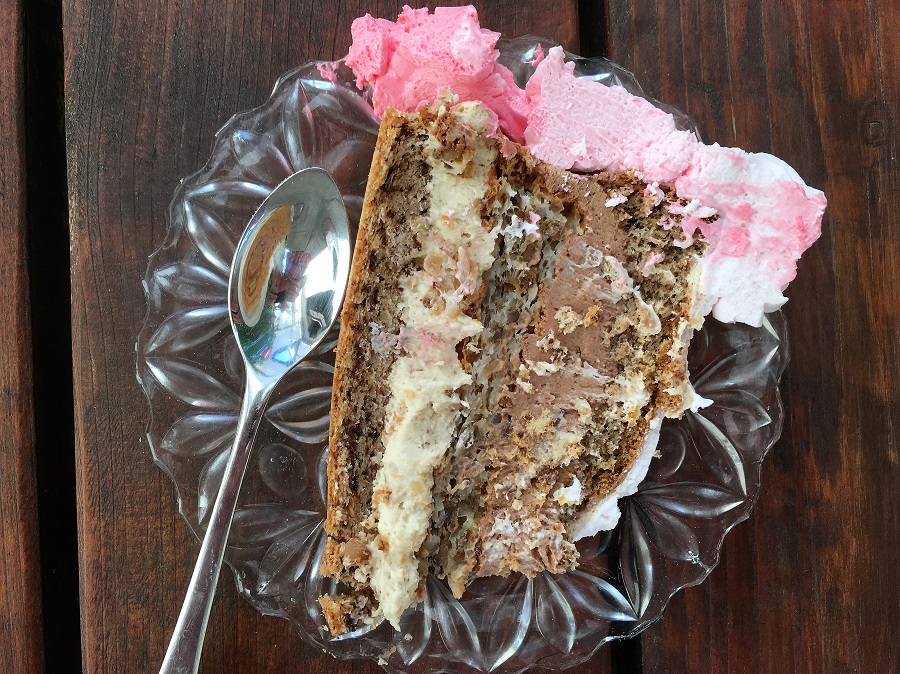
Anita's baptism party was in full swing when we returned to our apartment. Grandpa Milan was busy bouncing an over tired Anita and loving it. We were offered cake, in fact they insisted. It looked horrendous but we were too polite to refuse. There was a small table and chairs outside our door where we sat and ate the cake. Avoiding the alarmingly pink cream, the rest of it was surprisingly nice.
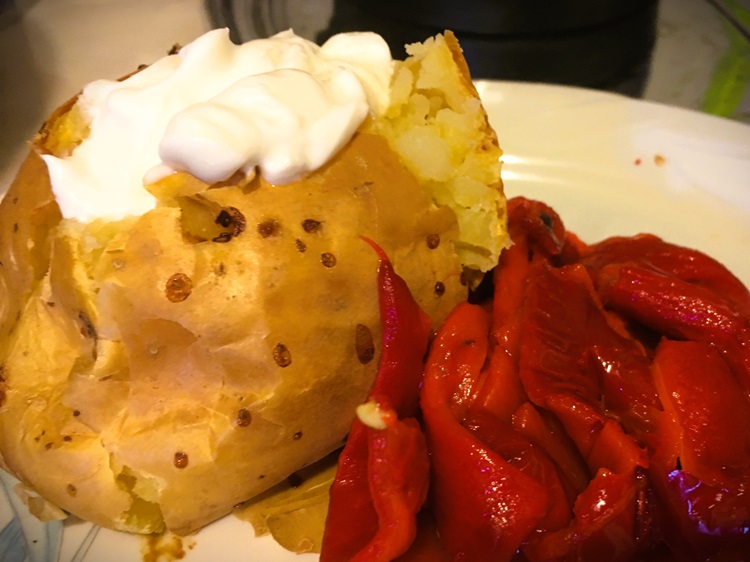
For supper we baked potatoes and filled it with fresh cream cheese. I also opened a jar of roasted red peppers to have with it. Julie had steak. It was small and thin but she really enjoyed it. I also made myself a shopska salad but I struggled grating the cheese. It was far too soft. It was all very tasty though.
It was still warm so we sat outside for the rest of the evening. The champagne was opened. We briefly thought about sharing it with the family but we didn't.
News came through that Chris Cornell, American musician and singer died last night. He tragically hung himself in a hotel room after performing on-stage in Detroit with his band Soundgarden. He was only 52 years old. Back in the room we listened to his songs all night. He had a phenomenal voice. Next Day >>> |
|
©Copyright 2000 - 2026 Colin Owen |